
Hitting the ball late in tennis is one of the most common challenges you will encounter, and only early stroke preparation on your forehands and backhands will allow you to hit the ball on time.
You may have heard your coach say, “Prepare early” or “Turn quickly”, and yet you’re still finding yourself preparing late for your strokes. Consequently, you hit the ball late, which results in a poor shot.
What’s missing in the above tips is the trigger, namely WHEN you should initiate your preparation of the stroke.
Not only that, you actually have a very short window of time in which you can initiate your preparation; otherwise, you simply won’t be able to make it.
The Challenge Of Ball Judgment
When your opponent hits the ball and the ball starts to fly towards you, your brain is frantically trying to calculate its flight trajectory so that you know where the ball will end up on your side.
You need to know quite accurately how far from you the ball will end up, how high or low above the ground it will be, how much time you have before it gets to you and possibly with what kind of spin it will arrive.
This is an extremely demanding calculation, and our brain does its best to get it right based only on perhaps 1/2 or 2/3 of the ball flight’s duration.
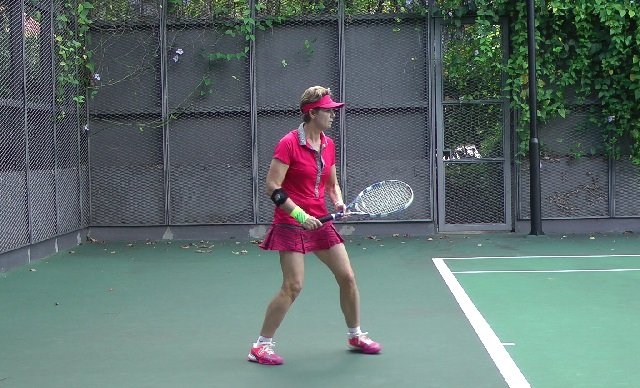
Reading the ball's flight and predicting its final position is an extremely demanding calculation
That’s because we need to get into our position BEFORE the ball in order to be balanced and calm. That gives us the highest chance of hitting that small, bouncing ball with our moving, small sweet spot of the racquet.
And because this calculation of the ball’s trajectory during the time we have at our disposal is so difficult, our brain is taxed at 100% of its computing power in order to calculate that well.
And if you’ve ever taxed your CPU in your computer to 100% with, for example, video editing software or another CPU-intensive program, you know that, if at that time you want to open another program and execute it, it will open very slowly with a big time delay.
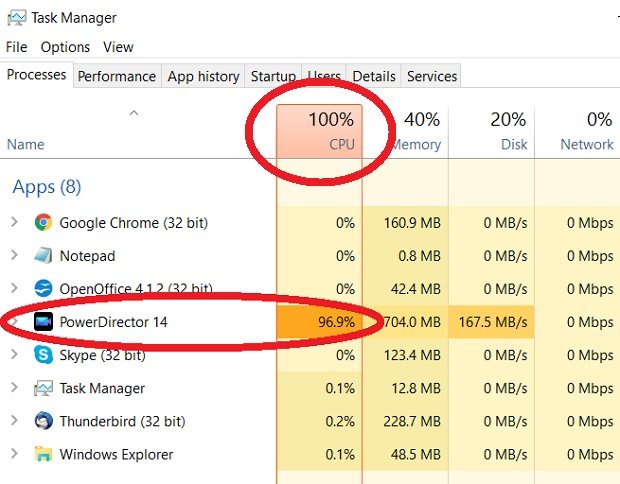
My computer's CPU was maxed out when I was encoding the video for this article
That’s because your CPU has no room to execute another program; it is already fully taxed.
Exactly the same process happens when you are judging the ball flight. Your brain is operating at 100% of its capacity.
If you at that moment get an instruction to “prepare your racquet” or “do a unit turn”, you won’t be able to execute it. Perhaps you won’t even register your coach saying that.
It is only towards the last part of the ball’s flight that you start to feel such time pressure to hit the ball that your brain frantically issues a command to swing the racquet back and forward in order to at least hit the ball back over the net.
But this, of course, results in rushed shots, poor balance, lots of tension in your body and arms and even possible injury.
It seems like it’s really difficult to execute your stroke fully in the short amount of time that you have from the moment your opponent hits the ball until it reaches you.
But there is a way…
The Short Window Of Time You Must Use
There are two parts of the ball flight that correspond to what you can read from the trajectory.
As soon as the ball leaves your opponent’s racquet and a few tenths of a second later, you cannot yet tell whether that ball will land deep, bounce high or come in very fast.
But you CAN tell whether it’s going to your forehand or your backhand!
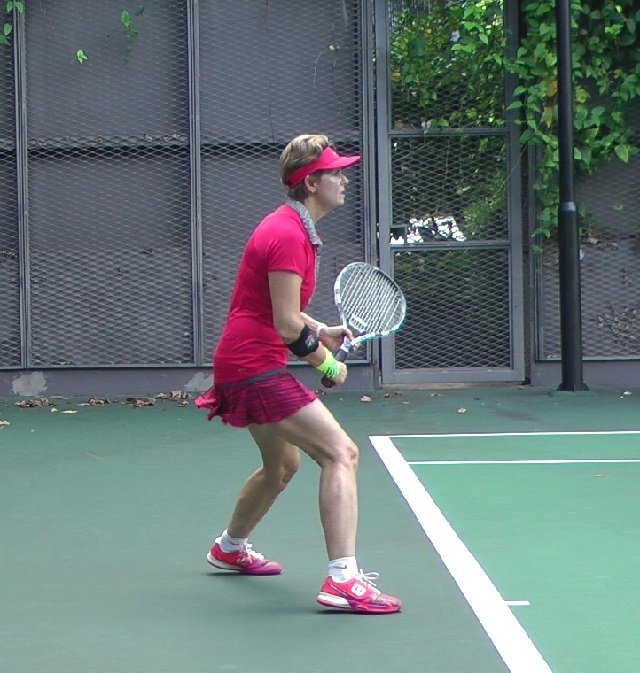
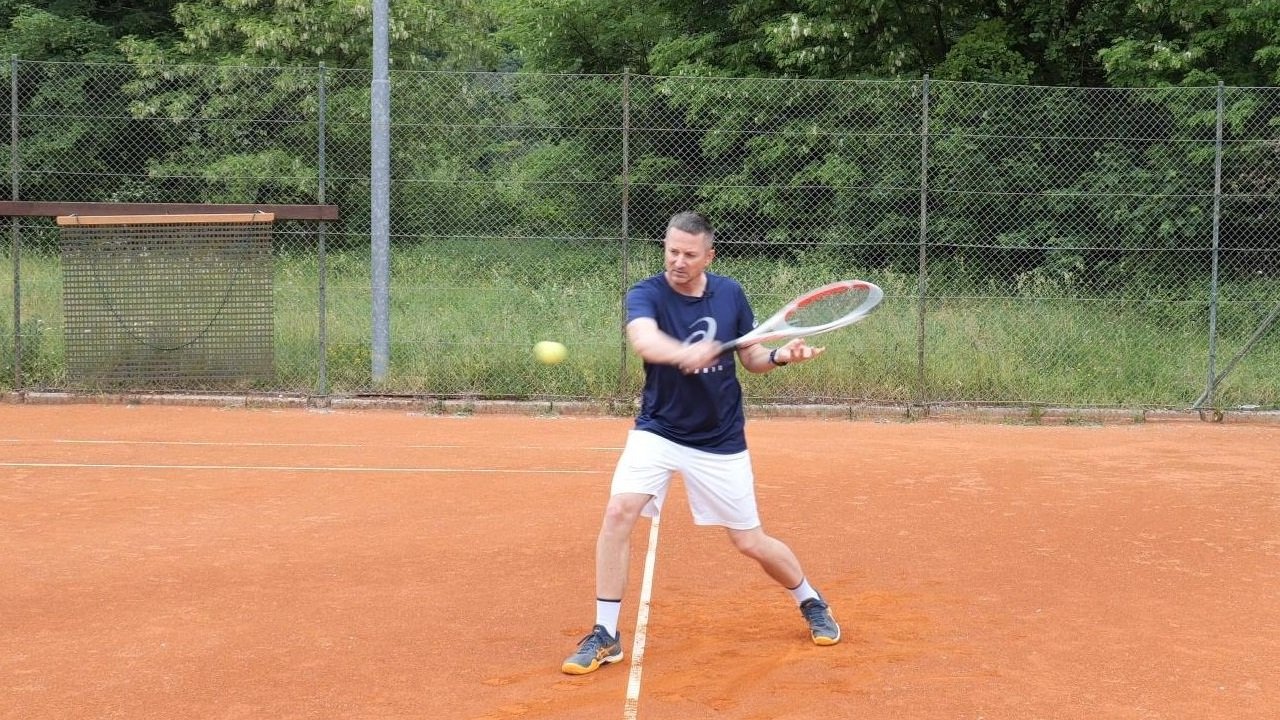
The moment after split step is when you can tell the direction of the incoming ball
Reading the direction of the ball is easy, and it takes just a split second to recognize.
THAT’S the moment you must catch and quickly initiate your stroke.
That’s when your brain is NOT YET fully taxed with calculation of the ball flight because it is NOT YET receiving enough data from the ball flight!
Once the ball has flown about 5-6 meters from your opponent’s racquet – which corresponds to about 1/4 of the distance of its full flight – your brain will start receiving lots of data from the trajectory.
At that point, it will go into 100% computing power in order to calculate and predict its final position, speed and spin.
Once your brain is at 100%, you won’t be able to think much about your preparation.
That’s why it’s crucial that you react quickly to the direction of the ball because at that time you can still give yourself commands on what to do.
Keep in mind that what I am explaining here is the process when you are still learning to prepare early or when you are correcting your late preparation – which means you have to consciously remind yourself to initiate your stroke.
But once that process has been automated and ingrained, you will of course have no need to think about that as your subconscious will time your stroke preparation and you’ll almost never be late again.
The best way to catch that crucial moment of time when you can recognize the direction of the ball and when your mind is not yet fully engaged into the ball trajectory calculation is to call out loud the direction of the ball.
That will be your trigger!
You will actually remind yourself (and give your coach a break!) of when to initiate your preparation.
At first, you may actually find yourself saying “forehand” but not doing anything about it.
Then you’ll become aware of that. And once you’re aware of this discrepancy, namely knowing the direction of the ball but still keeping the racquet in front of you, you’ll be able to change that.
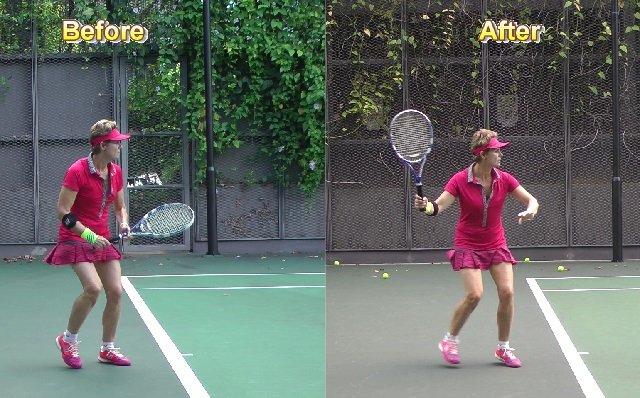
How much more time will you experience for your shots if half of your stroke is completed before the ball bounces?
I suggest you practice at least 5 minutes of calling out the ball direction while rallying cooperatively with your partner.
The final goal for you is that you feel that you have (a lot of) time between your backswing (or turn) and the forward swing.
If your stroke goes immediately and suddenly from backswing to forward swing, you’ll inevitably hit it with a tight arm because you’re fighting the racquet’s momentum (inertia).
But when you have enough time between the backswing and the forward swing, you can then accelerate the racquet gradually and be able to hit the ball with power while maintaining control.
This process of calling out the stroke usually needs to be repeated for at least 5 sessions but more likely 10-20 sessions before your old timing is corrected.
How To Teach Early Preparation With A Basket Feed
If you’re a coach or you have a partner that can feed you balls from a basket then I have another drill for you.
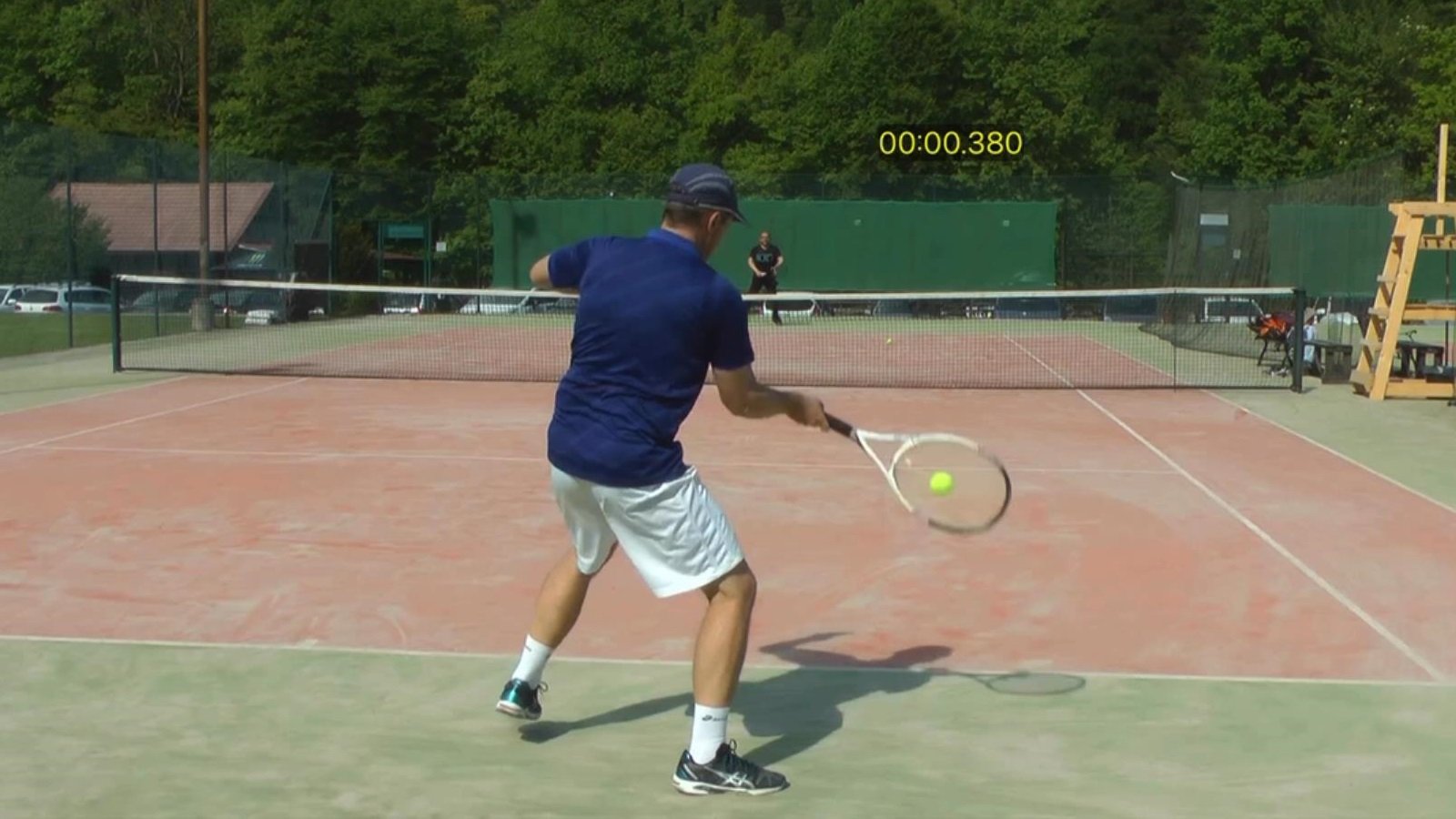
It’s a simple drill that shows very clearly to the player that he hasn’t prepared in time and works even better if you can record the whole process and then show it to the player.
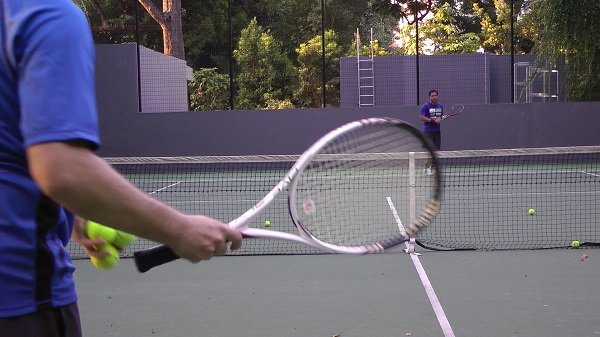
You’ll see how this process works and how much earlier my student prepared after a few minutes of working on this unique drill.
Advanced Drill For Achieving Early Preparation
There is another way of helping you prepare earlier for your strokes that doesn’t even require much thinking; it requires only doing.
Your goal is to play shots back from the baseline to your partner/coach, who volleys back to you from his position at the net.
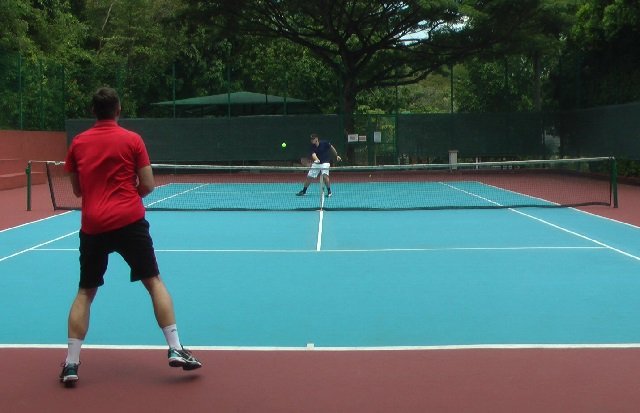
Receiving volleys from the net player forces to you react quickly
This cuts almost half of the time at your disposal to execute the shot, and you are basically forced to prepare early.
Just make sure that you also practice control as you may be rushed at first and therefore hit the incoming ball too fast and lose control of your shot.
Don’t forget to split step every time even though there is less time to execute it.
So, think about preparing fast but then playing nice and easy with control with your partner at the net.
Keep this drill going for about 5 minutes so that you get used to this higher tempo of ball exchanges.
After that, move back to the baseline and rally again cooperatively.
You will very likely experience much more time for your strokes because you will still react quickly to the ball since you’ve been “primed” to do that when the ball was being hit from just across the net, but now it’s coming from far away at the other baseline.
Practice this sequence of drills regularly in order to improve early preparation, and you’ll experience much more time for your strokes which will allow you to hit your forehands or backhands much more effortlessly.
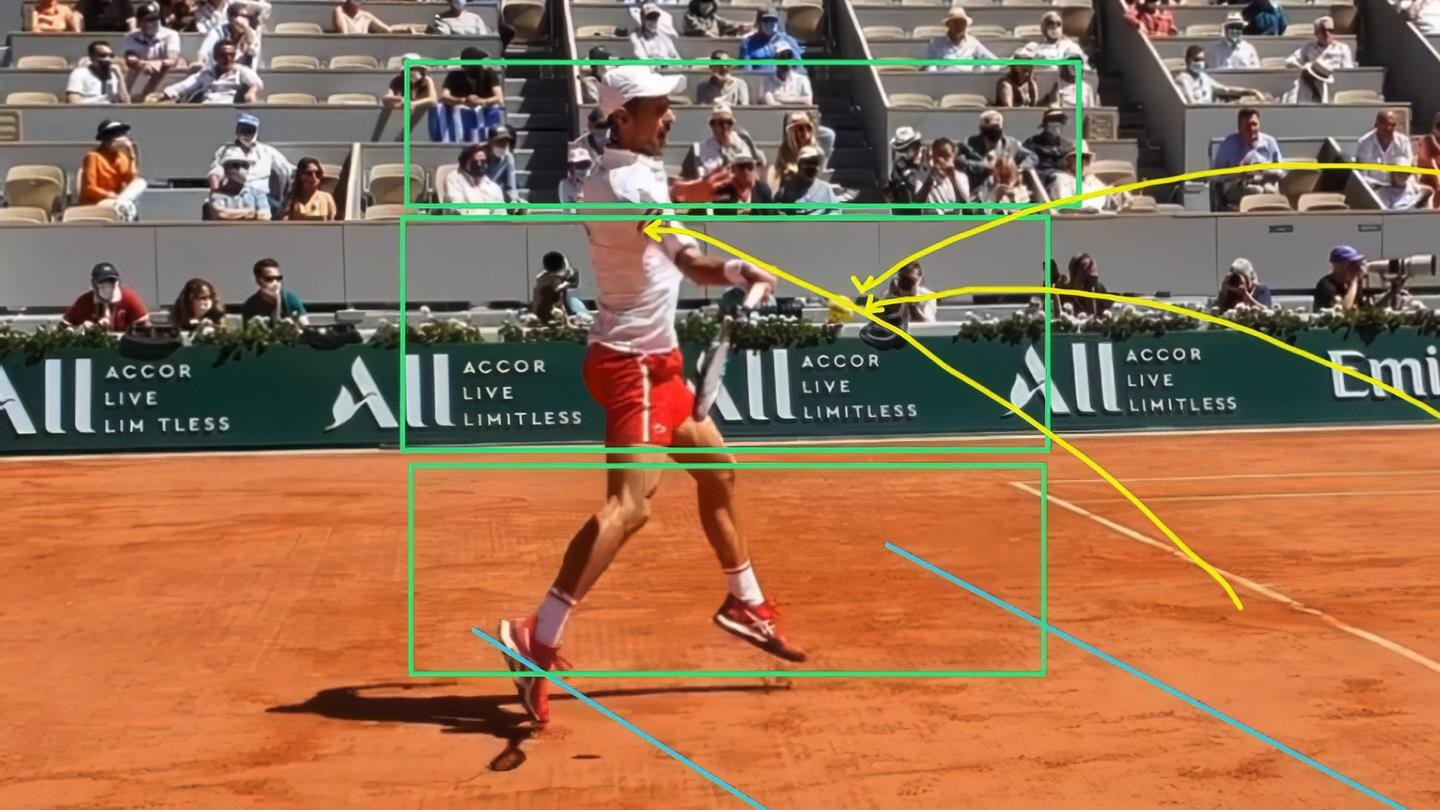
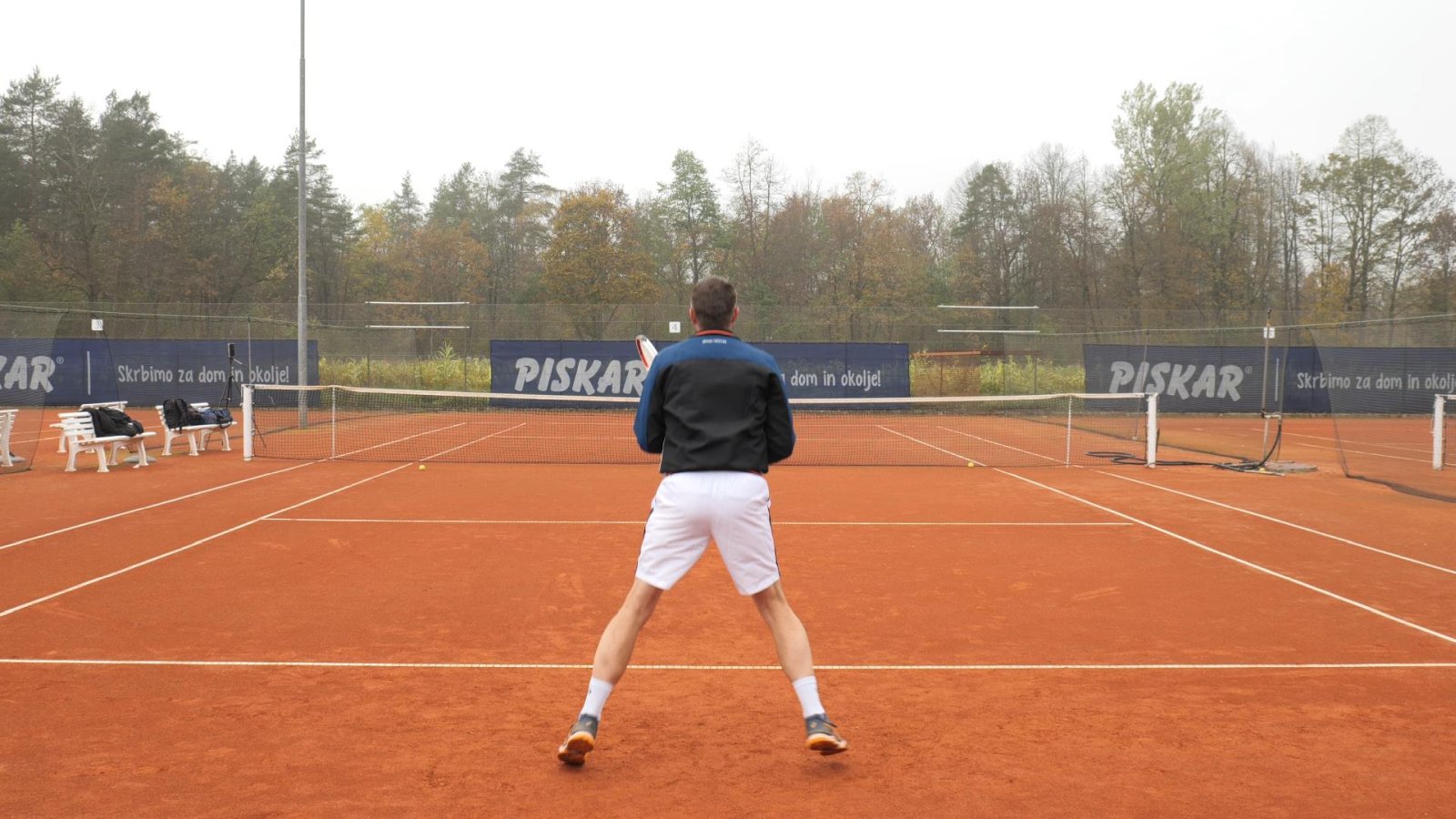
As usual. good illustration and good drills too.
Tomas, This makes so much sense to me. Great instruction. Thank you.
Thanks! Give it a try and let us know what you experience.
You’re comments on how to not get caught late on returning the tennis ball is good. I have tried it and it worked.
I also went back to this video several times to see where your racquet was in the ½ volley and ground strokes drills, and I found out, (and you will too), that your racquet was back and ready almost every time as the tennis ball bounced on your side of the court.
So, I then went on the court and asked myself, “Where is your racquet as the ball bounces on my side of the court?” And you know what, my body automatically started to have my racquet ready and waiting at the right time to now hit a nice simple yet clean tennis ball back over the net!
Check it out and see if it works for you.
Best,
Q
Thanks for sharing, Q. Anything that involves awareness of body or racquet position during the rally helps us get on the right track.
Beginners and intermediate players may not be able to assess their racquet position at the moment of the ball bounce since their mind will be at 100% trying to judge the ball.
But definitely good advice for more advanced players who can judge the ball and still observe their body and racquet position at the same time.
Tomaz, really good instruction, you keep it simple as always and so we can understand.
Thank you!
Daveg
By saying out loud forehand or backhand it alerts our brain to start earlier in calculating the trajectory of the ball.
You say that it is easy to know which position to move to – is that because we are watching the angle that the server’s racquet turns just before it makes contact with the ball (maybe without realizing it)?
Catching the racquet makes a lot of sense on the forehand stroke. We should be aware of where our limbs are at all times, whatever we are doing.
Sitting here now typing I am feeling if my feet are in a comfortable position and if I need to reposition them. Did you ever sit for a long period of time and feel a foot “going to sleep”?
It’s nice to see and read your videos Tomas.
Hi George,
We can read the racquet face somewhat although I would say that opponent’s body position reveals more of his intentions.
Direction is easy to tell – we can see that quickly, not sure how to explain to you what that is.
It’s a split second and we can see whether the ball goes left or right.
Players also react quickly to that by moving to that direction but “forget” about the stroke preparation… They can add it following the ideas above…
I swear, Tomaz is, if not the only one, one of the few coaches/instructors in the world I’ve ever listened to, who looks at tennis from such insightful perspectives.
This video is just magnificent.
Thank you for lighting us all up. There’s hope!
Regards from Spain.
Hey Tomaz,
All your posts are very helpful. Can’t remember if you advised me of this via post or email response, but watching my opponent’s racquet at the moment s/he makes contact with the ball has been a major factor in my much-improved response/preparation time. (Swinging freely has changed my game for the better too 🙂 )
When I first started playing, I had a quasi-pro friend who taught me “racquet back before the ball bounces.” Many moons and years later, that phrase still serves me well.
Thank you for all you share! You’ve changed my game and it’s ever-progressing b/c of my “coach in Slovenia”! 😉
Worked on this today during a hitting session. Definitely noticed an improvement in “available time”. And there were a few nice moments when my shoulder-mounted computer wasn’t overloaded and I could both prepare early and get a clear picture of the ball after the bounce per your other instruction. A little like being in the zone, pretty much having full control over what I wanted to do w/ the ball. I’m confident that w/ more practice I can get both things integrated and functioning at a more unconscious level. Thanks again for instruction that focuses in on what really matters.
And thank you, Greg, for taking the time and sharing your feedback after testing these drills!
To me this is the single best ever tennis tip from Tomaz, because when I started practicing it a lot of other things fell into place as a consequence and my game made a quantum leap forward. Thank you Tomaz.
Thanks, Luca!
Yes, once you find the main cause of problems, many other smaller problems disappear…
Good morning! One of your early video (ball hanging on a string) talked about “facing the incoming ball” and it stuck with me.
To stop hitting the ball sometimes late, and to make sure that I’m ready for the incoming ball, instead of calling out forehand or backhand, I simply point my chest at the incoming ball.
My turn is a result of the incoming ball and the closer the ball gets to me, the more I have to turn my chest towards it.
It’s simple and I now have much more time to hit the full shot. For me it also work on my overheads, volleys and serves.
Thanks
Q
That prepare early video has made my tennis so much better. Thank’s a lot 🙂
Hi Tomaz,I am getting back to this tip because I think perhaps you could do a version for doubles. When I play singles, I know I have to hit every ball by myself so I find easy (after a lot of practice) to start the swing early and all. But when I play doubles, I wait to see if the ball is coming at me or not, and that makes me be almost always late. What should I do?
Hi Luca,
In doubles we always assume that the ball is going to us. Every time your opponent hits the ball react as if it’s going to come to you. If it does, you’re ready, if not, you let your partner handle it.
You’ll probably say that in that case you wasted your energy for nothing. Yes, that’s exactly what we have to do.
We react and prepare for each shot “just in case” it goes towards us but if it doesn’t we wasted energy. That’s how it is, there is no other way…
In the How to Stop hitting the Ball Late video: I understand calling the stroke at split-step if the ball is clearly over to one side or another, but what should one call out (or do) if it’s coming straight at me. i always seem to freeze initially, then don’t get good stroke preparation. Your advice?
Hi Keith,
If you freeze then it’s already late for whatever advice I can give you.
Eventually you’ll learn to react immediately even to the balls flying straight towards you.
In most cases players will move away from the ball flight to play a forehand as it’s much easier to play if you’re moving away than the one-handed backhand. Two-handed backhand does work fine if you move away from the ball.
I suggest you visualize this situation often times when you’re not on the court and see yourself making a move to play a forehand as soon as you see the ball coming straight towards you.
Eventually your mind will store this response to the incoming ball and will trigger the right response in real play while you’re on the court.
This has helped me tremendously. I play alot with lesser players so I think I had a habit of not preparing early since most balls come back slow or short. Then when I play at higher levels I did not even know why the game suddenly became so much harder. After playing poorly a couple weeks ago, I pulled up this instruction and it really hit home and is working like magic! Thanks again, Mark
Glad to hear it helped, Mark. Thanks for taking the time to comment and share your feedback, much appreciated!
All your instructions are very good. However this is the one instruction that has had the biggest impact on my game. This tip in combination with your tip on watching the ball/keep the head still is making miracles for my tennis.
Thanks a ton!
Great, thanks for the feedback!
Hi Tomaz, How To Teach Early Preparation With A Basket Feed – shared on FB but still not able to open it 🙁 please help, btw all your coaching tips are great!