
In part 2 of my discussions with Colin, we’re talking about the importance of learning tennis technique based on the natural biomechanics of the body.
Part 1 was an introduction to tennis technique, and it pointed out that better technique does not automatically put the ball in the court but simply allows us to hit the ball more effortlessly.
We must not forget to have a clear intention of how we want the ball to fly if we want our technique to accomplish our goal.
So, if that part is clear, we can now focus only on understanding how optimal tennis stroke technique needs to be developed and why it’s crucial that it’s based on biomechanics and laws of physics rather than on someone’s opinion.
The Secret Of Consistency: A Repeatable Swing Path
When we look at a human body from the biomechanical perspective, which means we look at it first as a skeleton made of bones and joints, then we can see that it’s very complex.
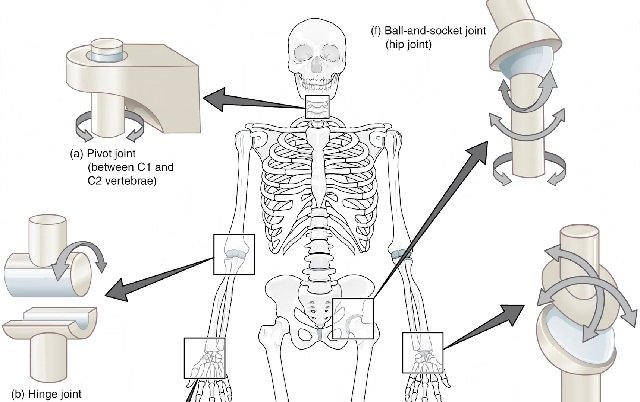
The large number of joints in our body allows us to move the racket through space in infinite different ways.
If we have infinite ways of swinging the racket through space, then we have an infinite number of different ball trajectories.
Then how can we have consistent and reliable shots if each swing is different?
While we always need a small adjustment to the incoming ball, we must have a fundamental swing that is more or less repeatable.
If we have a repeatable swing path, we will have a repeatable ball trajectory, which means we have a consistent and reliable stroke.
Variations of the swing/technique are also needed when you’re not in the right position to hit your basic stroke, but they must be developed after we have established the fundamental swing/technique.
The player must find a natural and effortless swing that gives him a very consistent ball trajectory as that also builds the player’s confidence and allows them to relax even more.
Note how similar & repeatable Urban’s forehands are. That’s why the ball flies more or less in the same trajectory.
How to find these movements based on biomechanics is the topic of part 3 of this series of videos.
What Colin wanted to know first is whether the top pros developed their ideal biomechanical stroke technique and hand–eye coordination simply because they are so naturally gifted.
Do The Top Pros Have Naturally Better Biomechanics and Hand–Eye Coordination?
All the top pros that you watch on TV are extremely naturally talented for the game of tennis (and very likely for most ball-based sports).
They move their bodies very efficiently and are able to hit the ball in the sweet spot of the racket even at very high speeds while maintaining good ball control.
You may think that it’s all because they were born with such gifts and they simply hit a lot of tennis balls and became really good. But, that’s only a very small part of the equation.
All of these skills and abilities had to be developed with specific exercises.
While Roger Federer has amazing hand–eye coordination he still spent years and years improving those skills through various exercises.
His natural talent simply allows him to reach a higher level of hand–eye coordination than someone else with average talent. For Roger to achieve such high levels, he needed to work on the skill just like everyone else.
Roger moves his body effortlessly around the court and executes his strokes with optimal biomechanics, yet he still had to train for years, stimulating his body with specific exercises so that his biomechanics became so good.
The point that I would also like to make here is that all these skills and abilities are developed with drills and not by someone telling you something with words.
Yet, how are you being taught tennis most of the time?
Typically, a coach tells you to do something, but you might be unable to do it. Then they just keep repeating the same thing over and over as if you’re an idiot.
In fact, the problem is that your eyes, hands and body have not been trained with specific exercises to reach the higher level of skills necessary for you to execute a stroke at a higher level.
Words don’t work (most of the time).
The player must not be told what to do but must be made to do a certain movement through a physical exercise. They need to FEEL which muscles they are supposed to engage and at what time and in what sequence.
The job of the coach is to develop such exercises that will stimulate specific body parts in the right way and help the player feel what they are supposed to do.
Through regular repetition of specific exercises, the player then develops a higher awareness of the body and more efficient execution of movements.
The player starts to feel better how hip rotation adds to power, how shoulder rotation adds to power, how the wrist joint can move more freely and when it should firm up. They hold the racket with more feel and so on.
A good analogy to developing higher sensitivity is the way in which blind people have to develop in order to be able to read Braille texts.
Braille is a tactile writing system that allows visually impaired people to read texts by simply skimming their fingers across the raised dots on the paper.
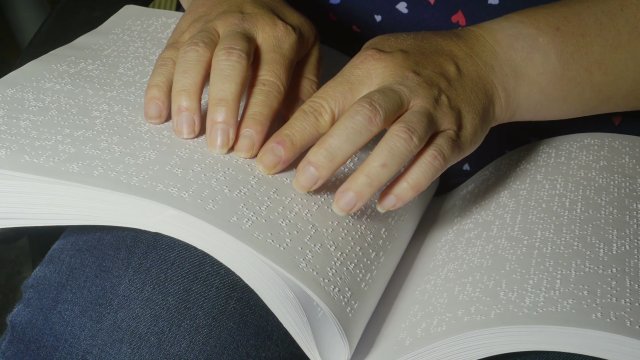
Visually impaired people can read with their fingers because they have such high sensitivity in their finger tips.
While you could feel the dots right now, your fingers are not sensitive enough to detect multiple dots and their location.
You couldn’t tell what you were feeling/reading even if you knew and understood the Braille code.
You would have to practice and improve the sensitivity of your fingertips until you could feel each specific dot and understand what each block or cell of the Braille text wanted to tell you.
Now apply this idea to the whole body.
We need to stimulate the legs of the player with specific exercises so that they become more aware of them and can feel better all the nuances of the movement.
We need to help the player feel more hip and core rotation so that they become more aware of it, can sense it better and can therefore use it better in their strokes.
We need to help the player develop much more sensitivity in their arms and hands so that they can adjust more accurately to different speeds of incoming balls and can more accurately choose how much force they will send into the ball.
Hopefully you can see that this process has to be done with exercises and not by being told in English what you’re supposed to do.
Tennis is a sport and not an intellectual problem that needs to be solved through gathering more information therefore it needs to be taught through physical exercises.
As we put players through various exercises over the months and years of training, they develop much better coordination of their body parts, which results in smoother movements and better racket head control.
They can also control the force output into the ball with much more accuracy,
As Colin put it: They have an extremely refined dial with lots of small intervals when it comes to how much force they put into the ball and how accurately they can control the racket path.
And this is a wonderful example of how various skills needed in the game of tennis are developed in children through exercises. By Tennis Vlandeeren
In part 3 of this conversations with Colin, we’ll discuss in more detail what it means for tennis technique to be based on biomechanics so that you start to look at the strokes of professional tennis players in a different light.
My goal is that you don’t become fixated on their personal styles of strokes but that you start to see the commonalities of their technique (which are all the same based on biomechanics!) and look to incorporate those into your strokes.
I am aware that these in-depth explanations of tennis technique and biomechanics may open up more questions than they answer, so if you have any, just shoot away in the comments below.

Congratulations, Tomaz.
Great article.
Wouldn’t these exercises teach us about physics and maybe math at a basic level? So teaching tennis through words is like teaching basic physics and math through equations?
Yes, Arturo, maybe like teaching math only by looking at theory but not really making lots of calculations to get the “feel for it”.
Tomaz,
I’m also a percussionist. Recently I’ve had a breakthrough where I have gone beyond trying to get exact notes right on a xylophone-type drum and instead let myself be free and guide by what I intend the whole piece to be. Less worried about being right and more free to create.
The same is happening with my tennis. It feels great and the results are showing it. You again hit the nail on the head with your amazing insights. The training is all still there (in music and in tennis). But the understanding of how to use the training kicks into a new level with this creative intention over mechanics.
Thanks for sharing, Chris, that’s a wonderful analogy and comparison!
This is a great series, and is helping me understand how much more physical training I need to do in order to learn technique more effectively. My coaches train me to do different coordination drills (like with a reaction ball), but I realise now that I need to practise a lot more after each coaching session!
Simple and yet so impressive and insightful. As usual with you Tomaz. Thank you and keep on sharing with us.