
If you’ve followed the drop series of tennis tips so far, you now know how to tactically play the drop shot well and which technique allows a good execution of the stroke.
But what should you do if you’re on the receiving end of the drop shot?
In my view, it’s good to consider all the options in advance since once you’re scrambling forward to get to the ball, you won’t be in a position to think clearly about the best response to the drop shot.
Guideline #1: Play the ball deep down the line (the safest option)
While you may see all sorts of spectacular counter drop shots on an ATP tour, you also may note quite a lot of misses as players attempt them.
While they are an option we’ll discuss later in this article, your statistically best option is to play the ball deep down the line and cover the net.
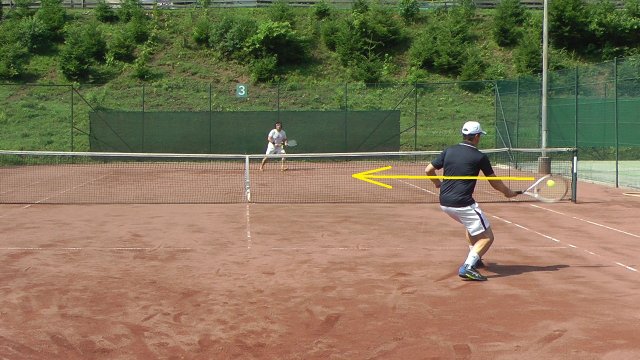
Push the ball deep down the line and cover the net.
That immediately puts you in a good position at the net. Now, it’s up to your opponent to come up with a good passing shot or lob.
You are likely more vulnerable to a lob if the drop shot was really short, as now, you’ve ended up very close to the net.
Keep that in mind, and observe really well what your opponent is up to with his or her next shot so you can read the lob as early as possible.
Quick Tip: Players give away their intention of lobbing early by leaning backwards. If you spot that, begin moving backwards in preparation for the overhead.
Guideline #2: Play the ball cross court (if you think you can finish the point)
You probably know already that you cannot cover the net well if you approach with a cross-court shot, as that leaves too much of the down the line open.
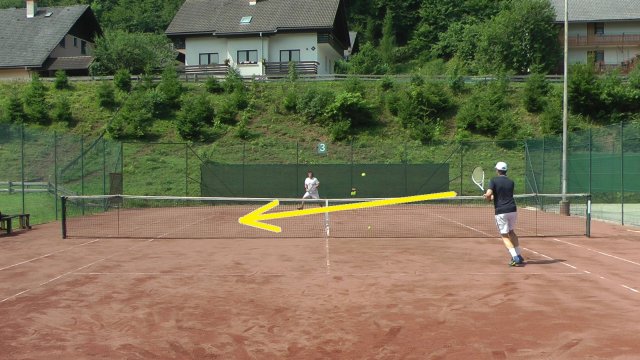
If you don't finish the point with the cross court shot, you'll be likely passed down the line.
If, of course, you believe you can get to the drop shot well and you will finish the point by hitting the ball cross court, of course, go for it.
So a rule of thumb is that if you got to the drop shot early enough that you’re hitting the ball above the height of the net, then play the ball cross court, and finish the point.
And if you’re hitting the ball below the height of the net, then it’s better to just push the ball deep down the line and prepare for at least one more hit at the net, either a volley or an overhead.
Guideline #3: Play a counter drop shot (if you reached the ball comfortably)
Playing a counter drop shot is a good option if you reached the opponent’s drop shot relatively comfortably, meaning you’re not at full stretch or still running.
That’s because you need really fine hands to execute the counter drop shot accurately, and you can do that more likely if you’re not in a difficult position.
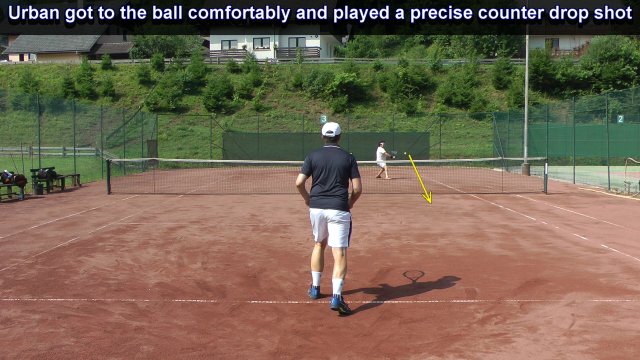
Even though I was inside the court, I still couldn't reach Urban's precise counter drop shot.
If you do choose a counter drop shot, make sure you really watch the ball well, as you’ll have to hit it precisely.
Again, this is a double-edged sword shot, as you will likely immediately lose the point if you don’t execute the counter drop shot well.
Guideline #4: If an opponent moved in, pass them with a quick cross or a low, down-the-line shot
If you’re the one playing the first drop shot, you can also follow it into the net, as you expect a weak reply. If that doesn’t happen, you will likely be passed or simply not have enough time to react.
I suggest moving in after the drop shot only to 4.0+ NTRP players, as you need good enough perception and volley skills to execute the next shot well.
If you’re on the receiving end of the drop shot and your opponent moved in, you have two options:
- If you reach the ball comfortably, play a fast passing shot so your opponent doesn’t have time to react well to the ball.
- If you reach the ball below the net height, then play a low ball down the line, as that will keep you in a good position at the net if an opponent reaches it. Their best response is to lob you with a volley shot, which is very difficult – but do keep that option in mind.
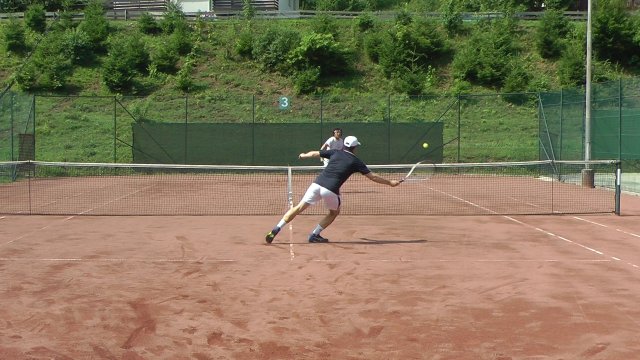
The low down the line passing shot stretches your opponent and keeps you in a good position at the net.
As you’ve probably noted, this video article is a bit shorter, and that’s because there are not so many tactical options to play once you get to the drop shot.
My preferred option at the recreational level was to push the ball deep down the line and cover the net, expecting a likely lob.
You may not see so many down-the-line shots on the ATP tour because top players are extremely accurate with their passing shots. They can also play very sharp angles because of heavy topspin.
So pros are looking to respond to a drop shot in a way where opponent won’t hit a passing shot. Therefore, you may see more counter drop shots.
Recreational tennis players are not so accurate with passing shots. You’ll have a good probability of winning the point after the down-the-line push, assuming you are consistent with your overhead.


Very clear. Very useful, especially if the answer down the line it is slice to obligated to lift up the ball and finish the point with a volley. Best regards.