
Holding the ball correctly for the serve toss is very important since you need to toss the ball very accurately for a good tennis serve.
An accurate ball toss depends also on how you execute the whole tossing motion with the whole arm, but many times the toss problems originate in the way the player holds the ball.
This article will show you exactly how you need to hold the ball, which drills you can use to improve your tossing motion and how to integrate the toss into your whole tennis service motion.
How To Hold The Ball
The ball should rest in the little valley between the fingers and the palm.
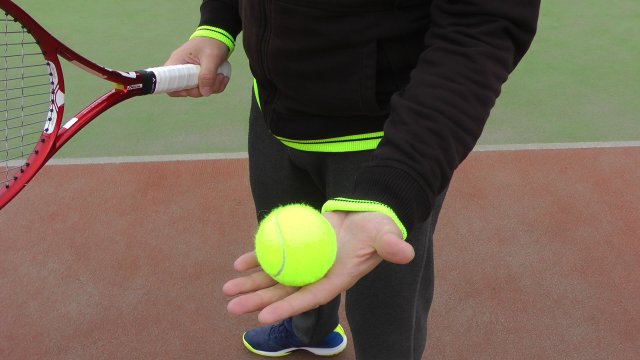
The ball "rests" here without rolling around the hand.
Find that position first in your hand and then gently hold the ball with your thumb.
One of the most common mistakes players make is to hold the ball with the tips of the fingers.
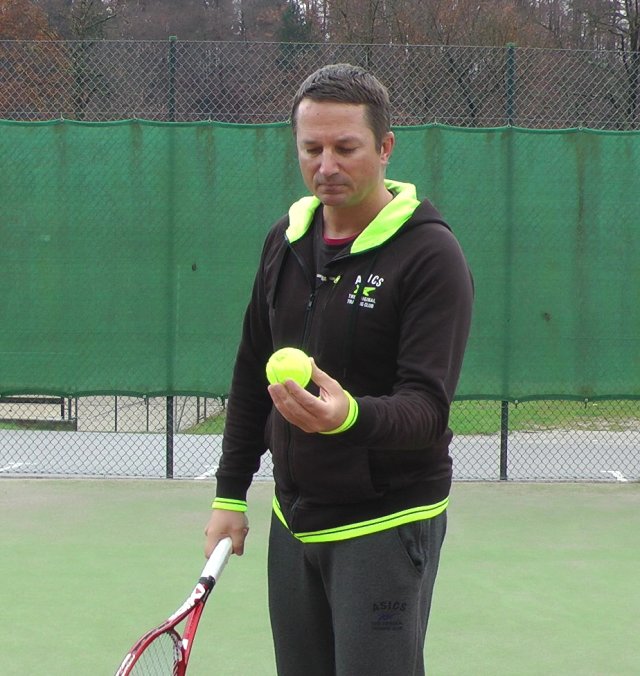
DON'T hold the ball like this for the toss.
When you do that, you will likely make a small movement with your wrist or with your fingers as you are executing the toss. This movement will make the ball fly in a slightly different trajectory every time, making serving very difficult.
The goal is to “calm down” the wrist joint and the fingers so that they don’t disturb the tossing motion.
Therefore, you should place the ball in the middle part of your hand where it rests by itself with almost no need to hold it except to “steady” it with the thumb.
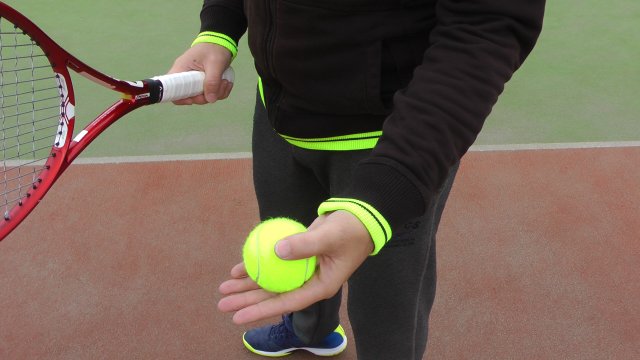
Gently stabilize the ball with the thumb.
Your fingers then extend out, and you can then place the racket on them.
This also helps you coordinate both arms in the whole service motion, which will help you execute the serve better.
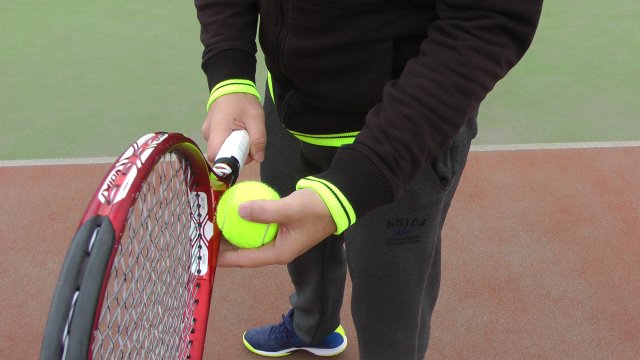
The final stage where you hold the ball and support the racket.
As you start executing the toss, let go of the ball with the thumb and keep extending the arm upwards in a straight line.
The fingers are not doing anything in that stage, and the wrist simply tries to keep the hand pointing upwards to the sky so that the ball is lifted and not thrown.
I explained that process in more detail in the Keep Lifting article.
2 Drills To Steady The Hand
The main reason for an inaccurate toss is slight movement of the hand/wrist as the player is releasing the ball.
Therefore, we coaches look for tennis drills that help quiet the hand.
Drill #1 – Toss The Ball With The Fist
Form a fist and place the ball on top of it. Now toss the ball like that.
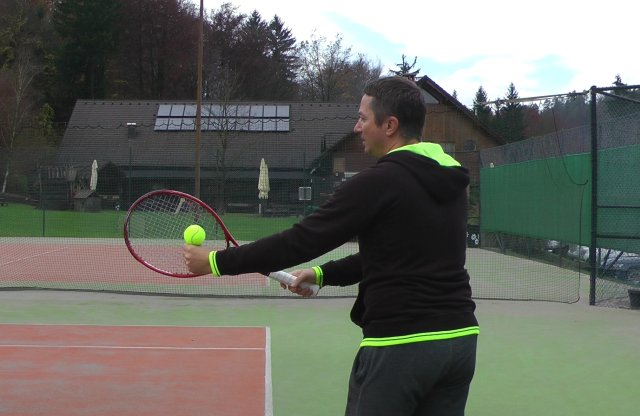
Don't worry about poor accuracy of the toss, this drill just stimulates the right muscles.
As with most drills, this one is based on exaggerating a certain principle. When you form a fist, you prevent the hand from flicking the ball backwards, which often happens.
You should also realize that, without any movement from the hand, you have to use the shoulder muscle, which is the right muscle for the serve toss.
So, through this drill, we try to calm down the hand and stimulate the right muscles for the toss.
Drill #2 – Toss While Holding Two Balls
This is a very simple drill, but it can be quite effective.
Your goal is toss the “front” ball while holding two balls.
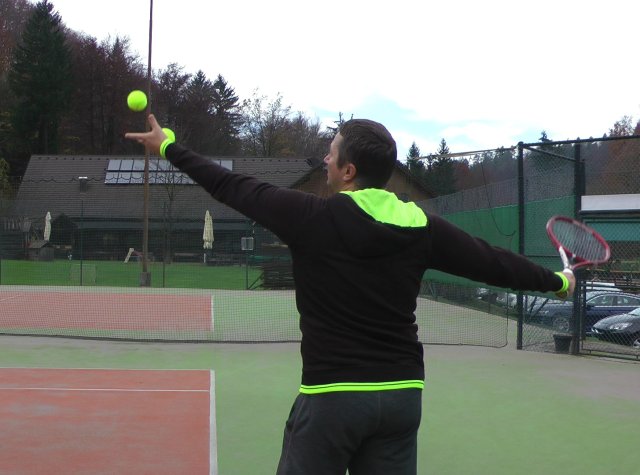
Do you know Steffi Graf actually served first serves like this in matches?
This again helps you calm down the hand so that it doesn’t make any sudden and erratic movements while tossing.
Toss like that for a minute or two. Then attempt a regular toss with one ball and see if you can keep a steady hand throughout the toss.
Integrating The Toss Into The Service Motion
Since we’re on the topic of the tennis serve toss, I’d like to share with you one more idea relevant to the toss.
And that’s the idea of integrating the toss into the service motion.
When the toss is not integrated, it’s isolated. An isolated toss means that you first attempt to toss the ball accurately and only then begin the wind up/backswing of the serve.
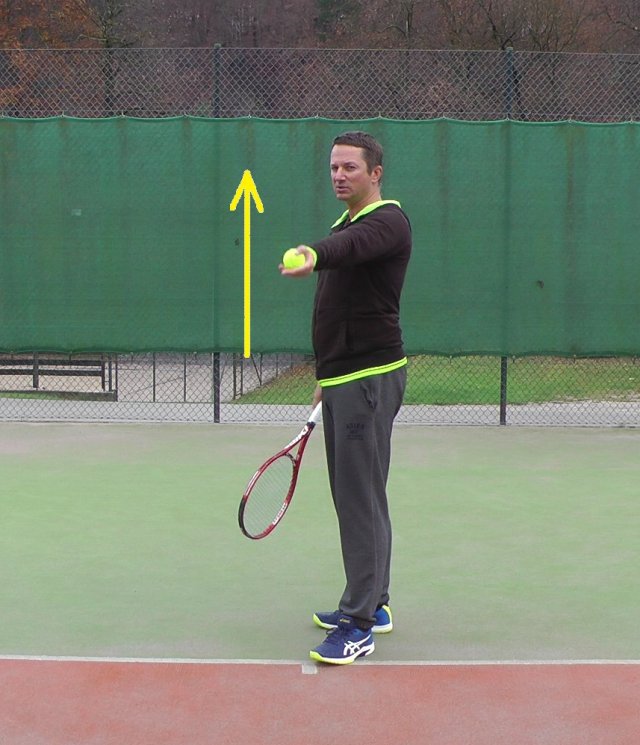
Toss first and serve next? I don't recommend this approach.
You feel that you can toss more accurately if you don’t move any other body parts except the tossing arm.
The problem with this approach is that the movement is not natural and is therefore stiff. It actually causes more problems than it solves.
Natural body movements are always coordinated, in sync and smooth.
It is only through a smooth tossing motion that you can achieve very good accuracy of your tosses and, therefore, of your serves.
The Foundation Of The Toss Happens Naturally
Put the racket away and take a tennis ball.
Pretend you’re going to throw it at an upwards angle of around 45 degrees.
Just coil and prepare for a throw.
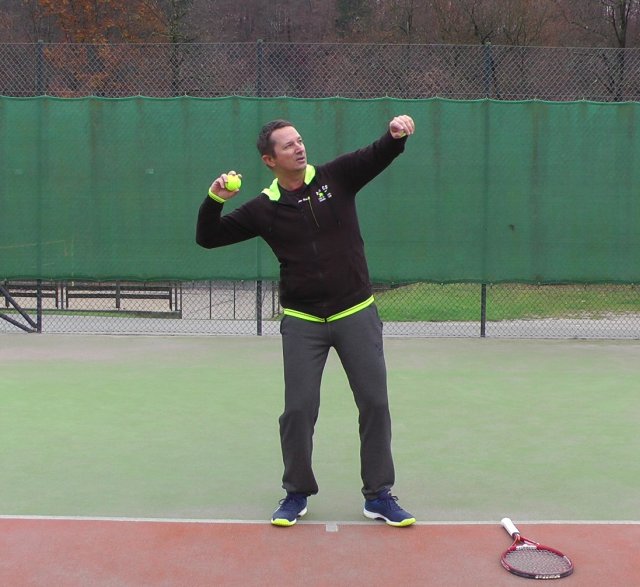
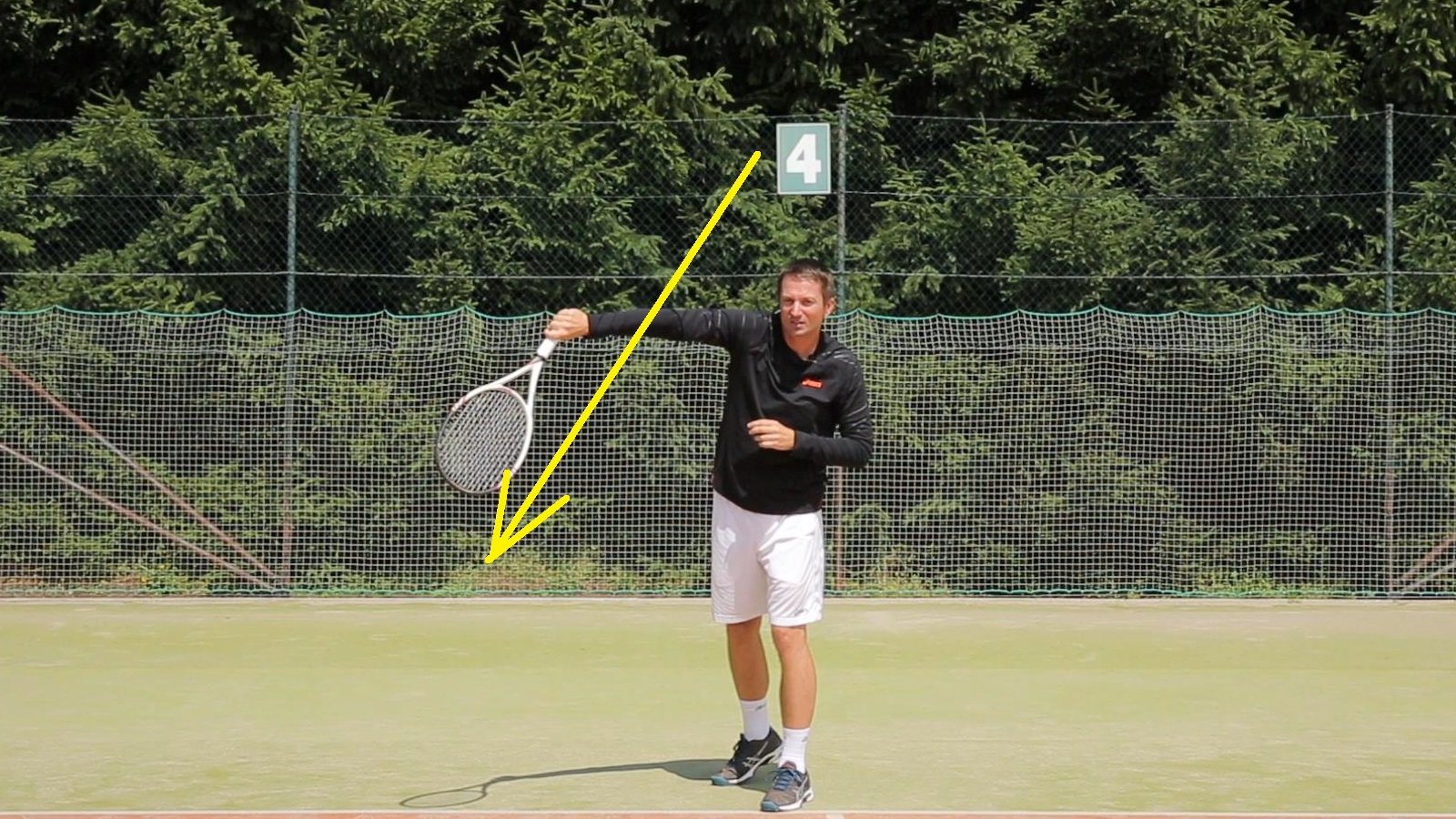
If you can throw well, you should end up in this position.
What happened with your non-dominant arm? Did it do up?
If it did, you have a good throwing motion and you should use that natural and unconscious lift of the non-dominant arm as the foundation of your toss.
If your non-dominant arm did not go up and just stayed hanging down, then you don’t have a good throwing motion and you need to work on it before you can expect to make good serves in tennis.
Now take the racket and again pretend you want to throw it up towards the sky at around a 45-degree angle.
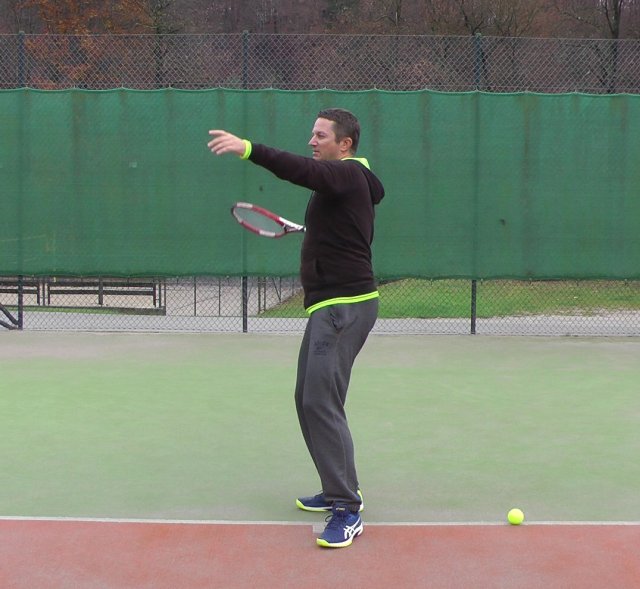
Just pretend you will throw the racket upwards. Does the left arm come up?
Note how the non-dominant arm automatically comes up.
Try to feel with which body parts and muscles you create that upward move of the arm.
Now hold a tennis ball and just release it as the arm comes up during the simulated upward racket throw.
You can see that the ball flies upwards. It’s not yet accurate, but the point of these progressions is that you realize and feel where the toss comes from.
It’s not an isolated move but part of the whole service “wind up.”
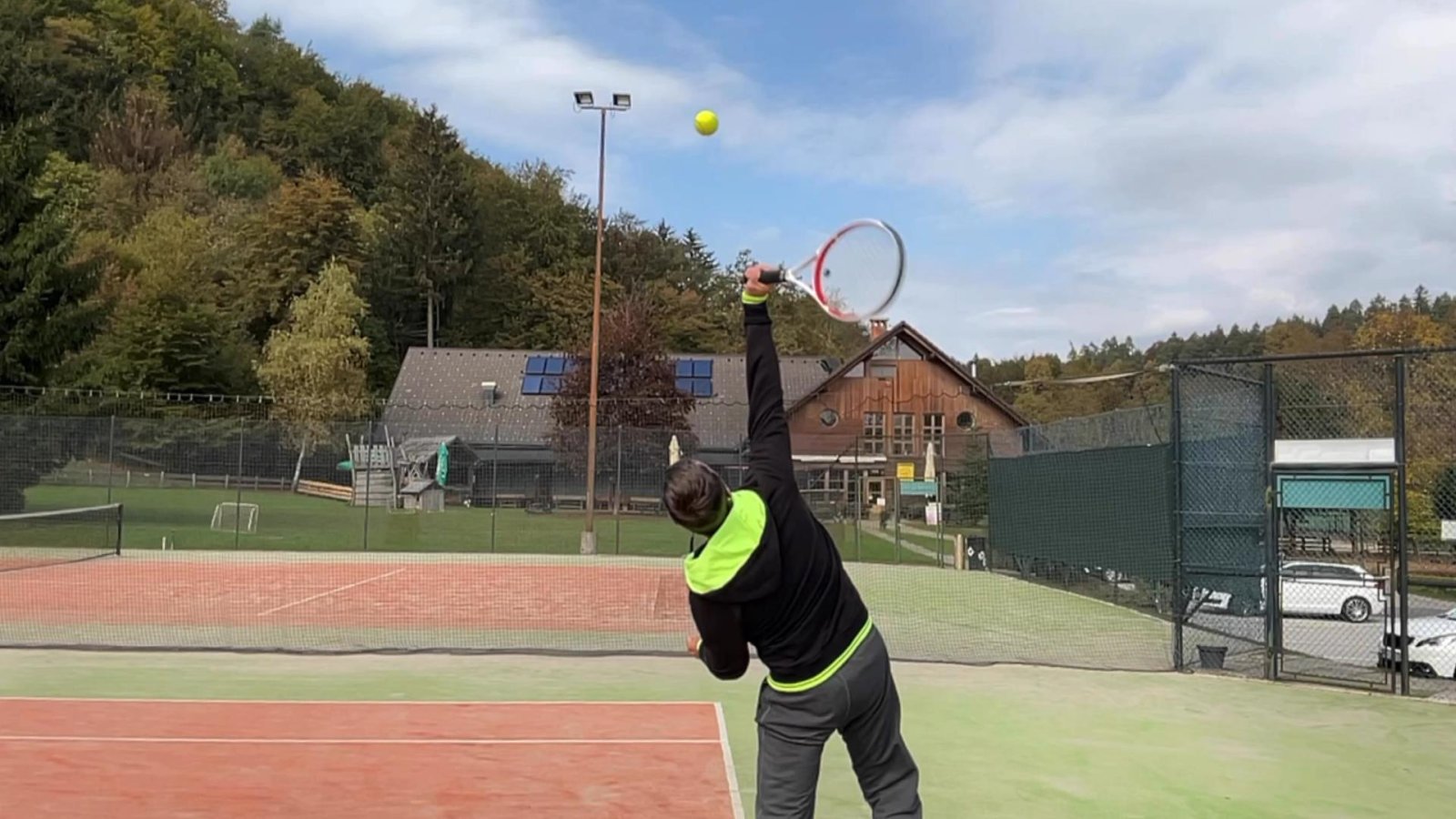
Now use that whole preparation movement to initiate the toss but start refining it with a more vertical arm movement and more clear intention of where you want to place the ball in an imaginary box above you.
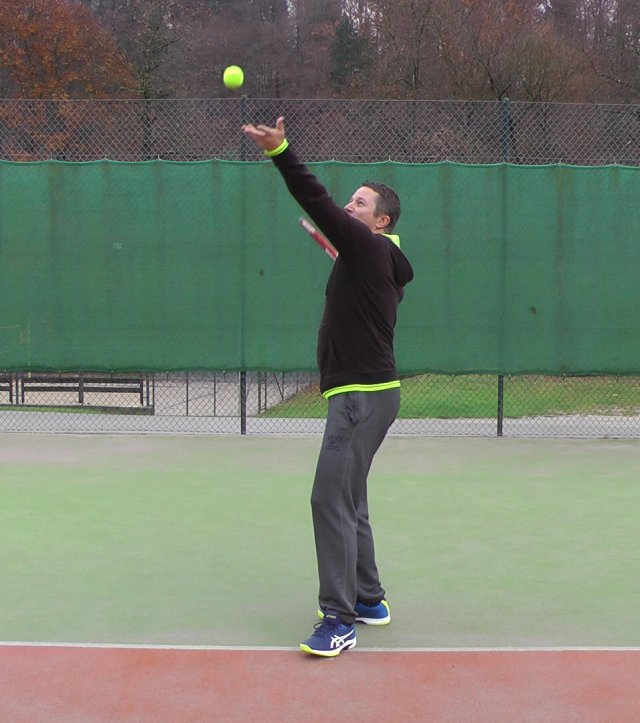
The final "integrated" toss
So, hopefully this demonstrates how you can learn over time to integrate the toss into your service motion instead of using an isolated tossing motion of the arm.
With some practice over time, you will see that the toss just happens and you don’t have to think about it.
The initial toss movement happens through the whole body movement (coiling and tilting), and then you progress to the lifting idea where you place the ball more accurately with a vertical arm movement.
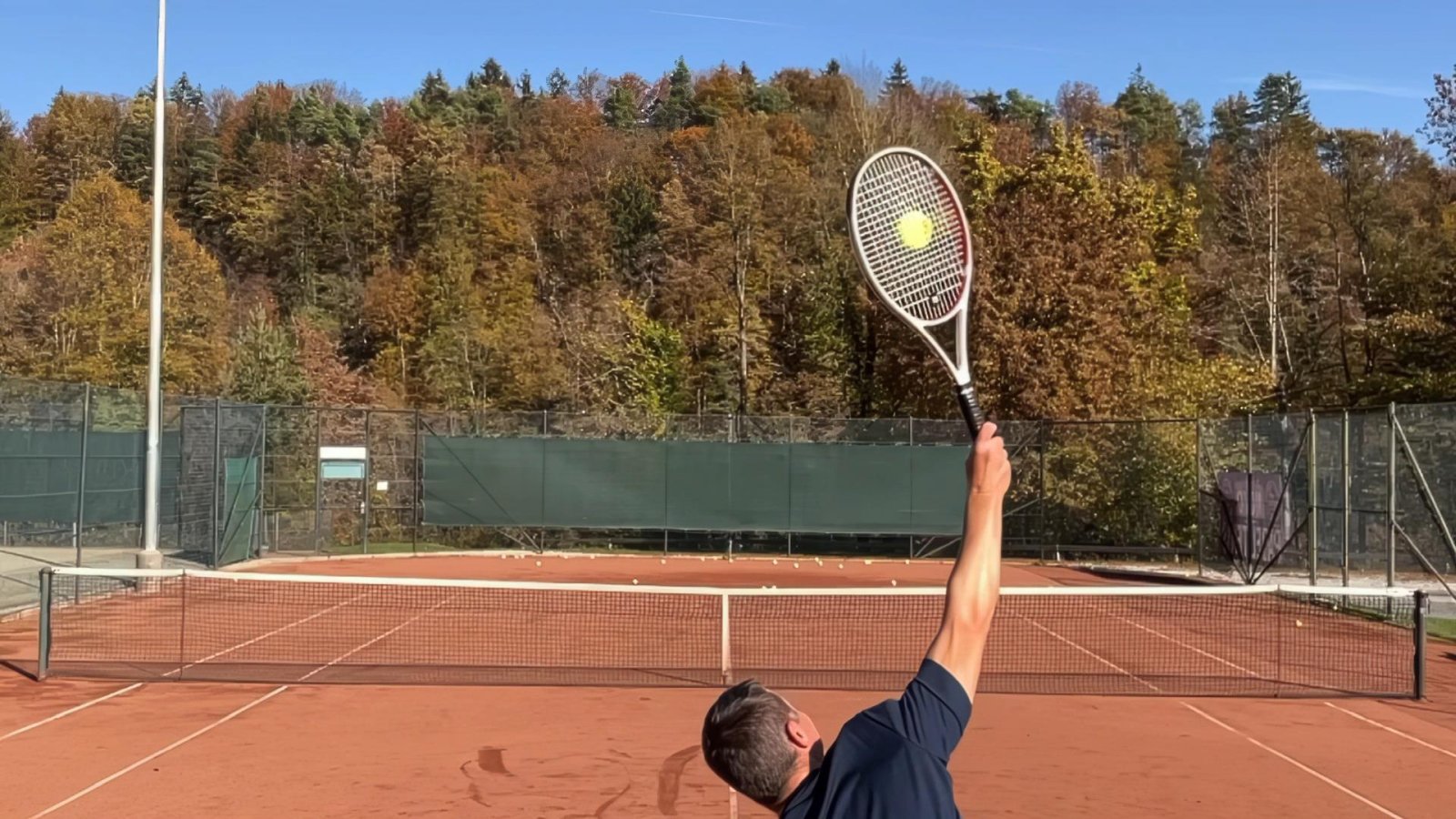
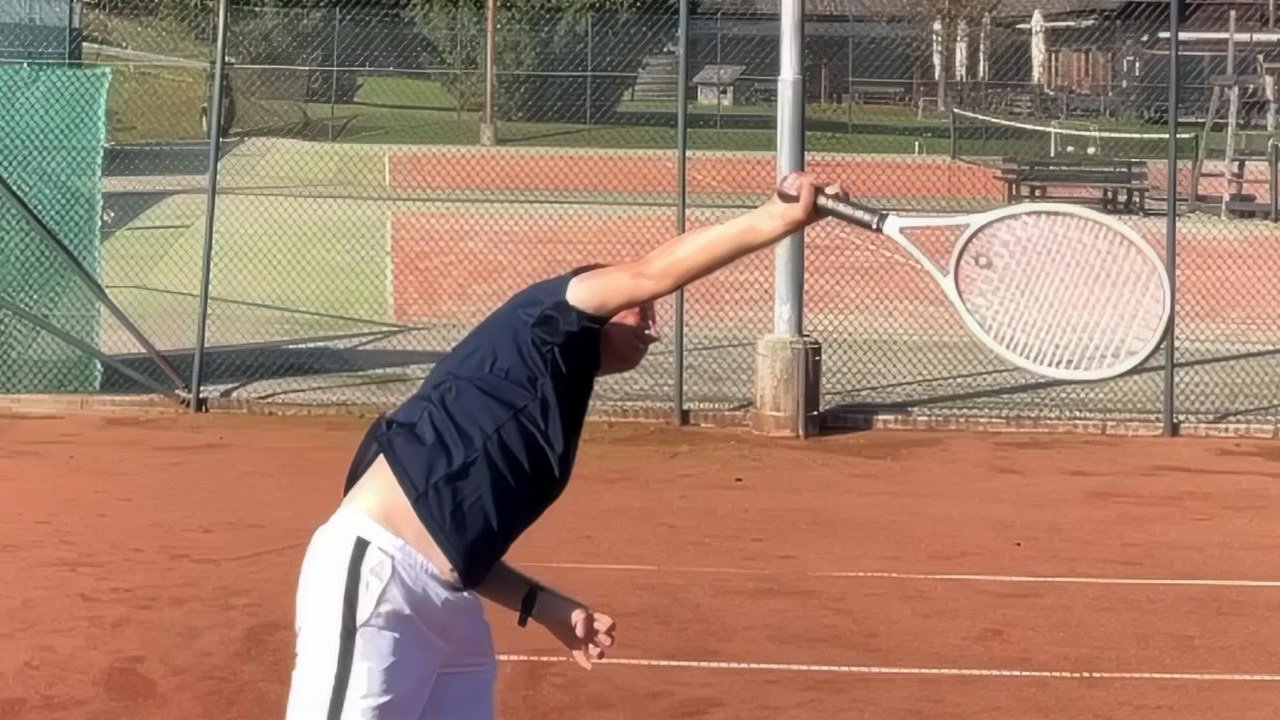
Thank you Tomaz, no one is accurate as you are!!!
Hi, its really helpful, especially as this is a point where I’m struggling (often throwing the ball to the left). What I’m missing here is an instruction on how should I decide how should I point my mind into throwing at specific location above me. It’s just I have no idea exactly where should I aim… And that I think should be a first step, because if you have a target, you can after toss decide if you managed to hit that target or not, otherwise the technique can be perfect, but it doesnt matter if you don’t aim or aim at completly wrong place.
Tomas, any suggestions regarding that?
Hi Michal,
All toss placements for different serves are shown here:
https://www.staging.feeltennis.net/tennis-serve-toss/
I think he was asking that as a toss method, should he be thinking about the toss location and have the body react to that target, or should the thoughts be about doing the proper motion and the correct location will just be a result.
When your toss technique is poor, you need to focus for a while only on correcting the technique.
The way you will know the technique is corrected is when toss placement becomes consistent. That doesn’t mean it is in the right place yet, it just means it’s not all over the place.
Once you have a consistent toss with correct technique then you focus only on where in space above you you would like the ball to be.
Hi Thomas ,
Please, how to do a good toss for playing a ACE?
Thank you so much.
Marino
Tomaz, Thank you for this lesson. It is perfectly explained with the closeup photos. I will try it. I have been following your lessons for many years, from the beginning. Larry in Israel
Thomas you are amazing! This way to hold the ball (the place on the palm and the light thumb) was a game changer. You have the best instructional video for tennis of anyone. Thank you again.
Great to have helped!
Thanks Tomaz for this accurate instructions.