
There’s a difference between a player using a theoretically correct tennis grip and the player actually feeling why that grip is the right one.
It’s not about how to hold a tennis racket correctly for the forehand, for example. Instead, it’s about feeling the angle of the racket face in your hand and picturing it clearly in your mind as you play tennis.
When the player does not feel the grip, they don’t know exactly how the racket is angled in space as they are hitting the ball.
If the player is not aware how the racket is angled, then they cannot control the ball well.
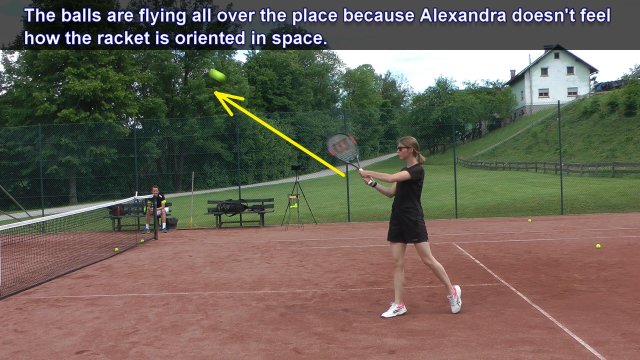
Tennis beginners especially struggle with feeling the right grip as they don’t have enough repetition yet to feel the grip. In most cases, they also haven’t done any specific drills to feel the grip better.
I often observe poor feeling of the grip in my lessons even at the intermediate tennis level, and that’s why I wanted to share a few fresh ideas on tennis grips that will hopefully allow you to better control the ball.
Rule #1 On How To Hold A Tennis Racket Correctly
The first rule is that there must be no space between your hand and fingers and the racket handle.
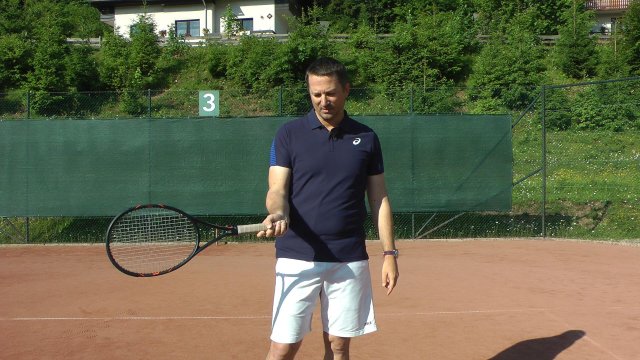
There is not a millimetre of space between my hand and the handle.
This applies not just to holding the racket while in the ready position or at contact but during all stages of the stroke.
Tennis players often loosen up the grip firmness in their backswings of all strokes: forehands, backhands, volleys and especially serves.
Since the player may be trying to loosen up the wrist in order to create wrist lag, they unknowingly loosen up the grip too much.
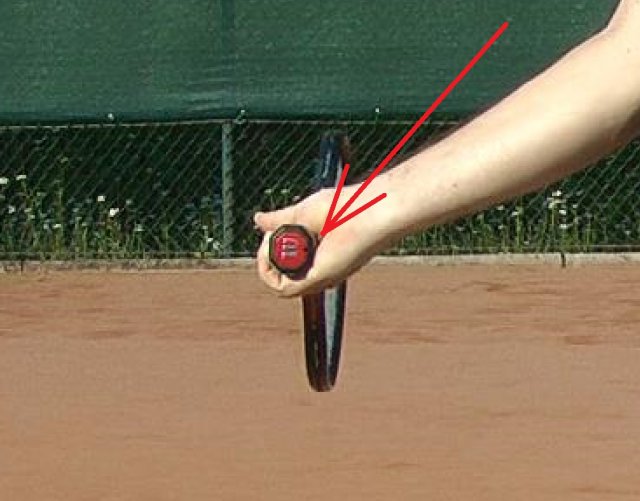
Never loosen up the grip so much that it starts to move inside your hand.
In turn, the racket loses stability from the hand and flails with some loss of control through the air.
The player may actually feel that allowing the racket to swing freely through space is a good thing since it feels like a pendulum (or an actual flail) and that gives them more free power.
That’s true, but in a game of tennis we also need control. Letting the racket fly around too much will cause a loss of control.
Even though the player may tighten the grip before contact, they will still have problems controlling the ball because they have, for a short moment, LOST the sensation of the handle alignment in their hand. As a result, they lost the information of how the racket is oriented in space.
So, as they are contacting the ball, they do not feel the racket orientation clearly in space and they cannot clearly visualize it.
In such a precise sport as tennis, that severely limits your level of play.
The Theory Behind Correct Tennis Grips
Tennis coaches typically explain how to hold the racket correctly for a certain stroke by describing where the V (that forms between the thumb and the index finger) should be placed on the handle.
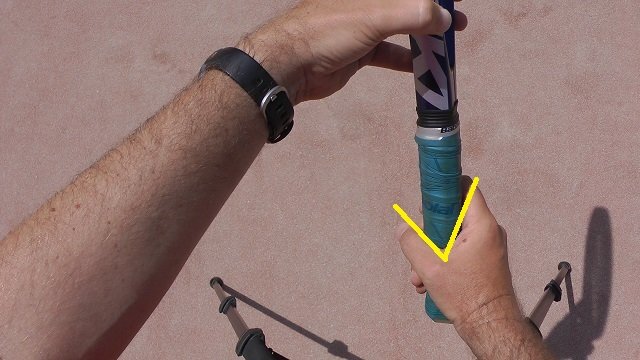
The "V" between the thumb and the index finger.
As you know, a racket handle has 8 bevels with edges between them, and we can specify on which bevel to place the V.
Another way of describing the grips is to explain on which bevel to place the index base knuckle.
That’s all fine, but when you see a beginner player hold a tennis racket with the instruction provided, you can see that it means nothing to them.
They don’t FEEL WHY they should be holding the racket like that. They still see their shots fly all over the place despite following all the instructions.
An experienced coach knows that the player doesn’t feel the grip yet and relies on lots of repetition for the player to develop that feel.
But, I believe a tennis coach should always strive to improve their methods, speed up the learning process and shorten the time of frustration that tennis players experience while learning.
It also helps to really understand what a tennis player (beginner or intermediate) is going through when they don’t feel the grip and what are the reasons for that.
What It Means To Feel The Grip
When a skilled tennis player switches the grip from forehand to backhand and vice versa, they don’t have to look at bevels to tell that they have the right grip.
They simply feel it.
There are, of course, levels of sensitivity and awareness of the grip that players might have, depending on their skill level.
For the forehand and two-handed backhand (for the non-dominant hand), the principle of feeling the grip is the same, so we can use the same exercise to improve it and speed up the learning process.
The one-handed backhand grip is different, and there is no similar exercise so I will make a separate video article on that topic to give you some interesting insights into the one-handed backhand grip.
Feeling the grip on the forehand means that you feel the back bevel aligned with your palm. It also means that you know exactly at what angle the racket is in space.
That’s because we have very good awareness of our hands.
Our hands are constantly in use in our daily lives, and we are able to move the hands and fingers very precisely, which means we have very good awareness of their position and angles.
If you hold the racket where the palm of the hand in is the same plane as the racket head, then you will feel that the racket is just an extension and enlargement of your hand and that makes hitting a forehand very logical.
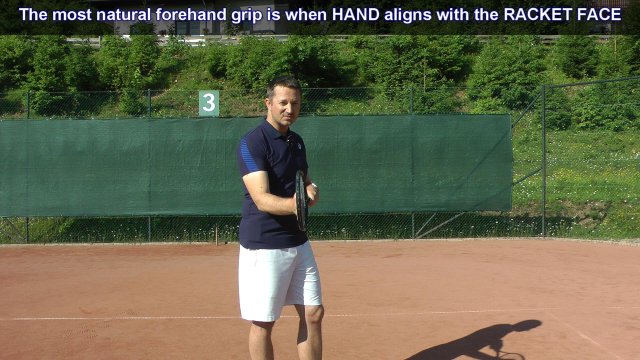
But as soon as the palm and the racket face are not aligned – and that’s with both Western and Continental forehand grips – then the player needs to develop some kind of “calculation” in their mind in order to know how the racket is oriented in space.
This can be developed, of course, but it takes a massive amount of repetition.
In my experience, players often struggle with these grips, which means they struggle to control the ball and don’t hit the ball cleanly often.
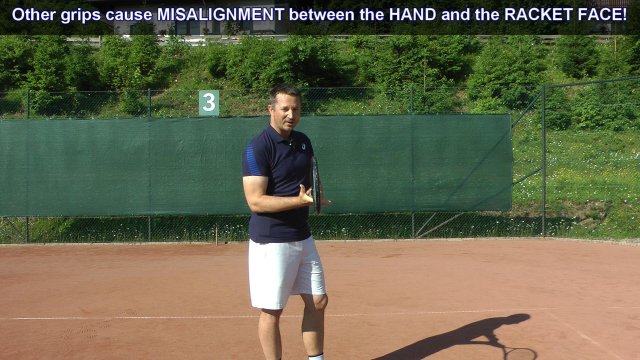
This struggle continues even after years of playing exactly because the hand and the racket face are not aligned and the brain has trouble calculating the right angle of the racket on each stroke hit.
This same problem happens on the two-handed backhand where the player needs to feel the “back bevel” with the non-dominant hand behind the handle.
There is a bit more variation on how to place that hand as the player may feel more the palm on the bevel or a bit more the fingers.
I see a lot of problems with feeling the grip on the two-handed backhand because the player has two hands on the handle.
As a result, they receive so many sensations from the hands that they get lost in them and fail to feel the key “back bevel,” which needs to be pushed steadily through contact.
This brings us to the key reason why players don’t feel the grip…
Feeling The Handle As Round
I believe the main reason why players don’t feel the grip well is because they feel the handle as round.
They feel like they have a round stick (or a bat) in their hand, and they obviously struggle to feel and visualize the flat racket face and its angle in space.
Therefore, the player never really feels secure and confident in their strokes; instead, they feel a bit “lost.”
If they slow the shots down a lot, then they can play with some degree of consistency. At higher speeds, they lose control of the ball simply because the variation of racket angle at contact is too great.
While the racket handles have bevels and edges, the player may not really feel their purpose.
The main reason for bevels and edges is not to theoretically tell you where to place the “V” but to help you feel the “back bevel” – that applies to forehands and one- and two-handed backhands.
Slices, volleys and serves are hit with a Continental grip. In each of those cases, we approach the ball differently with a different mental image.
Slices and volleys are approached with a “cutting” mental image, and the flat serve aligns the strings to the ball through pronation.
That’s why it takes so long to master the pronation because holding the racket with a continental grip is NOT logical and takes lots of repetition to develop that new feel of how the racket aligns to the ball properly.
The handles of tennis rackets are very similar, but there is one key difference: some are more rounded whereas others are more elliptical.
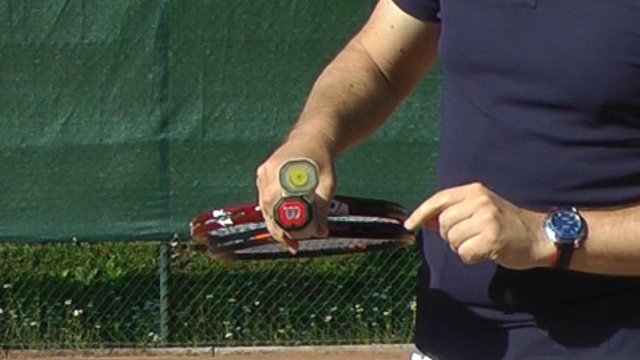
The difference in the shape of the handle between Wilson and Volkl rackets.
More round handles will make it even more difficult for players to feel the back bevel. That’s why some brands make more elliptical handles with a bigger surface of the back bevel.
This change makes it easier to feel and easier to find when we switch grips during play.
How To Feel The Grip And Racket Angle In Space
The following drills apply to the forehand and the two-handed backhand. There is no similar drill for the one-handed backhand. The closest one is to choke up on the grip and put your thumb through the throat of the racket.
For forehands and the feel in the non-dominant hand of the two-handed backhand, you can use the following progressions:
Drill #1: Hand On The Strings
Place your dominant hand behind the strings and hold the handle with your other hand.
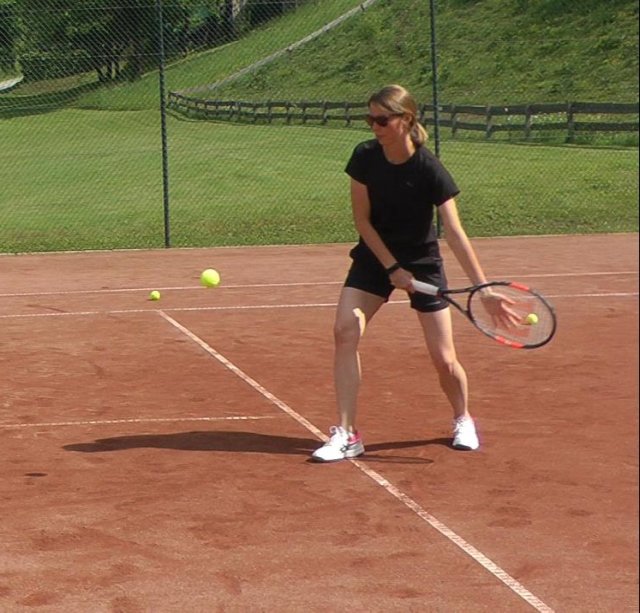
Alexandra is working on the two-handed backhand but the same drill can be used for the forehand.
Play first at short distance and either have someone throw you the ball or even rally gently on mini tennis.
You should just push the racket face with your hand at the ball and through. That will start creating a clear mental image and develop feel for the idea of hitting with a “big hand.”
Drill #2: Hand On The Throat
Slide your hand down to the throat of the racket, but don’t close your fingers fully. You still want to feel that your hand is aligned with the racket face.
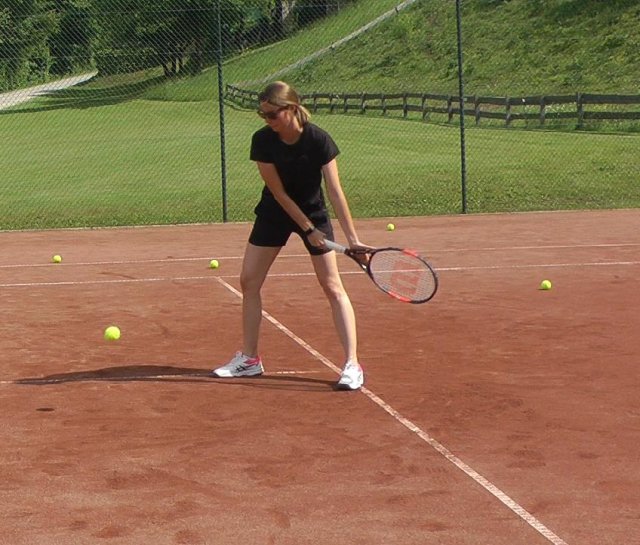
The player should still feel that the hand is aligned with the racket face.
Play for a while with that grip.
Drill #3: Hand On The Handle
Slide your hand down to the handle. If playing a forehand, play just with one hand. Try not to close your fingers fully.
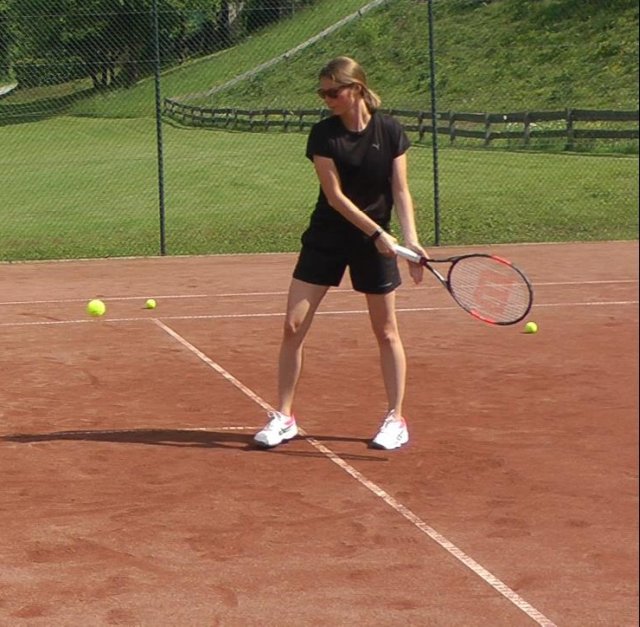
If you are playing a two-handed backhand, keep your dominant hand on the racket. Also try not to fully close your fingers.
I do these progressions almost always when players struggle with a two-handed backhand. They simply get too many sensations from both hands in their brain.
As a result, they can’t really feel what’s the one “feel” they need to focus on – which is the non-dominant hand feeling the back bevel and therefore the alignment of the racket face in space.
Summary
The question of how you should hold a tennis racket is not answered by theory but by feel.
Sometimes your grip can be just a bit “off” compared to how a skilled tennis player holds the racket, and that’s enough to constantly cause you problems as you never really feel secure hitting the ball.
On the forehand stroke, you should have a feeling of hitting with a “big hand.”
You should feel and imagine that at contact (for a normal baseline rally) your hand and racket are perpendicular to the ball and that you are pushing the racket steadily through the contact zone without changing its angle.
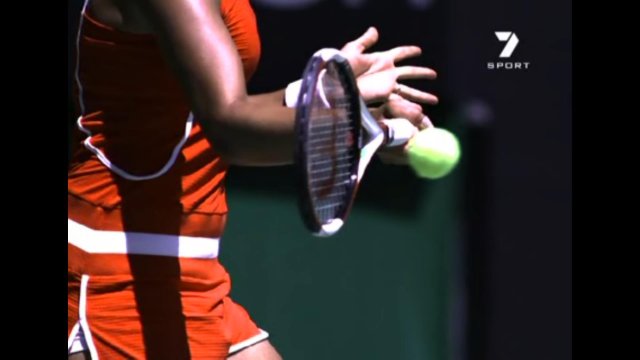
Visualize a racket perpendicular to the ground moving steadily through the ball.
This action takes a split second, but in our mind the mental image can last longer.
Even when hitting a topspin, the racket is not really angled much except in extreme situations like very close to the net or on high balls.
A similar feeling should be on the non-dominant hand of the two-handed backhand.
Players typically grip the racket too tight with both hands and completely lose the sensation of racket alignment in space. They just have a vague idea that allows them to play at low speeds, but that’s about it.
The player needs to feel the “back bevel,” feel that it’s pushing steadily through the contact zone, and then they’ll gain consistency on the two-handed backhand.
Obviously all these drills are exaggerations as they are performed slowly and isolate a certain part of the whole tennis stroke.
Once the player feels and understands how to place their hand on the handle and they are consistent at shorter distances and lower speeds, we can then give them some exercises to develop a more dynamic wrist lag as that will add more comfort and power to the stroke.
Sometimes this can be easily achieved by just asking the player to relax their wrist(s) during the backswing without any other specific explanations that could make the player think too much.
On a final note, as you can see, it’s possible to write quite a few pages of information just on one little detail of a tennis grip.
While this detail may seem small, my experience has shown that it makes a big difference in how players are able to control the ball.
Stay tuned for another interesting video article when we discuss the one-handed backhand grip.
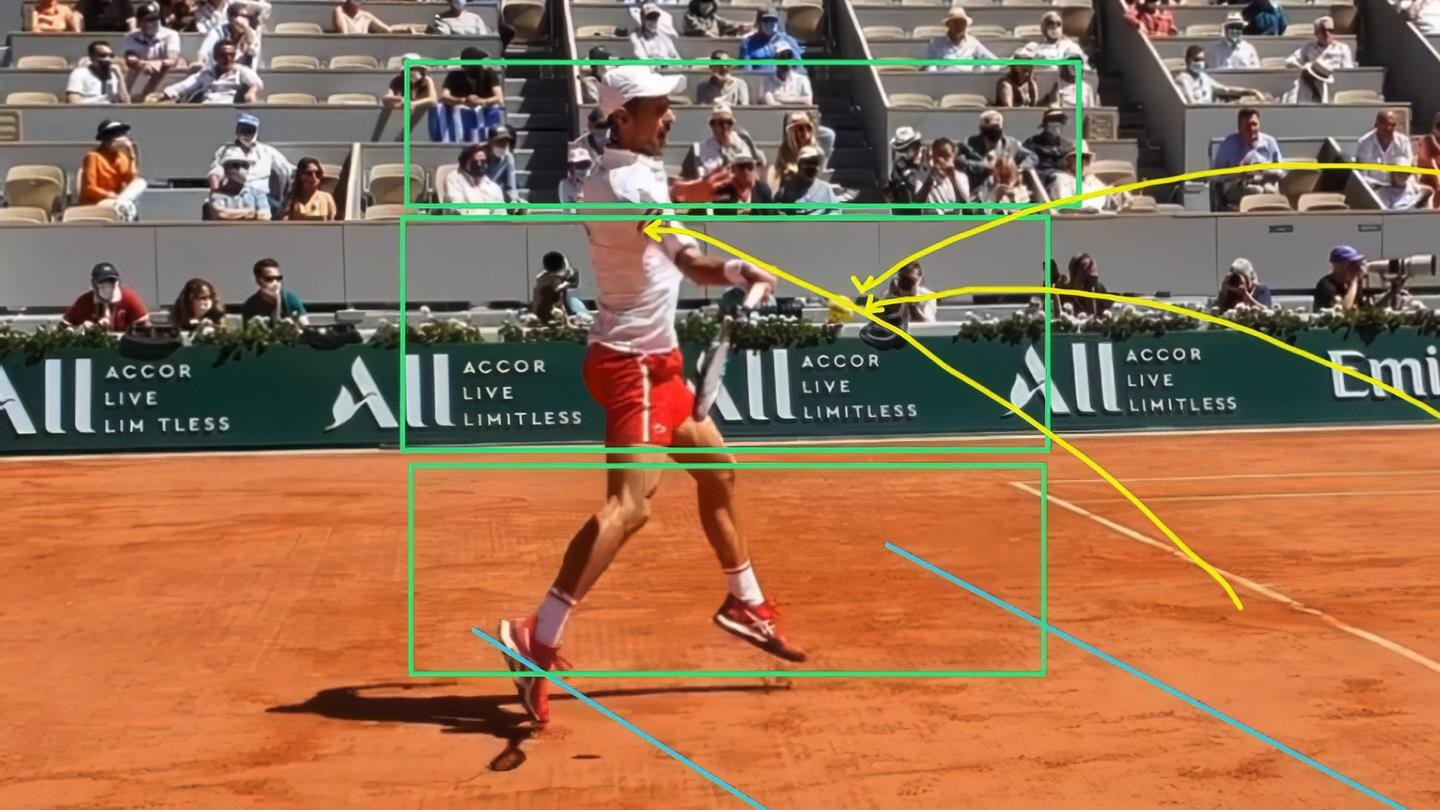
I think you are perfectly correct about the Eastern forehand grip and its alignment of the racquet face with the palm of the hand. However, once we have some experience playing tennis, I believe we develop a sense of the racquet face’s orientation independently of that of the hand in the Eastern grip. Opening or closing the racquet face creates certain unique sensations in the hand which alert us to its orientation regardless of the grip used. This allows, for example, the “modern forehand” or “ATP forehand” which uses a stronger grip, commonly a semi-Western grip, an elevated dominant elbow on the backswing and a “pat the dog” closed racquet face at the very beginning of the forward swing. Sensations in the hand allow the player to open the racquet face to the proper orientation by the time the ball is hit–and, with a strong topspin stroke, that racquet face may be slightly closed at contact (to offset the vertical trajectory of the stroke).
Thanks for your expert explanations, George.
The semi-western grip still falls under the “hand aligned with the racket face” scenario, the offset is minimal.
Great insights on grip feel. Very detail explanation and intuitive to understand. Thank you Coach Tomaz
This is exactly what Oscar Wegner does for beginners, except he tells them to use the hand first to hit the ball, learning how to use the arm, wrist, and the rest of the body to create spin and power. If you can do it with just the hand, you can do it with the racquet.
Yes, and every coach who works with beginners for long time, has never heard of Oscar Wegner, but uses their own brain, will also come to the same conclusion and exercises.
What a good lesson, you are the best!
Does the “no space between the handle and hand” rule apple to serves with the continental grip also? Could too loose of a grip with a space lead to inconsistent serves?
Yes, this problem happens especially on the serves.
And yes, this will lead to inconsistent serves.
In your opinion what brand of racquets is easiest to feel the proper grip on?
Head and Volkl
very enlightening.
thank you
Thank you, much to think about and work on!
Very good explanation.
Question please: in your statement “The player needs to feel the “back bevel””, how do I achieve this with my SW grip? Which zone in my palm to focus on upon contact?
Thanks in advance
Well, it’s not so much in which zone but whether you are actually aware that there is a big flat surface pressed against your hand.
Your goal is to pay attention to the sensations in the hand and try to realize that it’s pressed against a flat surface rather than having a sensation that the handle is round.
My friend thanks a lot for the great information. You really walk the extra mile!
When you say back bevel, are you referring to bevel number 3?
Yes.
One thing you don’t mention but that works for me is to put two fingers from my off hand on my strings (at the bottom of the racquet face) in my ready position and take back on both wings (one handed back hand). That give me perfect feedback as to where the strings are and aligns the stroke and backswing effortlessly.
Some pros do this (maybe Thiem and someone else before him–Guga?) and it keeps you always aware of the racquet face. Super important.
Yes, Stephan, some pros to touch the strings with fingers but most do not.
It’s important that player holds the racket high up on the throat / heart of the racket as that helps awareness of racket orientation is space compared to holding very close to the handle where one cannot really feel how racket is oriented in space.