
The following one-handed backhand tips focus on overcoming five different situations in tennis: playing with more precision, controlling fast incoming balls, hitting attacking shots with more control, hitting higher arc shots with more topspin and hitting short cross-court shots effortlessly.
Keep in mind that before you work on implementing these tips, you need to make sure your one-handed backhand technique is solid and consistent in typical rally situations.
If that’s not the case, I recommend you first work on establishing good one-handed backhand technique and return to this article once your backhand is consistent and stable.
Tip #1 – Hitting With More Precision
The main reason players struggle with precision on the one-handed backhand is that they rotate with their body as they are hitting the ball.
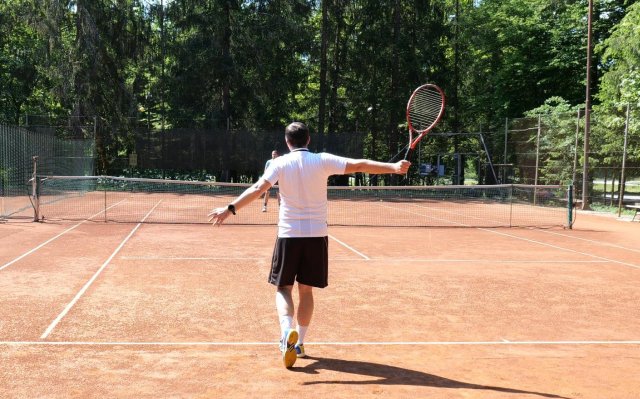
Over-rotation is the most common technical flaw on the one-handed backhand.
They may rotate because they mistakenly think it’s the right way to hit the backhand.
Alternatively, they may know it’s not right, but they feel a lot of power, so they choose to lean on the side of power rather than control.
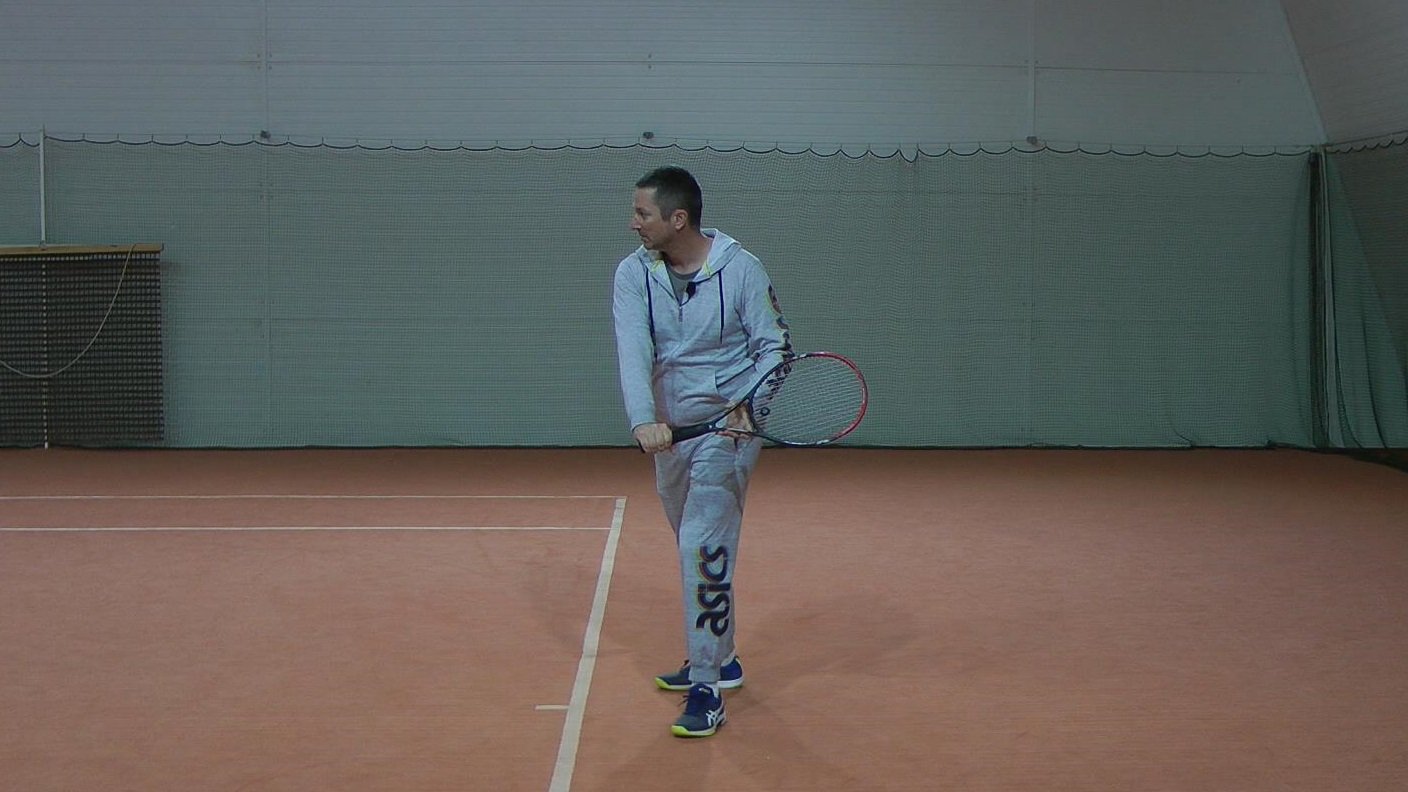
The right way to hit a one-handed backhand with correct technique and good control is to stop the body from rotating when hitting the ball, which allows us to have a linear arm movement toward the target area. That gives us good precision of shots.
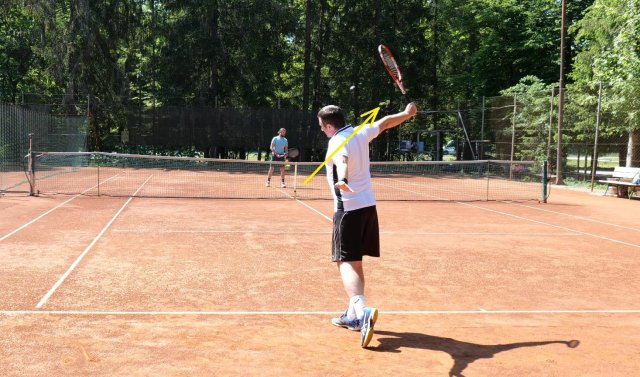
Aim the ball using your shoulder line!
A good tip to keep in mind is that the ball will go in the direction of the shoulder line.
So, wherever your shoulder line is pointing at the moment of contact, that’s where the ball will go.
It’s important to hold the shoulder line for a split second during the execution of the one-handed backhand and align it in the direction of where you want to hit, whether that’s a down-the-line or a cross-court shot.
Tip #2 – Controlling Fast Incoming Balls
When you have to play a fast incoming ball, especially if it’s a deep one, you cannot really execute your one-handed backhand as usual.
That means having a full backswing, putting lots of topspin on the ball and swinging up at a steep angle.
If you do that, you will likely mishit the ball and miss the shot completely or play it very short.
The best tip to keep in mind in such situations is to simplify your stroke.
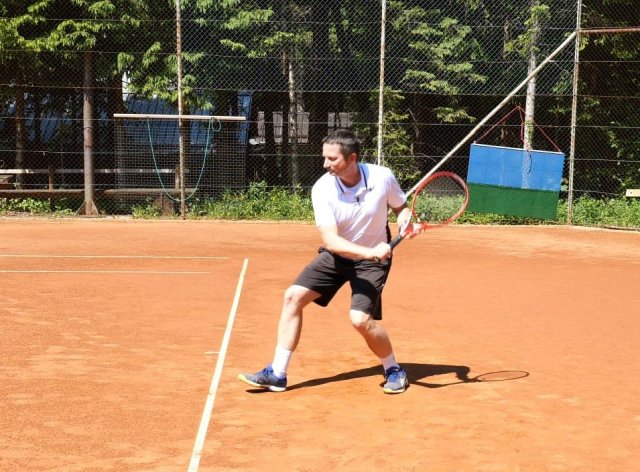
Simplify your backhand backswing and ...
Shorten your backswing, hit the ball more flat and just push it forward without a high and full follow-through.
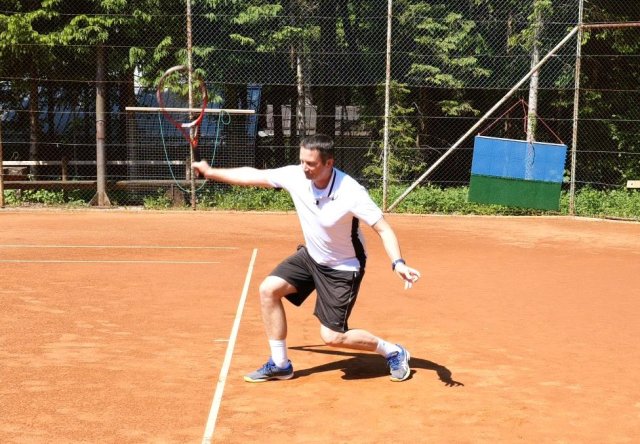
... simplify / shorten your follow-through.
Your goal is to get clean contact with the ball and push it back deep so that you neutralize your opponent and prevent him from attacking you again.
While you need a really good shot on professional tour, that’s not the case in club-level tennis.
As you soon as you can hit the ball in the last quarter of the opposite court, you’ve likely neutralized your opponent and you’ll be out of trouble.
Tip #3: Controlling Attacking Shots Well
The main reason players lose control of their attacking shots (meaning when they accelerate more than in a usual rally) is that they lose control of their follow-through.
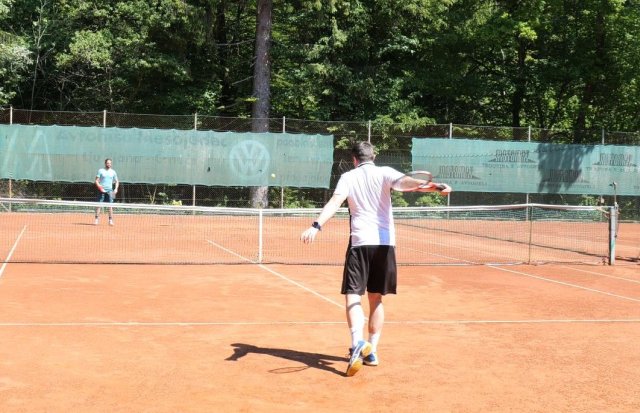
If you lose control of your technique, you lose control of the ball.
They focus only on increasing the racket head speed until contact. Then they release the racket through contact, hoping that the ball will go in.
The secret to controlling accelerated shots is to slow down the follow-through and control it.
You can accelerate and look to hit the ball faster, but you need to pay attention to your follow-through, too, and slow it down.
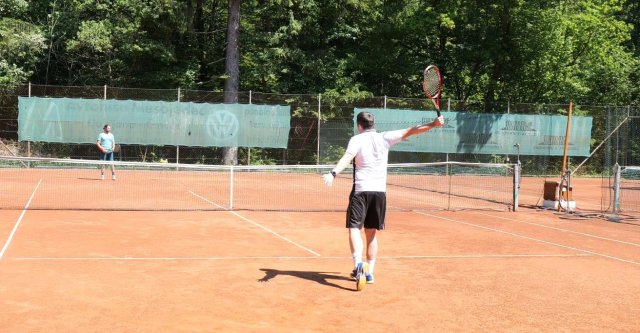
When you learn to slow-down and control your follow-through, you will control attacking shots well.
The follow-through also needs to be correct, meaning it should be the same as if you’re hitting a normal rally ball.
You will have to be conscious of this process for a while, of course, so you’ll need a partner to feed you balls or use a ball machine.
Your goal is to ingrain the slowing down of the follow-through when you’re hitting attacking shots, and you’ll see that you’ll be much more consistent.
Don’t forget to check a tip I shared in the past when I described that you need to accelerate gradually and not suddenly.
Tip #4: How To Hit Higher Arc Shots With Topspin
When players attempt higher arc shots with their one-handed backhand, they tend to use the forearm and the wrist.
We can see that in a bent arm and twisted wrist in the follow-through.
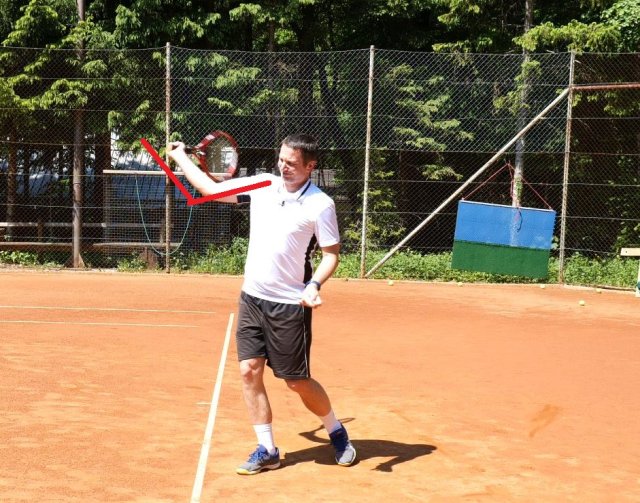
When you see a break in the elbow and twisted wrist in the follow-through you know it's not right...
This one-handed backhand technique is incorrect and will usually result in very short balls with no pace.
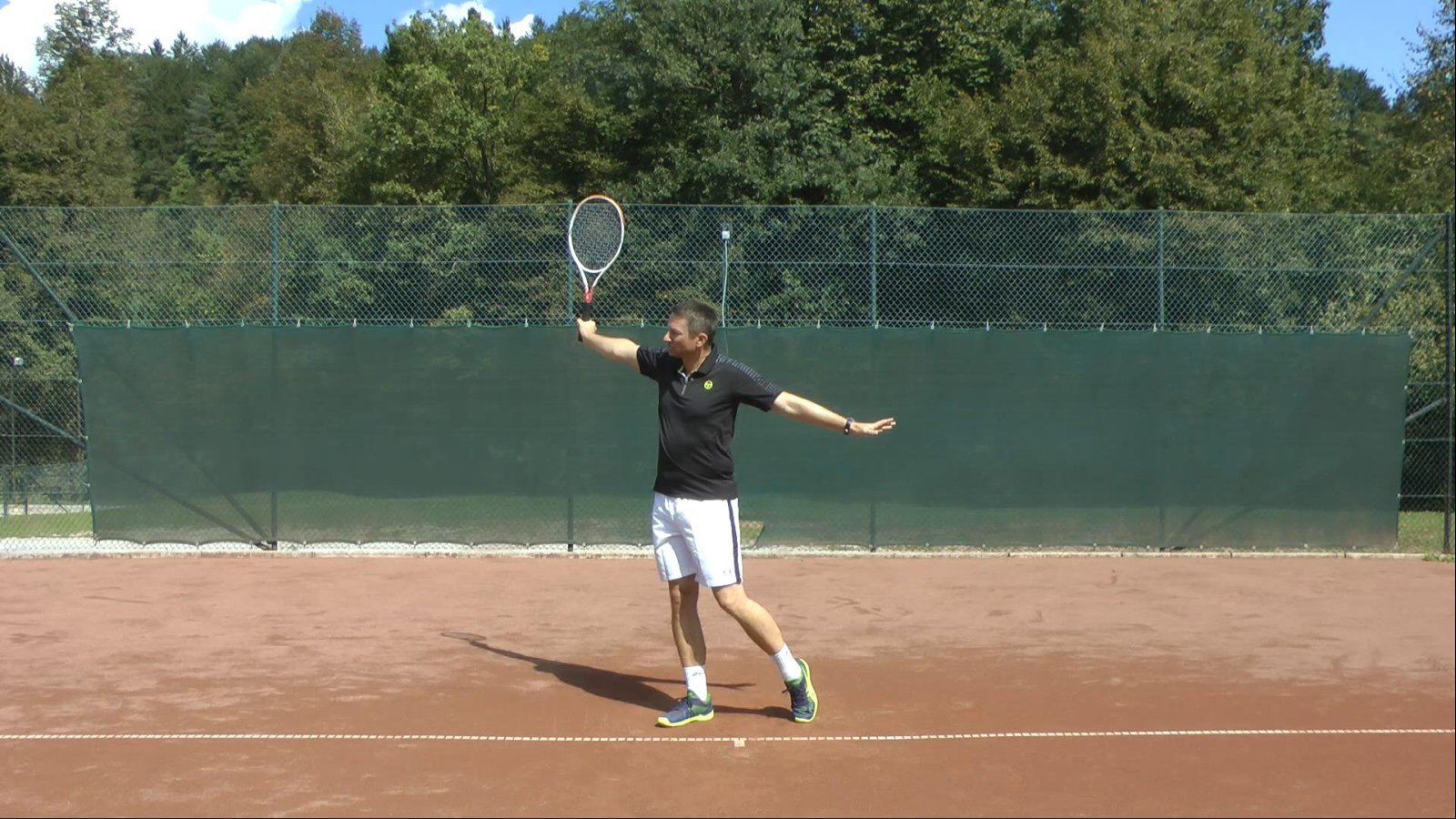
Instead of trying to lift and spin the ball by using your forearm and wrist, you need to dip your front shoulder first, which will cause the racket to swing under the ball as you start executing the backhand.
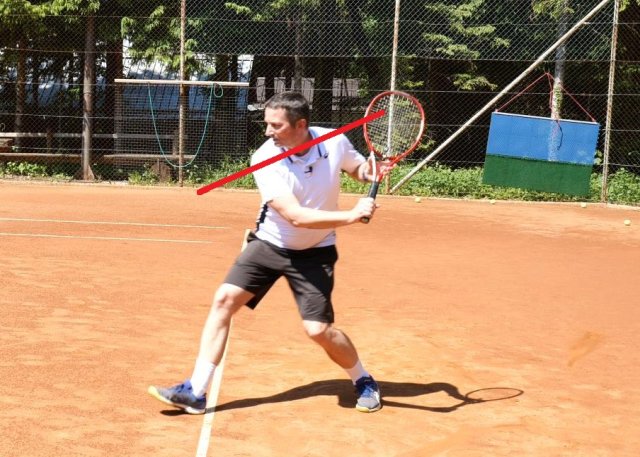
If you want to high a higher arc ball, start by tilting your shoulders...
Finish the follow-through high above the head with a firm, fully extended arm, and you’ll see that you can have effective high arc one-handed backhands with good pace.
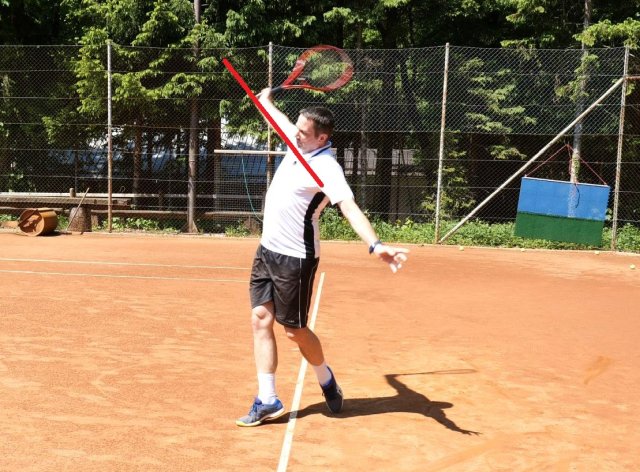
... finish high with an extended arm.
Tip #5: How To Hit Short Cross-Court Shots Effortlessly
Hitting short cross-court shots with the one-handed backhand requires a slight adjustment in timing and not really in technique.
While players tend to use the same forearm and wrist technique as mentioned in the previous tip, that technique again does not work well.
The key tip to keep in mind is that you need to hit the one-handed backhand way more in front when going for the short cross-court shot.
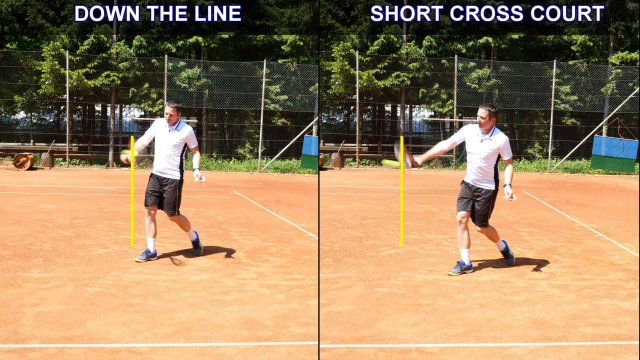
Hit way more in front than usual and the ball will go cross court naturally.
When you hit the ball well in front, your racket will already have a more upward path, which will automatically impart more topspin.
The angle of the racket will also be pointing more cross court naturally without any extra engagement of your forearm or wrist.
In other words, you’ll hit a short cross-court one-handed backhand quite effortlessly if you make contact with the ball way more in front than you would normally do when, for example, hitting a down-the-line shot.
Summary
Controlling the one-handed backhand in different situations requires some adjustments to the fundamental technique, so it’s important to allow those adjustments to happen and not force the one single technique as you try to solve different problems on the court.
Follow the above-mentioned one-handed backhand tips and give yourself some time before expecting significant progress.
While some tips are easier to implement, like the shoulder line that controls direction, others are more challenging, like simplifying your stroke and timing it well when handling fast incoming balls.
If you struggle with any other situations with your one-handed backhand, feel free to ask questions below in the comments or simply share your feedback on how these tips worked for you.
Great
Great instruction. Thanks!
great stuff, Tomaz, as usual. but where is this court? looks fabulous surrounding….
Thanks, Leo!
This is a tennis court in some small village in Slovenia, yes, very nice, all nature around it…
Tomaz: Excellent tips.
You can see very well in the video the importance of keeping your chest well forward when hitting the ball.
Thank you.
Your tips are the best. I really appreciate all you efforts.
And I appreciate all the comments!
I often play with one who plays very hard and very low balls and my returns always ends up in the net. I hope I can use your advice next time we play.
Hi Anne,
Make sure you get low enough and rising up using your legs, they will help you lift the ball higher.
Also hitting the ball well in front, late shots usually end up in the net…
Hi Tomaz,
Thank you for your excellent courses. I follow you on Youtube and really like the way you teach.
I believe that I follow all the major steps required: split step, grip change, unit turn, non-dominant hand pull the racquet up, then I bring it down and hit the ball at contact point and do the follow through.
However, 80% of the times, the ball ends up in the net or in the fence way behind the baseline.
Not sure what I am missing?? Is it because my preparation is late? How much faster should I prepare? I split step before my opponent hits the ball…
Thank you for your time
Thanks for the kind feedback, Mani!
Do you aim when you’re hitting the ball?
Better / correct technique does not put the ball in the court, it only enables you to hit the ball with effortless power.
So, do you know in your mind’s eye the trajectory you want before you hit the ball?
Do you know the height above the net where you would like the ball to go?
Let me know…
This might also help: https://www.staging.feeltennis.net/intention/
Hi Tomaz,
Thank you for the quick response.
These are very good questions. To be very honest, I have never thought of the trajectory or the height. I just know I want the ball to go over the net, and somehow bother my opponent.
Reading the article you mentioned has completely changed my mindset. I will try to apply it next time, and will let you know the difference.
Thank you again.
Mani