
The drop shot is a special stroke in tennis as it requires a high level of feel, good technique and, of course, smart tactics.
In fact, the key to playing successful drop shots is making the right tactical decisions, which means you need to be clear on when to play it and when NOT to play it.
This article will not only cover the correct drop shot tactics but also explain to you which situations and types of incoming balls are not right for playing a drop shot.
Guideline #1: Play drop shots inside the baseline
The first and most important tactical tip is to play drop shots inside the baseline. The ball will have a shorter flight to the bounce, and the opponent will have less time to get to it.
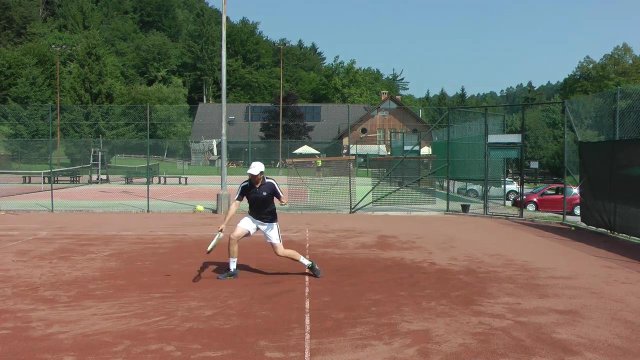
Get at least this much into the court when playing drop shots.
As with every rule, there are exceptions. In some situations, you can attempt a drop shot even when you are standing behind the baseline, such as when your opponent is stretched out wide outside of a singles sideline or pushed really far.
When this happens, it will take them some time to get to a short ball.
Of course, your opponent may also be a slow mover (or very slow to read a drop shot). In that case, you can of course play it as long as it works.
Guideline #2: Play lower and slightly longer drop shots
You can play drop shots in the following two ways:
- a higher trajectory and landing very short behind the net, and
- a lower trajectory and landing a bit further from the net.
The first type of drop shot is very difficult to pull off as you can easily play the ball too short and not even clear the net.
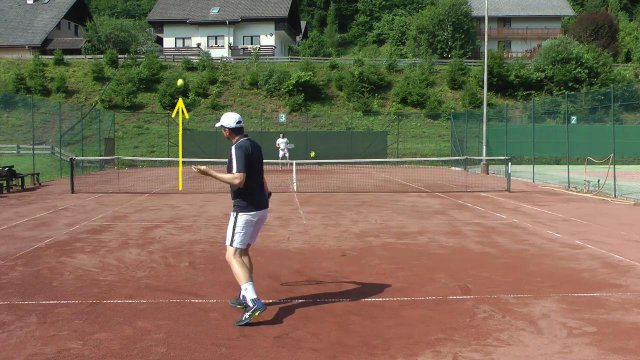
Higher and shorter drop shot or...
Alternatively, the ball can bounce too high, making it easy for your opponent to get to it, which likely means losing the point.
The second type of drop shot is easier to play and less risky. It is also more difficult to read as the trajectory is quite low and doesn’t give away the drop shot so quickly.
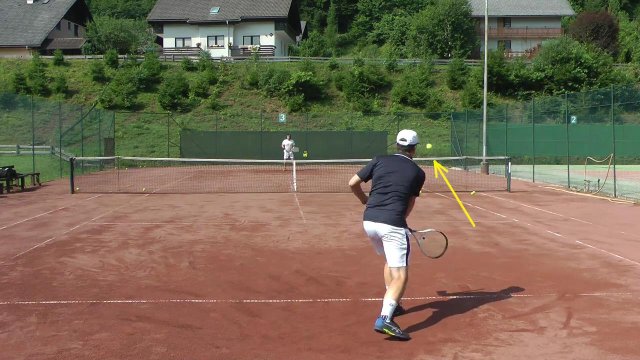
... lower and a bit longer drop shot?
The type of drop shot you should play depends on your skill level, how well you can slice the ball and other factors.
My goal with this tactical tip is just to let you know that there are generally two ways of playing the drop shot. You should experiment with them to see which one works better for you.
I personally play both types of drops shots depending on the situation I am in.
Guideline #3: Play drop shots only when you’re NOT nervous
As I mentioned earlier, the drop shot is a shot that requires a high level of precision.
If you play slightly too short or hit the net (or even fail to do that!), you lose the point. If you play slightly too high or too long, your opponent can easily get to the ball and likely win the point.
As you can see, you have a very small margin of error when playing a drop shot.
And you can’t achieve a high level of precision if you’re stressed or nervous.
Your body reacts to stress with tension, and you lose the fine feel required for accurate drop shots.
Therefore, one key tactical tip to keep in mind when playing drop shots is to play them only when you are not stressed or nervous.

I would play a drop shot like this at 40:0 or 40:15.
That can be when you are ahead in the match, ahead in the game, or perhaps at the first point of the game if you don’t feel any anxiousness.
Do not play drop shots on crucial points in the match.
Yes, you can make one here and there, but long term you will very likely have a losing ratio.
Here’s an example of Zverev playing a drop shot on a match point and eventually losing the match. (Forward the video to 2:08!)
Guideline #4: Play drop shots off topspin (incoming) balls
Drop shots are easier to play off balls that are spinning forward (towards you), meaning the ball has topspin, than they are to play off balls that are spinning backward (backspin/slice).
If you hit a drop shot off a topspin ball, you will spin the ball in the same direction as it is already spinning. The result is less friction or “fight” required to make the ball spin and fly as you want.
If you hit a ball coming towards you with backspin, you will have to “turn” its rotation. That is more difficult to do, and it’s less likely that you will hit a good drop shot.
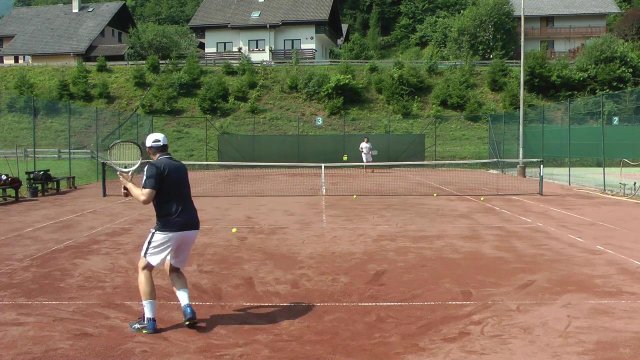
I am attempting a drop shot off an incoming slice ball - it's risky!
But don’t take my word for it. Just experiment with many different incoming balls, and note the success rate depending on what type of rotation the incoming ball had.
Guideline #5: Do not play drop shots off high balls
It’s difficult to control the ball and racket path at higher contact points, so again it’s not likely that you will hit a good drop shot.
The exception to this rule is playing a drop shot when you are really well inside the court, perhaps close to the service line or even inside the service box.

You would have to be this much inside the court to pull off a drop shot off a high ball.
Only then could we call that a good drop shot tactic.
Guideline #6: Do not play drop shots off dead balls (low pace)
It’s an interesting fact of tennis that it is more difficult to play an accurate drop shot off a very slow incoming ball than off a normal rally speed ball.
Again, no need to believe me: just give it a try, and note the results.
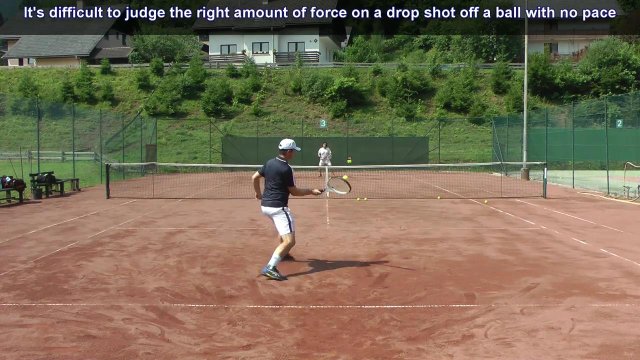
I am attempting a drop shot off a dead ball with no pace. Lost the point...
I am again sharing this tip with you because you may have never considered the speed of the ball, and you may have blamed your drop shot skills or lack of feel when you missed a drop shot off a dead ball.
The fact of the matter is that these shots are very difficult.
You should generally avoid playing drop shots off very slow balls, especially if they have backspin. See guideline #4.
Guideline #7: Have fun with the wrong-footing drop shot!
The wrong-footing drop shot is the most devastating drop shot – for your opponent.
Not only will it trouble them physically as it is very hard to change direction the way you need to, but it will also affect them mentally because they will feel initially that they are relatively close to the ball, yet they won’t be able to get it.
If you watched the video above, you saw how much trouble I had getting to the ball even though I knew the drop shot was coming.
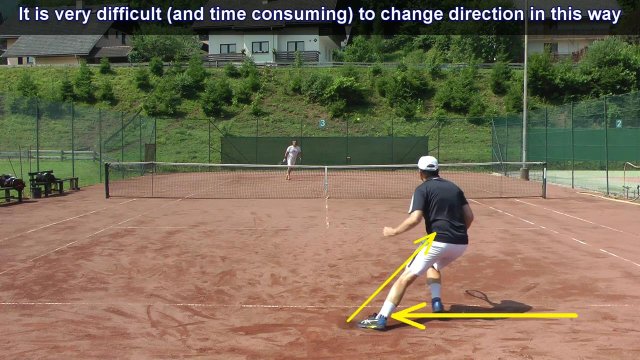
This is the most devastating drop shot...
It is a bit counter-intuitive to play the drop shot in the direction of your opponent, but try out this final drop shot tactic in one of your practice matches first so that you can see how it works.
Stay tuned for part 3 of this drop shot series: how to defend against a drop shot.

Wonderful. I’m going to try the wrongfooting drop shot tomorrow when I hit…
Many thanks,
Spencer
Hi Tomaz. Great video as usual. One thing though that most people don’t know. Both under spin and top spin balls have top spin after the bounce. Except drop shot balls which can have backspin on an extreme spin drop shot. If there is forward motion on the ball , underspin will reverse after contact. ( learned this from Federer questioning a drop shot ball that Berdich tried getting and it bounced twice, but he didn’t call it on himself. Federer complained to umpire that the ball had top spin after Berdich hit it. Which proved that it was 2 bounces. Tim Brielmaier USPTA.
Hi Tim,
Wanna bet that all balls have topspin the bounce? 🙂
Heavy sliced balls will maintain backspin after the bounce especially if the surface is hard court and of course grass.
Clay court does tend to make all balls spin forward but trust me, I see the ball pretty well after my 30 years of playing and I can see backspin on heavy slice even after the bounce.
Hi TomaZ,
Thank you for the drop shot tactics video. On the wrong footed drop shot, what is happening? Is it a way of disguising the shot? What is wrong- footing and how do you do it?
PS I was sort of near Slovenia last month – i had a 9-day job in Ukraine. That’s the closest I’ve come to your country but some day I’ll get there☺️ Larkin in Santa Barbara, California
Hi Larkin,
Wrong footing is playing back in the direction from where the player is recovering.
Good players always split step in order to counter the wrong footing attempts which means they’t don’t have much trouble changing direction.
But when they need to change direction and at the same time run forward then a lot of time is wasted in this movement and that’s why the drop shot works many times.
Disguise is only necessary for higher level play, perhaps from 4.0 NTRP onwards because lower level players don’t really observe their opponent yet.
Hi sir ..
Thank you for wonderful videos ..I was playing drop shot with wrong foot work but after seeing these videos I realised how to correct & play . It’s really helpful to every tennis player .. Tnx
Thanks for the feedback, Rekha!
Nice series Tomaz.
Any thoughts on the relative benefits of going x-court with dropshot vs. down the line. Like regular shots, a x-court drop shot is a higher percentage shot than a down the line dropper given that the net is lower, you’ve got more room for error and the dropshot is angling away from the opponent in addition to being short with backspin – basically the same reasons why going x-court on regular shots is a higher % way to play tennis.
Obviously, going down the line can be tempting (and appropriate) at times, but it’s a more difficult, lower % shot. Given that the dropper is a lower % shot anyway – is it worth thinking about being more selective about when to use it, i.e. – not only waiting for the right ball (one that drops inside the court that you can move forward on, etc.), but also waiting for a situation re: relative court positioning where a x-court drop shot is the right choice based on your opponent’s position on the court (out wide and/or moving backwards) or because you think you’ve fooled him/her (the wrong footing situation or he/she is anticipating a hard and deep shot.)
Hi John,
All valid points but in my view this requires too much thinking and analyzing which is usually affecting the player negatively – namely they hesitate, change their mind, etc.
I would more lean towards quick instinctive decisions where you play a drop shot when you see opponent far behind the baseline or out wide and you are inside the court playing their short ball.
So in most cases you would play away from opponent so that they have an even longer distance to run.
So to me it doesn’t matter whether it’s a cross court or a down the line, I just execute a drop shot in the direction away from opponent most of the times.
And then only here and there I would attempt a wrong footing drop shot.
Hi Tomaz. Great video as usual. Great truth about slow balls and the difficulty of the drop shot. Best regards.