
Playing mini tennis, meaning just behind the service line, is a great way to warm up your strokes, and your body overall.
Playing at such short distance helps you develop feel for the ball, being able to hit it very accurately and generally just prepare your eyes and your mind to deal with a bouncing ball which is not an easy task.
But if you play mini tennis with your usual technique which means doing full backswings and body rotation, you’ll find it difficult to play the ball slow because your swing will generate too much power.
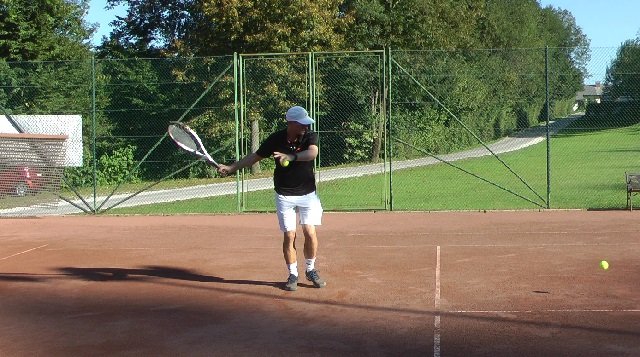
Full swing generates too much power and that makes it difficult to hit the ball slow
Going Forward Instead Of Swinging Backward
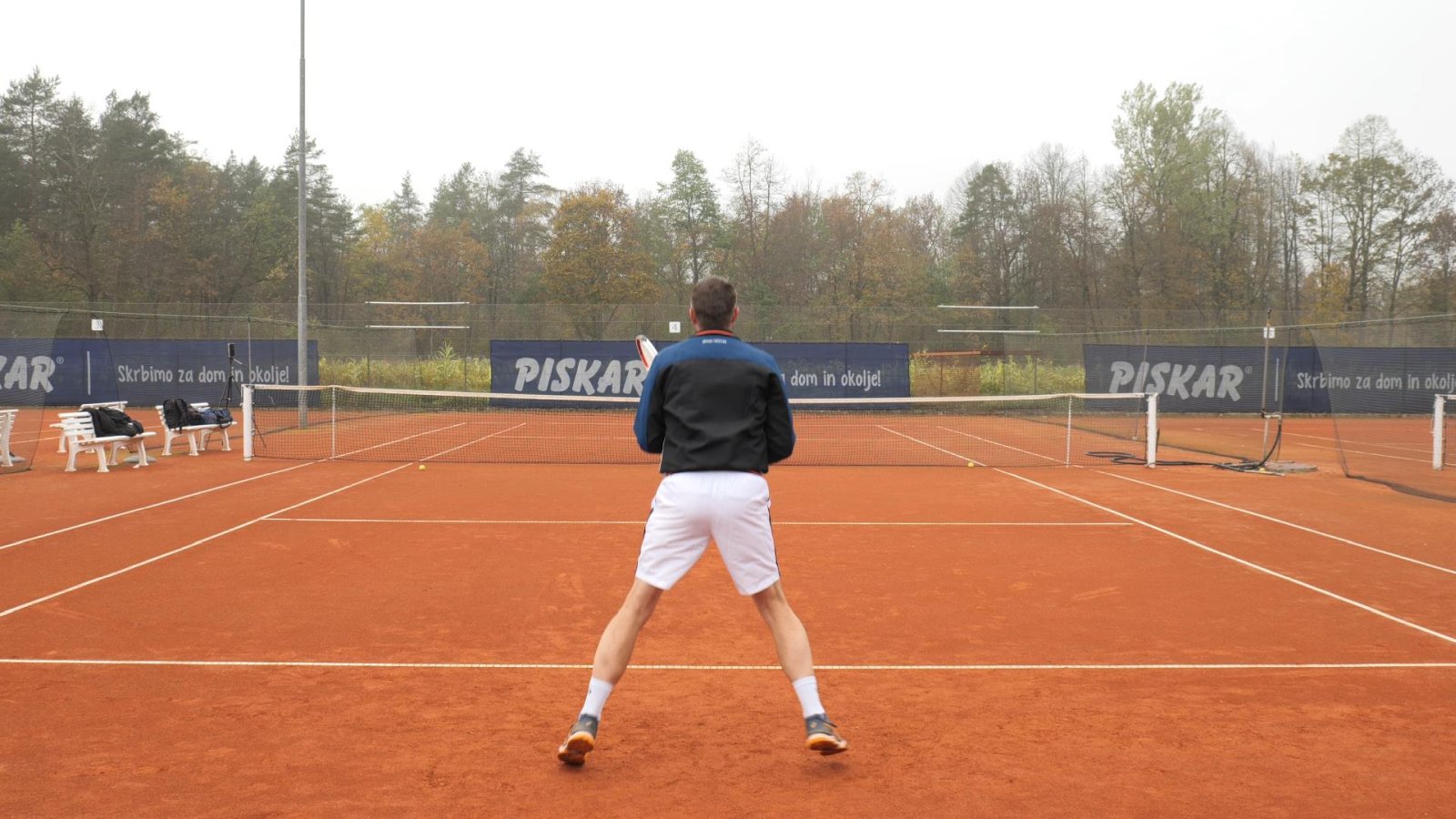
What I recommend you do and what I personally do when I play mini tennis is to actually move your hitting arm forward from your body rather than doing a backswing.
And going even further, instead of having an abbreviated backswing, you’re actually sticking your hitting arm forward.
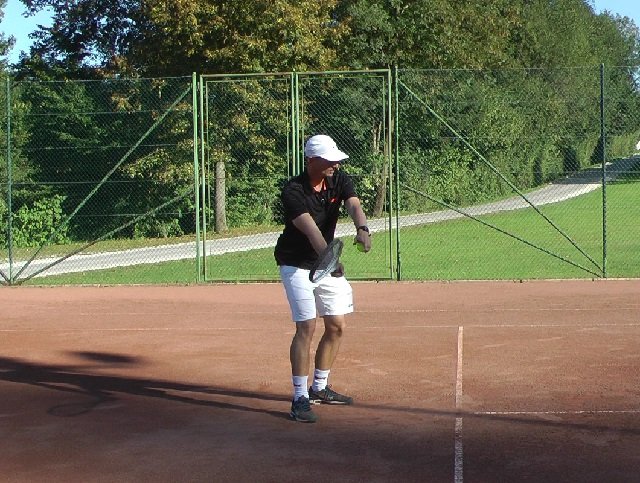
I am literally sticking my racquet forward (in relation to my body)
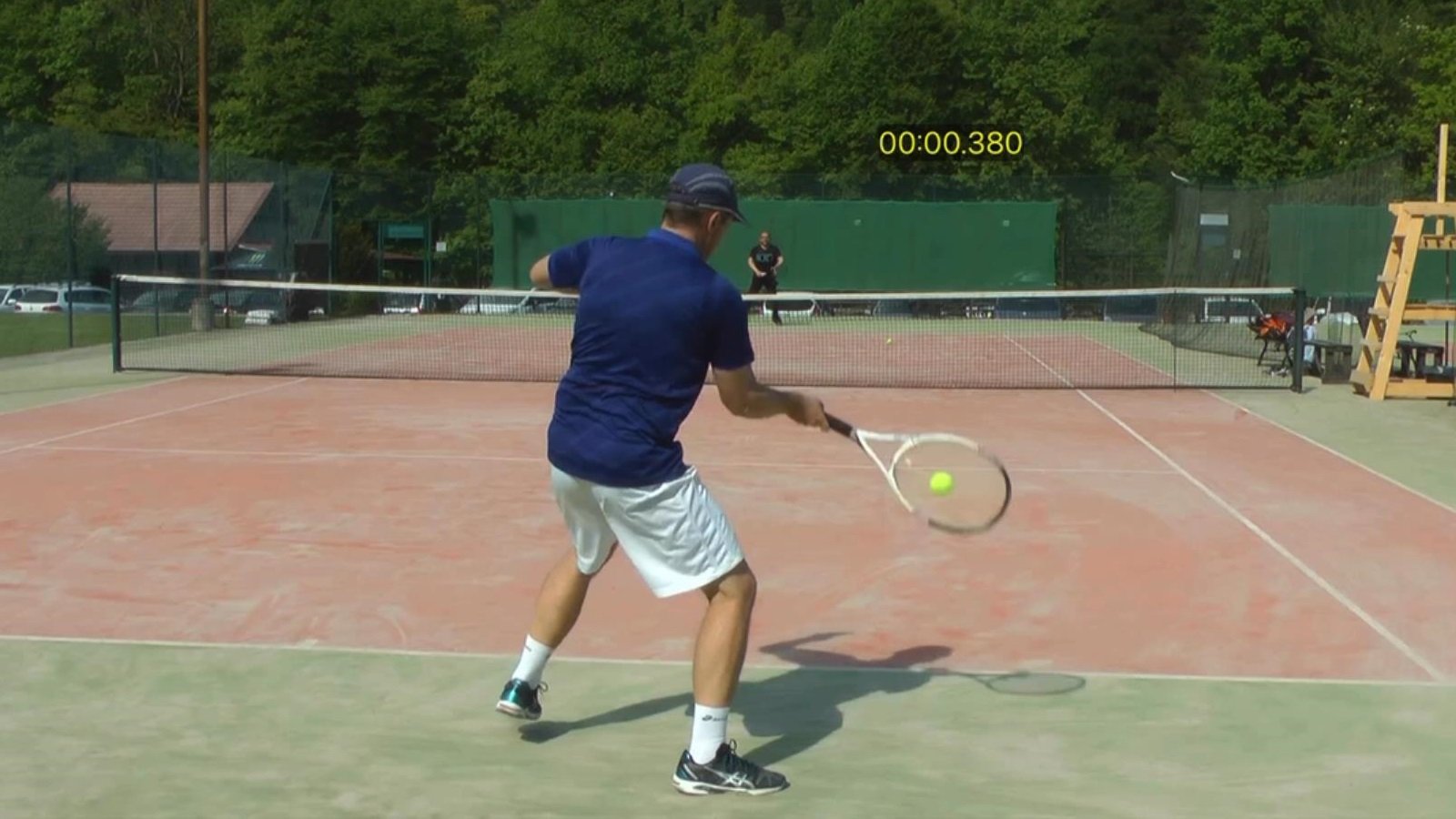
The reason why the arm and the racquet will move backward is because you’ll turn your body slightly.
So your eyes may deceive you because you see the racquet in my hand and you clearly see it moving backsward through space while I hold it in my hand so you can falsely assume I move it back with my arm.
But I don’t.
I distinctly feel that I extend the arms forward from by ready position but at the same time I also turn sideways somewhat.

The racquet moves back because of body rotation
So that’s how my racquet is basically at the ideal contact point in relation to my body and I only need to turn towards the ball to hit it and it’s therefore almost impossible for me to be late on the ball.
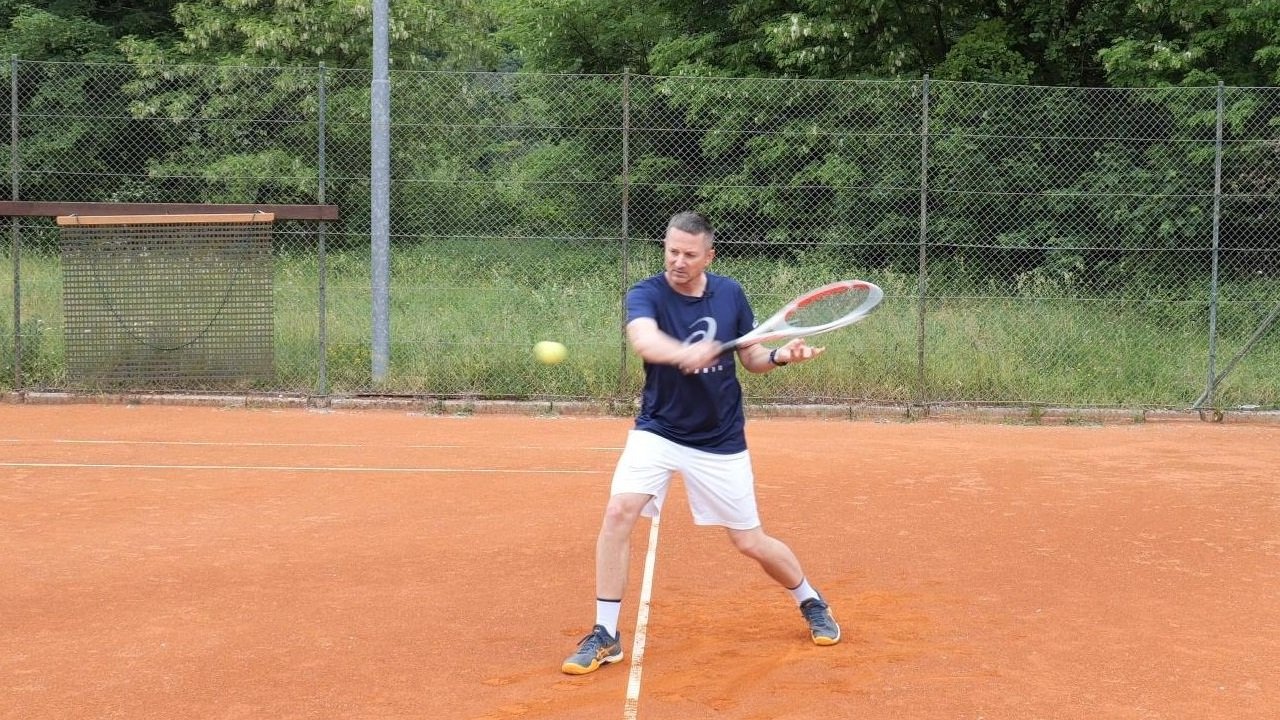
I use mini tennis to establish my ideal contact point for both forehand and backhand groundstrokes which means I feel and see exactly how much in front of my body I am hitting the ball.
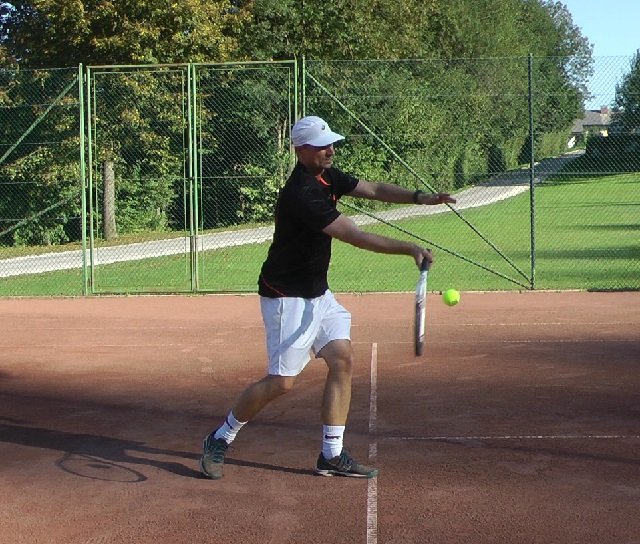
Establishing your ideal contact point is one of the main objectives of playing mini tennis
I then bring this feeling and awareness back to the baseline and now I know exactly where I want to meet the ball as it’s coming towards me.
Remember, ideal contact point is going to make your technique work the best it can.
In summary, starting your session with mini tennis helps you:
- Warm up your body, specifically your wrists and ankles (providing you are moving around)
- “Warm up” your eyes – since most of the day they are not tracking small fast moving objects and they need some time to get used to that. Therefore it’s better to give them some “warm up” with mini tennis when the ball is moving slow before going back to the baseline where the ball will be faster and therefore more challenging to track well.
- “Warm up” your mind – in a similar manner, your brain has not been tasked to process ball flight and coordinate all your body parts with accurate timing for the whole day so it’s better to start in easier conditions first for a few minutes and then progress to the baseline.
And in order not to feel rushed and not feeling tight when playing mini tennis, I recommend that you experiment with sticking your racquet forward in relation to your body, turning your body to the side as much as it’s needed and then using body rotation and your hands to play the ball rather than swinging with your arms.
This technique adjustment of your forehand and backhand stroke might very likely help you develop more efficient strokes when playing from the baseline when you will add some backswing and more body rotation, but you’ll at the same time swing less than you used to.
I just build a mini-court in my yard so I’ll be doing a lot of mini-tennis. People have told me that it can hurt your game, because you get used to hitting short, but I don’t believe it. I notice that I have more problems playing mini-tennis on the backhand side (one hand) – trouble getting spin, hitting long, timing. I think it’s because I was taking a bigger swing and trying to slow it down like you mention. Could you talk about the “tension in the wrist” on the 1hbh – sounds like you should hold the racquet with the left hand to create a quick acceleration as the right hand pulls it from the left hand. Is that right? Would you say that this move is key to a good one-hander? It’s not something that I currently do.
Thanks,
Jon
Hey Jon,
You would need to play more than 50% of your time playing mini tennis for it to possibly hurt your game and that’s never going to happen.
There are only benefits to mini tennis.
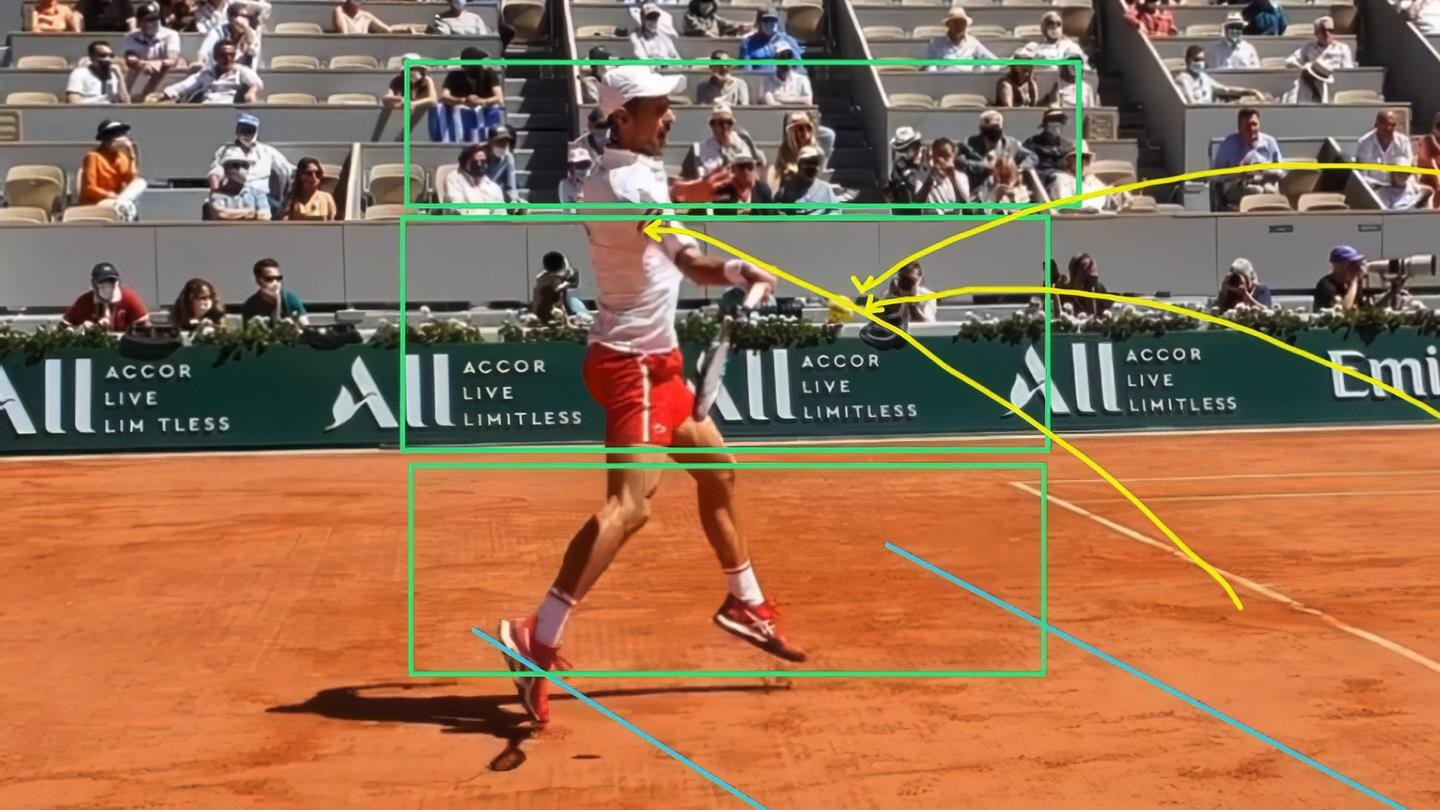
As for the backhand, yes, you can try and pull the racquet back with your left as if you want to tear it apart with both hands. Just gently of course…
Once you release with the left, your right hand / wrist will act like a rubber band and “spring” the racquet forward. Try and see how I do it in the clip above.
Thank u for this and all your videos. They r very helpful to my teaching business. I always begin my lessons with mini tennis, but I have been focusing on under spin and drop shot technique from the service line in. Now I will begin with your approach to establish contact point and footwork and finish with my “short game” skill building work. Maybe 2 1/2 minutes of each. When I end a lesson playing points I see the results when they come in on a short ball and catch me on the base line with a perfect “driopper.” In a one hour lesson how many minutes do u spend with mini tennis?
Hi Steve,
I play from 5-10 minutes playing mini tennis before I go back to the baseline. And that’s mostly because my friends like to do it for that long!
I need maybe 3-5 minutes just to feel everything in place… (seeing the ball well, hitting it in front, feeling the spin…)
Hi Tomaz:
What a marvelous demonstration of mini tennis practice..
I am recovering from a shoulder injury & this will help me immensely…
I have been unable to play for 8 weeks now…
Your slow motion video is awesome especially on the backhand.. I had not realized that the importance of a short back-swing…
You are so perfectly balanced.. so many of us club players tend to use far too much unnecessary extraneous effort while hitting the ball…
I just love your teaching videos… they are the best I’ve seen online..
Thanks,
Ayna
Thanks Anya and good point, yes, you can use mini tennis to play with not much effort (but keep moving your feet!) and then transfer that idea back to the baseline.
This is very useful practice.
Thank you!
Tomaz-
Thank you! I recently began playing with partners who like to warm up with mini tennis and have been struggling with keeping it ‘mini’. Once again, you’ve come up with the perfect, timely instruction- best on the web for me.
Tom
Great, Tom, let me know later if this helps!
I believe mini tennis is good preparation for return of serve also. It encourages the player to take the ball early and use a short backswing. Your videos are very helpful. Thanks.
Good point, Greg. It definitely reinforces the technique that’s used on the return too.
Tomaz..yet again a touch of genius to get the feel and grooving of your ideal hitting zone in a safe territory.
Thanks for this mini tennis technical lesson Tomaz . I like the mini tennis warm up before playing for obvious muscular reasons, however a childlike playfulness also emerges in me as the scope,range is reduced and the subtlety and touch increases.
It reminds a bit of keeping a ballon in the air, not letting it touch the ground, a common impromptu children’s game.
Bravo!
With Topspin,
Richard
Great points, thanks for sharing, Richard!
seems very similar to half volley technique – though depending on the reduced pace of the ball being received – it’s not as necessary to bend one’s knees and hit the ball on the rise – though that’s good technique and practice as well.
In general – I think sometimes there is too much emphasis on stroke mechanics and not enough on moving to ‘intercept the ball’. In other words I think lots of good things happen ‘naturally’ if one moves to intercept the ball – and then making the natural (but not exaggerated) turn and release from one’s core to contact the ball and send it back to the other side.
Watching Fognini’s unbelievable hitting last night vs. Rafa – showed how much power can be achieved by simply ‘getting there’ on time and on balance and making clean contact with relaxed but relatively abbreviated swings.
Hi Tomaz,
Many thanks your lesson for mini court warm up, I just did that this morning training with easy short back swing, before I had done with full swing with difficult control. Now, I changed.
Regards
Henry
Do you think the pushing the racquet forward concept could also apply to the return of serve. My biggest problem is being late on the return.
Yes, Ralph, this would apply to the return too.
This is so effective. I have found that doing this ties in with other strokes that require minimal back swing and a quick turn and good follow through, like service returns and some situations for half volleys and taking it early. Warming up the way you teach hear helped me ‘warm up’ for those situations as well!
Thank you Tomaz, this was extremely helpful!
I was wondering what is your view of the extremely talked about ‘sabr’ used by roger federer? And how would one counter it tactically?
Thanks, Iffat.
You can’t really counter Roger’s tactic of taking the returns that early since you don’t know when he is going to do it.
If you knew, you would aim at his body or wide so that he couldn’t cover the net well after his approach.
Okay thankyou!
This video is so helpful! I’ve always felt puzzled by mini tennis because the technique has never been properly explained. Intuitively it just felt wrong to be using the baseline technique at the service line, and as a result hitting the ball felt really constrained. This is a great explanation! You’re a genius at breaking it all down and presenting things so clearly. Thank you!!
Hi Tomaz,
I very much enjoy these video lessons. I really appreciate not only your ideas but teaching approach is unmatched.
This lesson got me thinking about my approach to playing against a softer/slower hitter. I find that it is not the matches against a stronger, harder, more creative (4.0 ) hitters that I struggle. It is against a basic player (often 3.0 or 3.5 level players) where I must create all my pace against consistently “dinky” but accurate shots. In these matches I not only struggle to say mentally engaged but my footwork timing and stroke size get totally out of sink. Perhaps this mini tennis approach holds a key here.
I also have noticed that most of my practice time is put toward being able to hit harder, more dynamic shots with consistency (my two best buddies I consistently hit with are 4.5 players). I almost never practice with my approach to a pusher. Perhaps this fact resembles how seriously I take this approach. I am close to turning down any match against a player who seems content to just push shots back at me as I have not found a successful way to enjoy and/or improve my game in the matches.
Please advise.
Thanks,
Joel
Hi Joel,
When we have to create pace on our own, we usually muscle the ball too much and then technique breaks down.
Your first step when dealing with slow balls is to start hitting them with usual pace and making sure your technique is the same.
Don’t think about finishing points but about maintaining fluid and correct technique.
Then gradually start increasing power and see at what “level” it starts to break down. Follow the same principle outlined in the Proper Path to Power article.