
Roger Federer’s serving technique has been analyzed from all possible angles and possibly made much more complex than it really is.
I’ve partnered with Jason Frausto from TennisUnleashed.net to show you Roger Federer’s serve in a completely new way that will hopefully help you dispel the illusion of complexity.
Jason has graciously allowed me to use his footage of Roger’s service motion and digitally remove the racquet from the video as I have done once before when looking at Roger’s forehand technique.
As you initially observe Roger’s serve with the racquet, you realize that the main reason for the seemingly complicated tennis serve technique is the racquet’s fairly complex movements through space which we find very difficult to copy.
But when the racquet is removed you can see that his arm’s movement is quite simple.
Without the distraction of a tennis racquet we can finally see how Roger prepares in a very similar was as if he was about to throw a ball and then releases it up towards the ball.
How We Feel Key Positions In The Serve
As we look at the pro footage in slow motion or simply watch a skilled tennis player execute their strokes, we can immediately feel and visualize how we would do that in a very similar manner.
The better observer you are and the more you’re aware of your body in space, the better you can imitate movements / technique of other players.
I’ve cut out key positions in the service motion of Federer’s stroke and put side by side images with and without the racquet.
Take a look at these key positions and compare how you feel when looking at the image with the racquet in hand and the image without the racquet in hand:
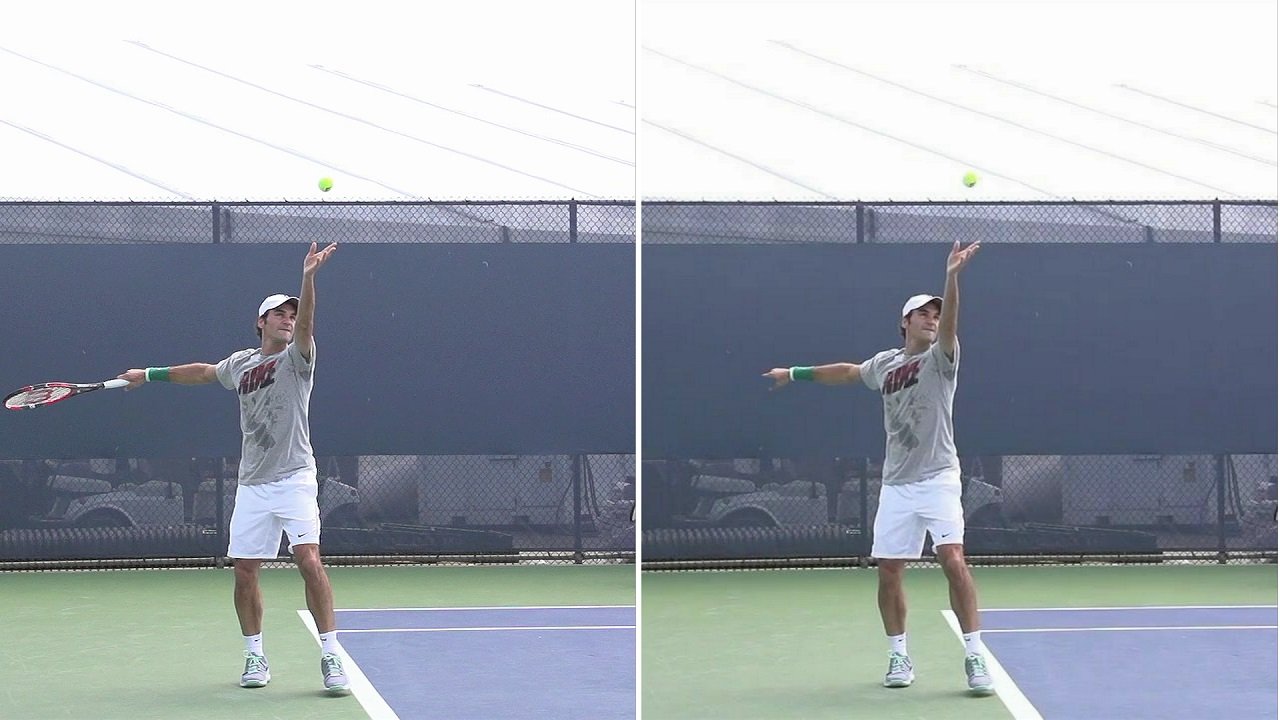
a) The backswing
Would you swing your arm any differently when looking at the left image compared to the right image?

Click images to enlarge!
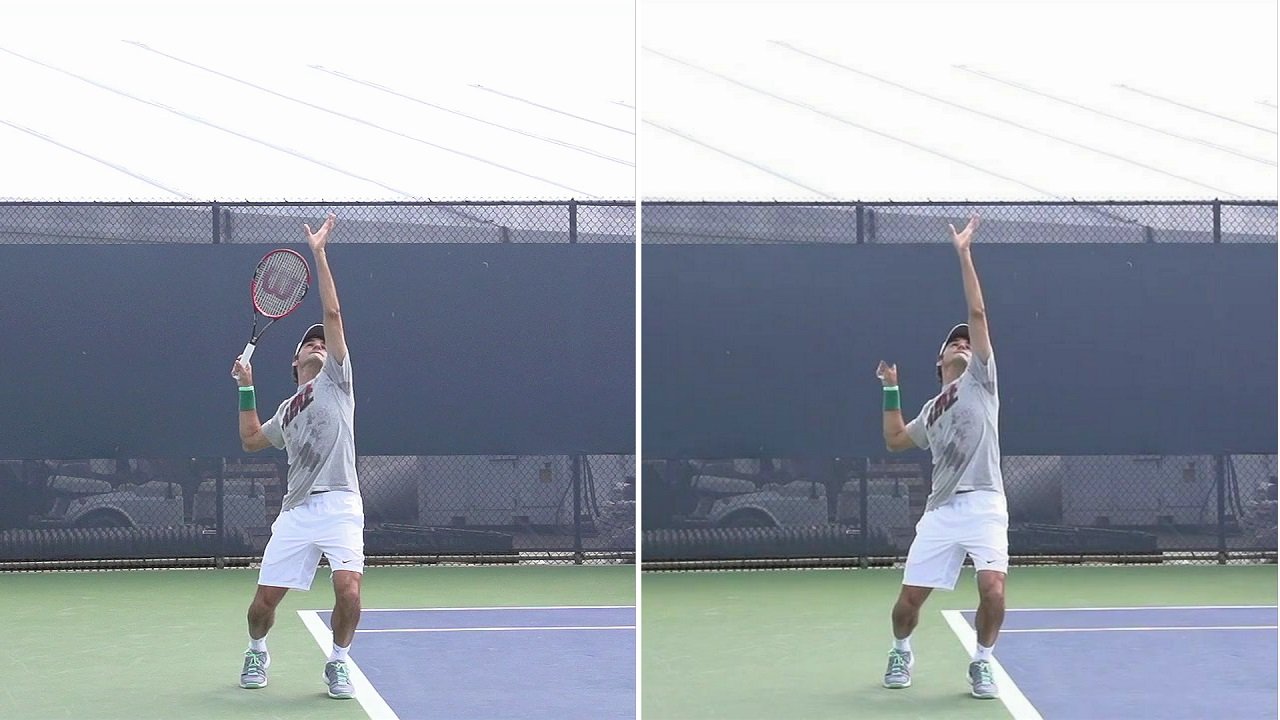
b) The trophy position
Would you do anything differently when it comes to your elbow, body or hand when looking at the left image compared to the right image?

Click images to enlarge!
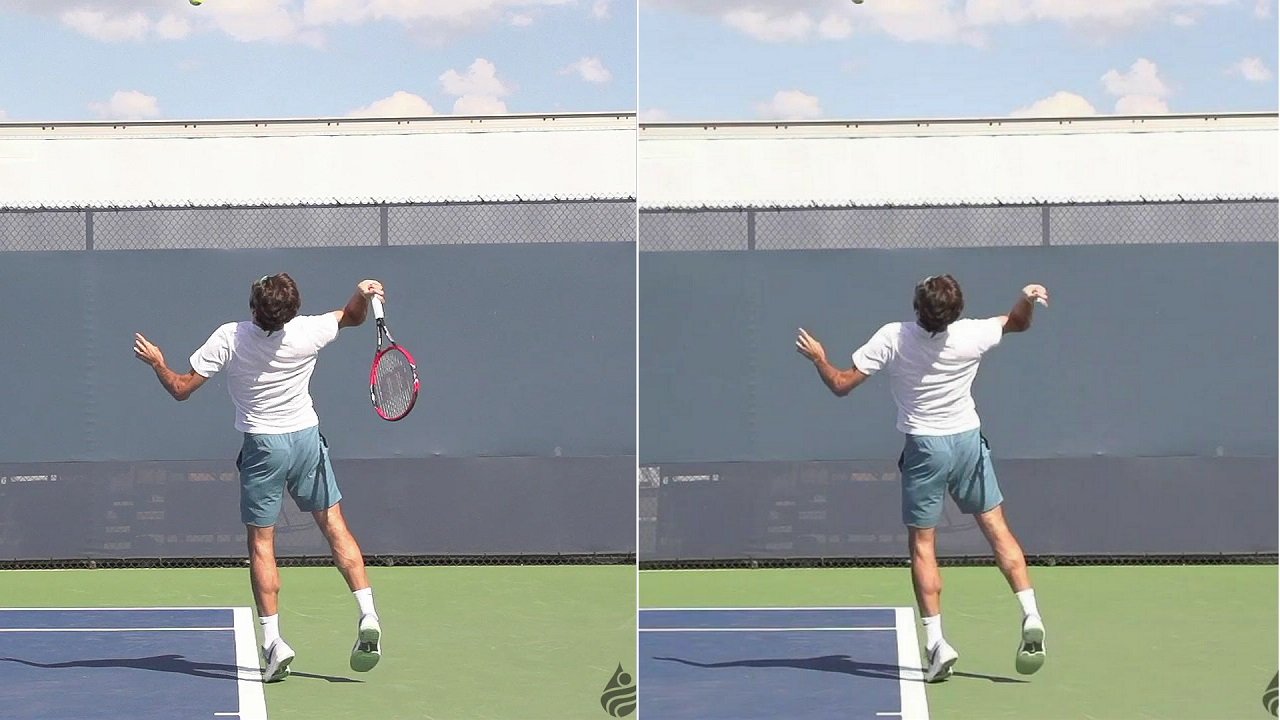
c) The drop
Do you feel any different in your body when looking at the left image compared to the right image?
Click images to enlarge!
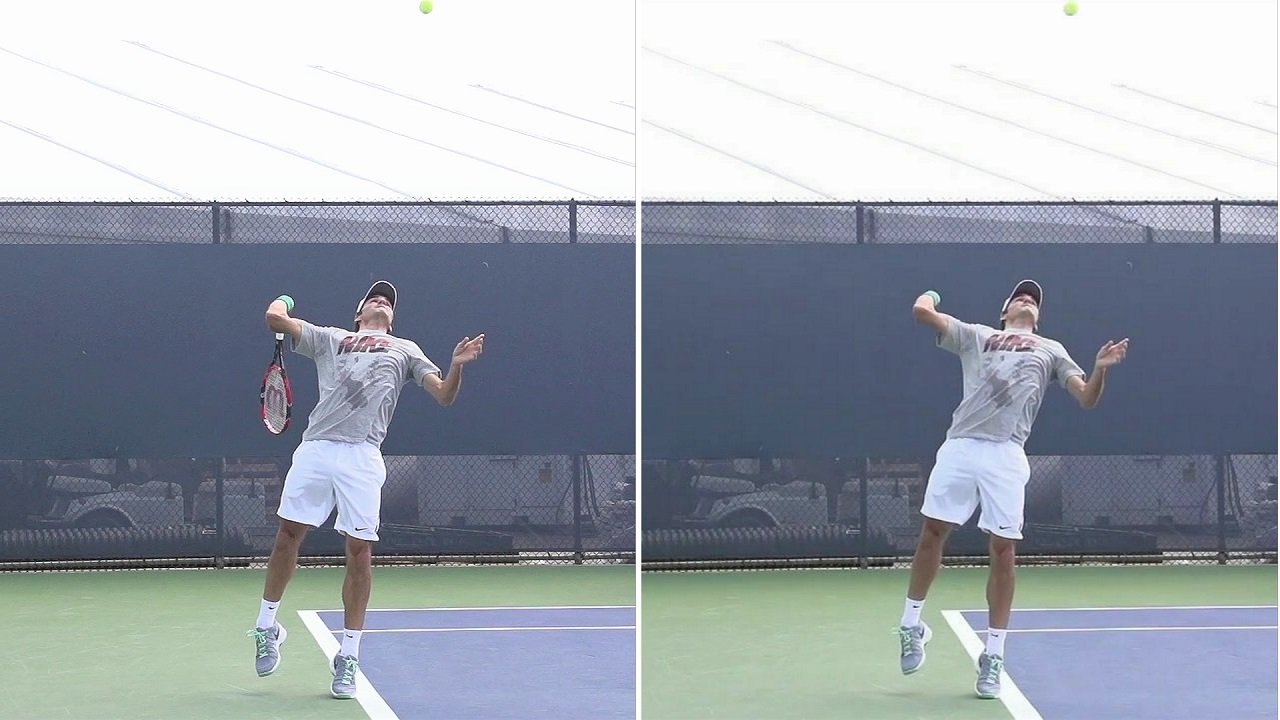
d) The pronation / follow-through
Would you do anything differently with your arm and hand when looking at the left image compared to the right image?

Click images to enlarge!
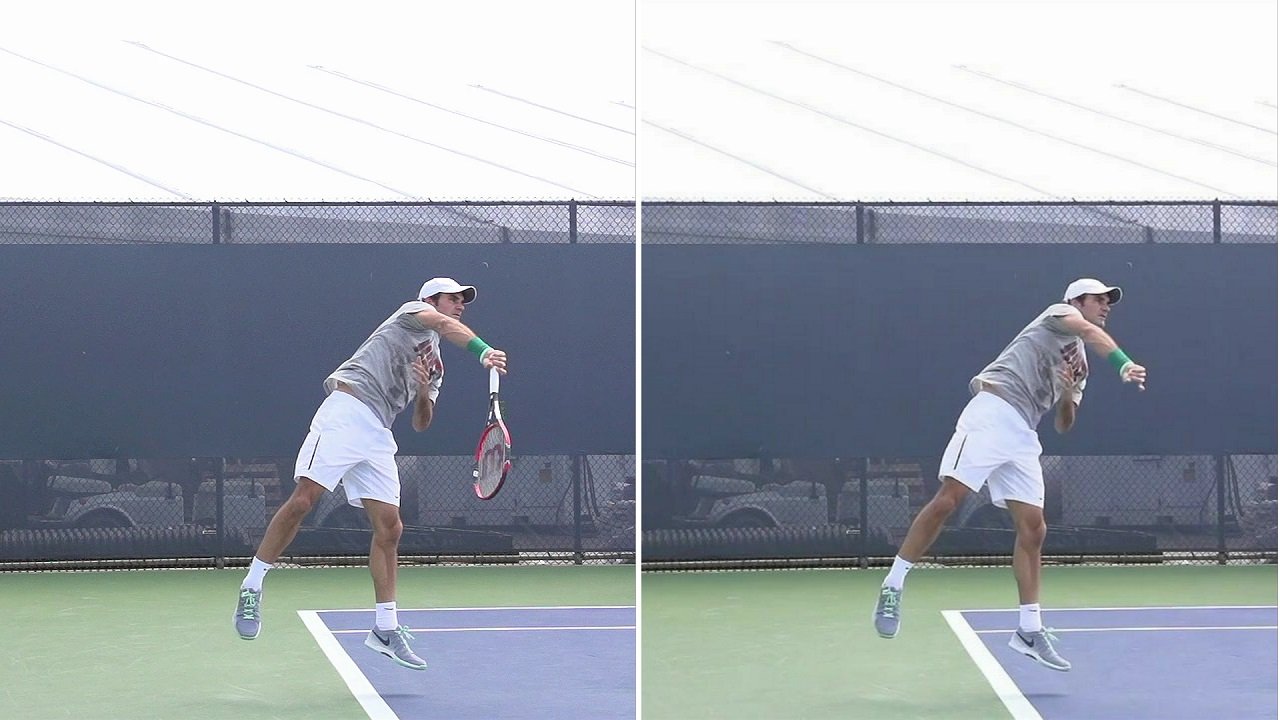
Have you anwered yes to any of the above questions and can you “feel” the difference in your mental image and your body in how you would imitate Roger Federer’s serving technique?
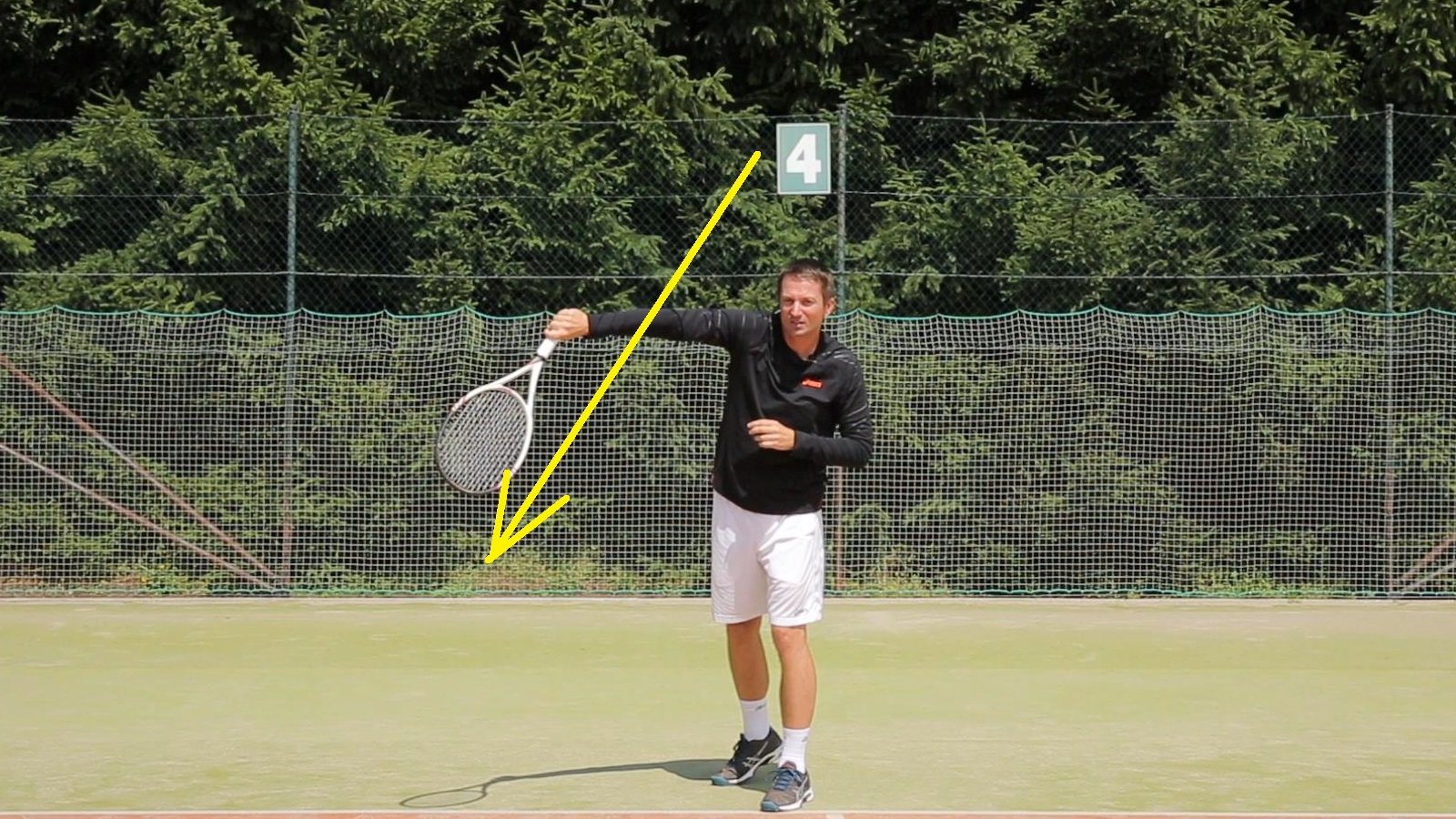
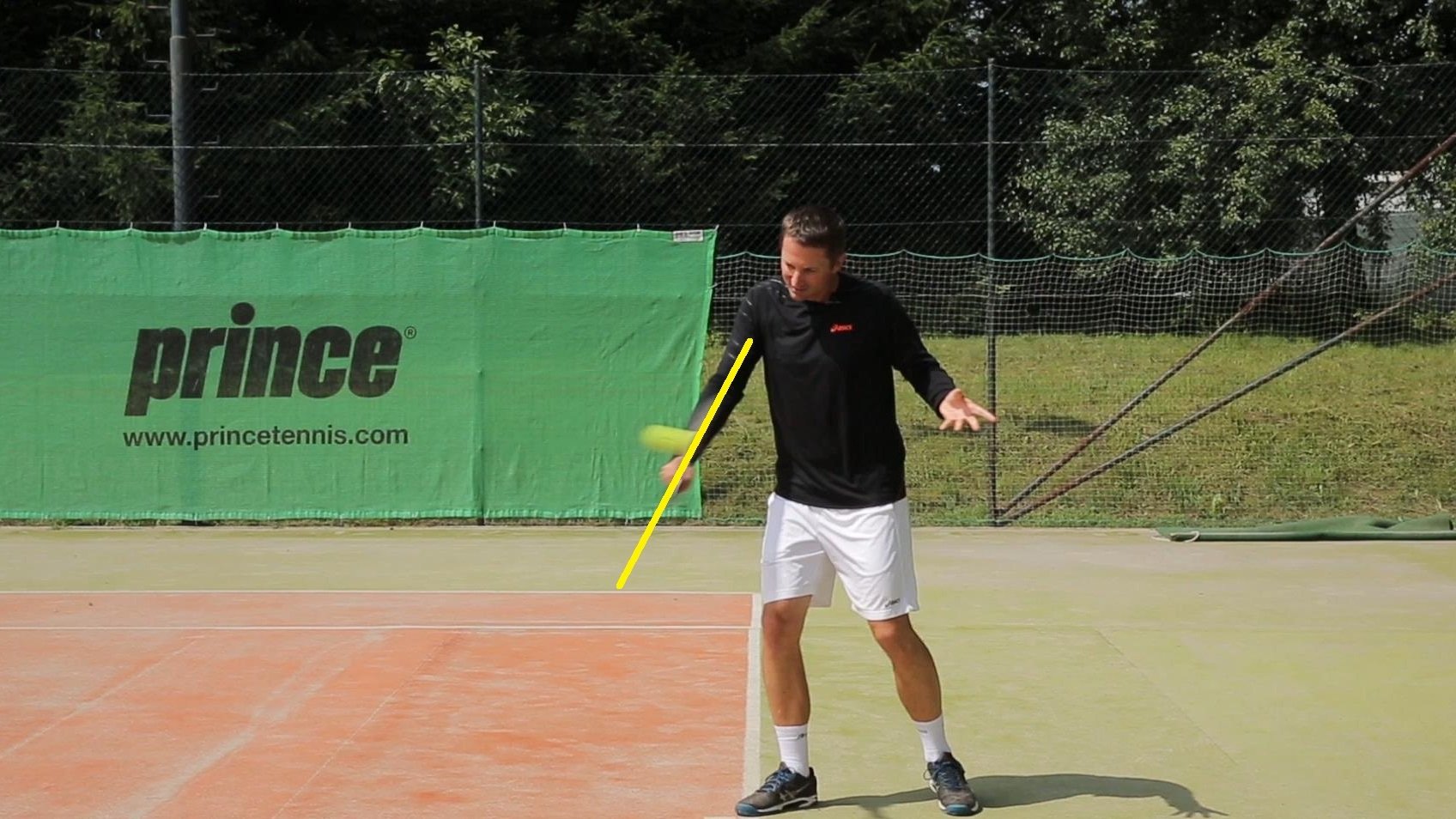
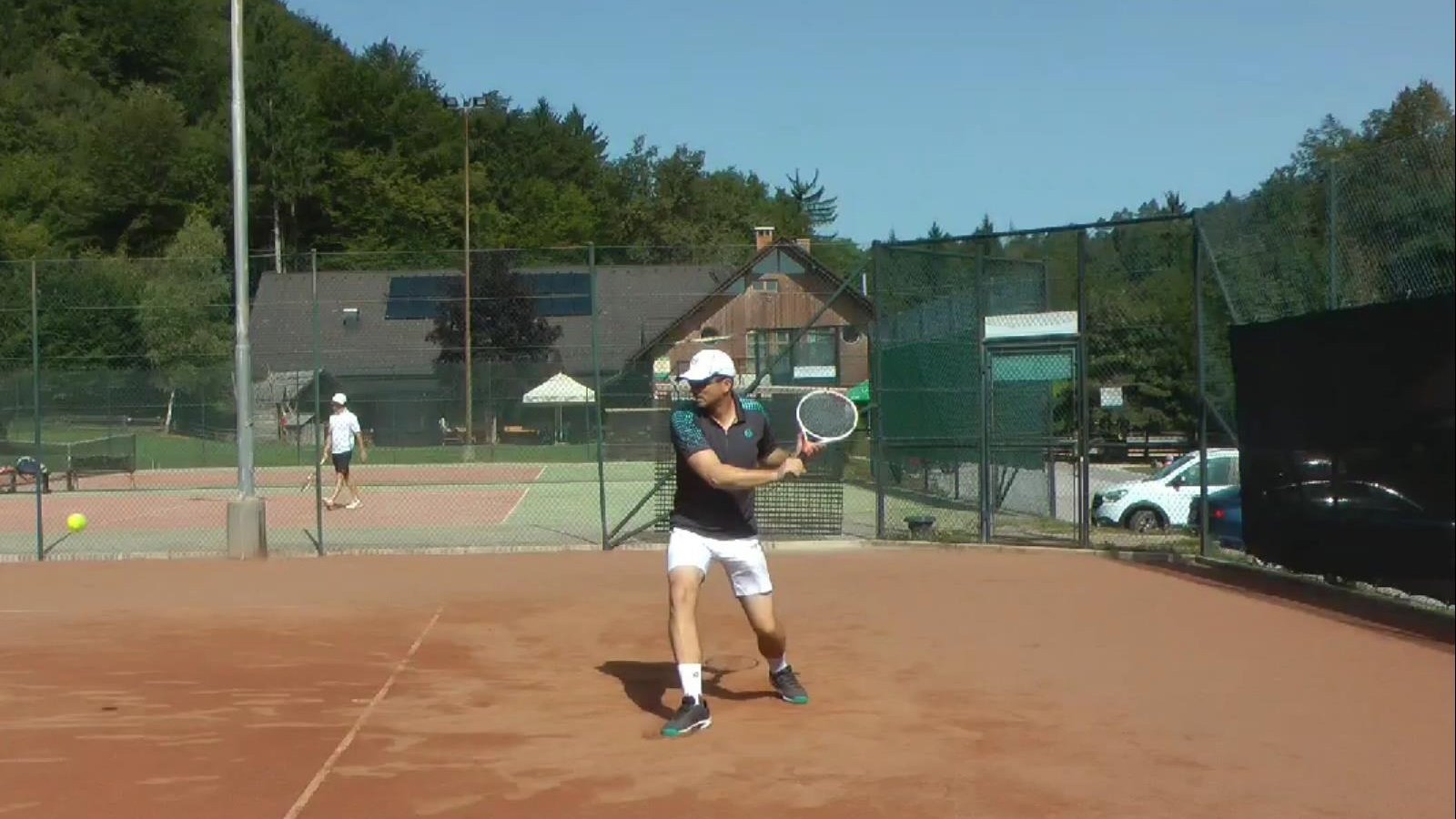
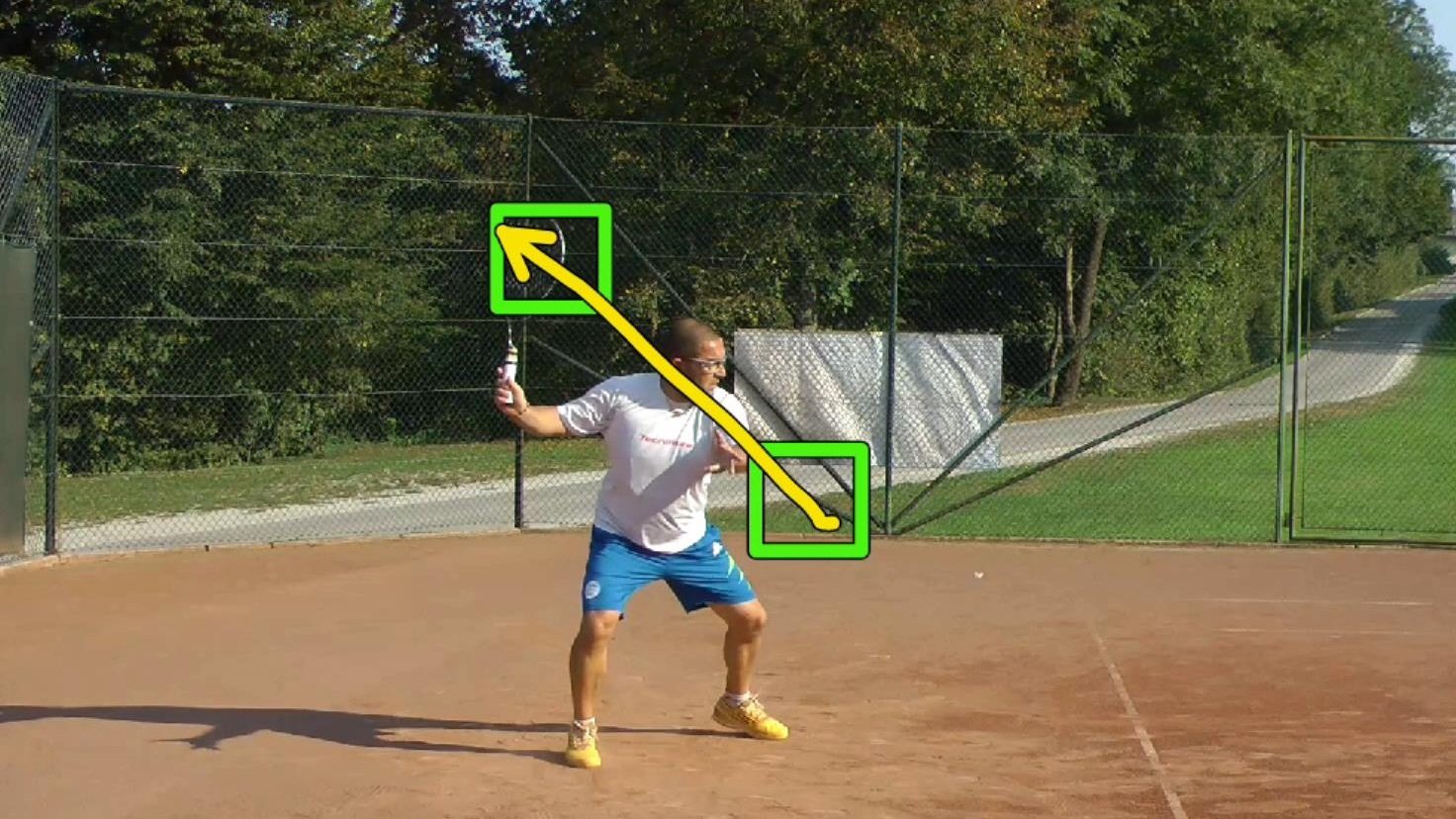
In this sequence is he serving FLAT, SLICE OR HIGH KICK ? or it won`t matter.
It won’t really matter because he tosses the ball in the same way for most serves and so his swing up towards the ball is very similar for all serves except maybe for a kick serve to the ad side.
Fascinating. Thanks so much for doing this. Looks much simpler and easier to follow without the racquet.
Hi Tomaz,
This is really good. Seeing it without the racquet is really helpful. I compared my hand motion to his and I can see a big difference that I’m going to work on!
Thanks
Tomaz,
I’m feel I’m completely missing the riddle in the questions. When I look at the serve without the racquet it is hard to “feel” why the body is stretching and contorting so much to do that motion, but you add the extended “arm” of the racquet and I understand and feel the way that the arm, back and body stretch and then pull the racquet through space to meet the ball. Is that anything you were aiming for?
Hi Chris,
As you can see, you “feel” differently when looking at images with and without the racquet. If you feel “contorting” looking at images with the racquet, then you’re very likely contorting too much.
The serve is very comfortable if you do it right, it is as you see it without the racquet.
Pretty amazing. For me this made the angle of Federer’s arm to his spine much more apparent, along with how little effort he exerts on his arm and shoulder. Terrific video, Tomas!
Hi Tomaz,
I do not feel much different comparing images. Both look very logical to me anyway. What does that tells ?
Hi Saul,
That tells you that you have a good mental image of how the serve works and that you are not “deceived” by the racquet.
Cool. Is there any chance you could do this with some vintage slow motion footage of Edberg’s backhand?
If you find the owner of such video on Youtube and convince him to allow me to do it. 😉
Excellent video. I can see very well the result of mechanics. With a slight movement of the wrist, how it generates a large “loop” in the path of the raquet, which produces acceleration. It’s like that?
As always, thanks a lot Tomaz.
What I really noticed without the racquet was the palm position, facing the sky, just prior to the racquet drop. It looks like he then relaxes his wrist and lets the racquet drop,
Hi Tomaz,
Great video. I’m interested in your comments about the direction of Roger’s tossing arm. I see that his left arm is parallel to the baseline on the toss. He is still able, however, to direct the ball such that the contact point is just to the right of his head. Intuitively, I would think that the direction of his tossing arm would result in the ball placed a bit farther to this right. I suspect the tossing arm is parallel to the baseline in order to allow for a full shoulder turn. That said, how is Roger able to toss to the right, yet place the ball farther to the left?
Thanks…
Hi Mike,
Do you happen to be an engineer by chance? Because you’re thinking very mechanically…
Our body goes through many little movements even when all you see is the tossing arm “just going up”. All these movements affect the ball flight even if you can’t see them with the naked eye.
You’re looking at just one plane of motion which is up-down. There is a slight movement of the arm back-forward.
Look at his arm position at 0:43 and then at 0:46 (at release) and you’ll see that the arm has moved slightly in the court…
But this movement is so small that if you try to do it consciously you’ll make it too big.
All you want is to toss the ball slightly inside the court and think “tossing arm parallel to the baseline” and with some practice you’ll toss the ball slightly inside simply based on feel.
Thank you Tomaz, that was very interesting. I noticed that Federer takes his racket arm straight back before getting into the trophy position, and Raonic takes his arm maybe only three quarters of the way back before getting into the same position, and they both have excellent serves.
Yes, Alan, these are personal styles of each player and not the most important parts of the serve that produces power.
But once you look at the racquet path from the drop through contact and into pronation, you will see very little deviations.
Tomaz,
Thanks for the awesome video, do you have any tips on how to focus or work on the “drop” phase. I feel like the trophy and pronation/follow-though I complete in my current motion, but the drop phase is not completed each time. Any tips would be helpful. Thanks.
You’re welcome, Sid. Click the link for some ideas on how to develop a deeper serve drop.
these are really terrific videos – would like to see you include a third and perhaps 4th line showing the plane of the shoulders and the hips throughout these strokes as it seems that there is a second illusion at play – the majority of the movement of the arms/hand in the initial loading portion of the strokes seems to be due more to trunk rotation and foot work than actual arm/hand movement.
thanks again, these are great – will you be adding volleys as well?
Thanks, Tim. Yes, everything is initiated always from the hips and the core, that’s where we have the strongest muscles. So the arms then act as levers and not really the main “engine”.
But theory is easy, the only way to learn proper technique then is to use feel based exercises to teach your body how to function efficiently.
I’ll include some in my upcoming video courses but you can find plenty on YouTube.
Tomaz
These are very interesting and as with very thing you put out, thoughtfully analyzed.
Can you tell us about any unifying themes between all these? Any principles to apply as a general rule to our own strokes. Is less more?
Thanks again.
Hi Dave,
The unifying theme of all these no racquet videos is that if you pay too much attention only to the racquet trying to copy its movement, you will unconsciously move your arms too much.
By removing the racquet and seeing how much (or how little) the arms actually move, you can create a more accurate mental image of how to move your body in order to imitate pro’s technique.
So yes, in all cases it means that there is less movement with the arms than initially perceived. So yes, you can say less is more because your strokes become more compact and easier to time and control.
It would have been interesting to see a hand at contact and about 1 foot before contact and 1 foot after contact. This is good stuff. It is a lot easier to teach serves with the smallest racquet because the racquet distorts an arm motion.