
This video article continues exploring the topic of visual illusions of tennis strokes. We’ll cover forehand, backhand, backhand slice and volley illusions.
For better understanding of why visual illusions happen, check out the previous articles on forehand and backhand backswing illusions.
Such illusions happen primarily because our eyes tend to follow the racket and our mind subconsciously wants to follow the racket’s movement in space with the hand.
In reality, the hand moves much less in space than the racket head, so players who misinterpret the stroke technique tend to make swings too big, which results in hitting the ball late and struggling overall in tennis.
Since most people learn tennis visually (around 70%) it’s very important that one creates a correct mental image of the stroke. The following visual illusions of tennis strokes are the ones that I have encountered the most times when working with adult tennis players.
Illusion #1 – Contact Point Is Not To The Side
Illusion: Because the racket extends approximately 0.5 meters (1.6 feet) from the hand, it seems like we are hitting the ball well on the side of the body and need to EXTEND to the side with our arm to execute the stroke properly.
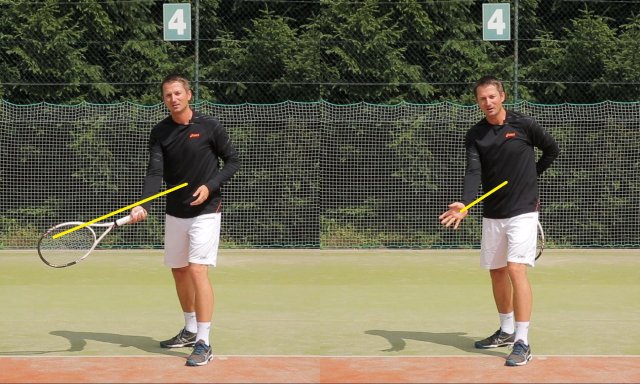
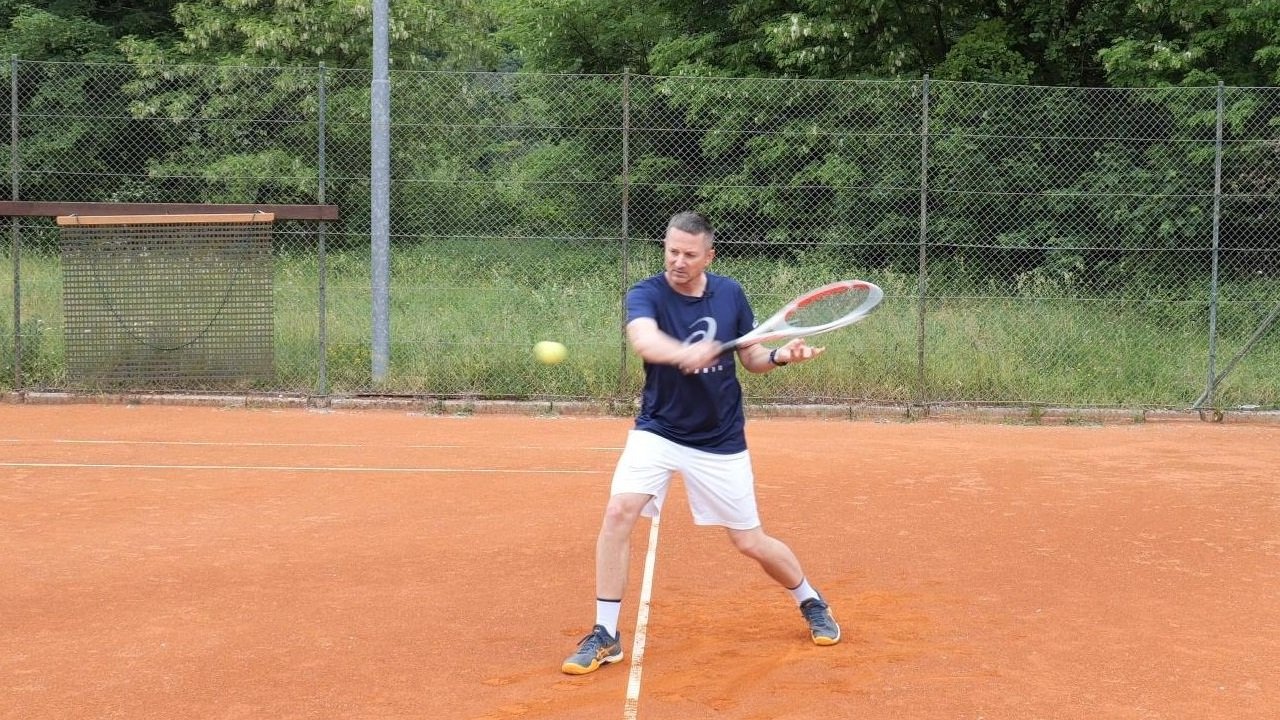
Reality: When we remove the racket from the hand and observe the arm movement without it, we realize that the arm does not extend to the side much. The arm is actually positioned more forward than to the side at the point of contact.
Illusion #2 – The Swing Path Is Not Horizontal
Illusion: This relates to the previous illusion. If player believes they need to reach to the side to hit the ball, then they will also visualize a very horizontal racket path that goes around the body.
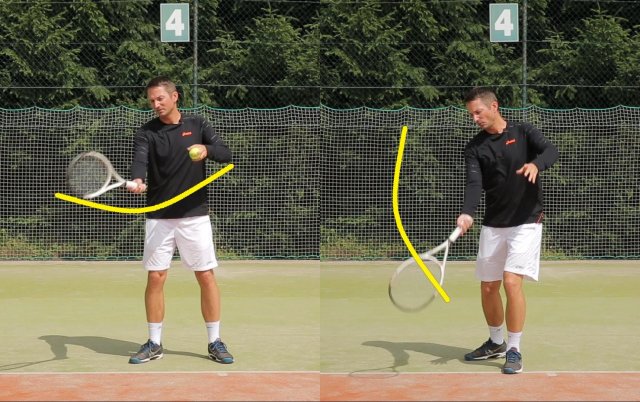
Reality: When we remove the racket and simulate the arm swing of a forehand (or backhand), we can see that the swing path is much more up and down rather than left and right.
In other words, it more closely resembles a bowling motion than a discus throw (in athletics).
Note: The only situation where the arm does swing more horizontally is when hitting high balls around shoulder height.
Illusion #3 – Preparation Is Not (Very) High
Illusion: When we initially prepare the racket for the forehand or backhand, we start with a lift. The tip of the racket head will end up above our head.
If the player misinterprets that movement – since they see the racket head higher than the head – they will attempt to lift their arm and hand very high, which creates a loop that is too big.
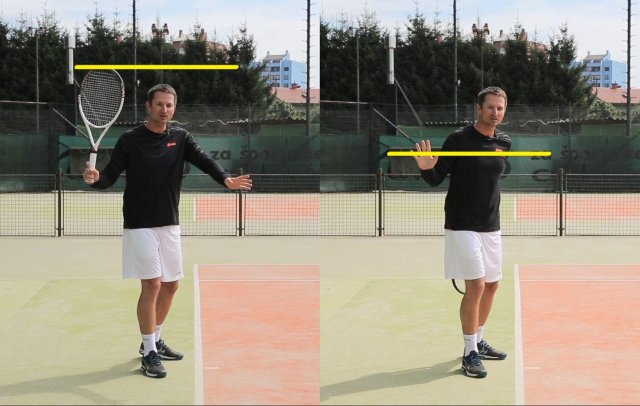
Reality: When we remove the racket from the hand and only observe how high the hand lifted from the initial ready position to the prepared position, we realize that it’s not high at all. It’s actually around shoulder high for forehands and slightly lower for one- and two-handed backhands.
Illusion #4 – There Is No Wrist Slap
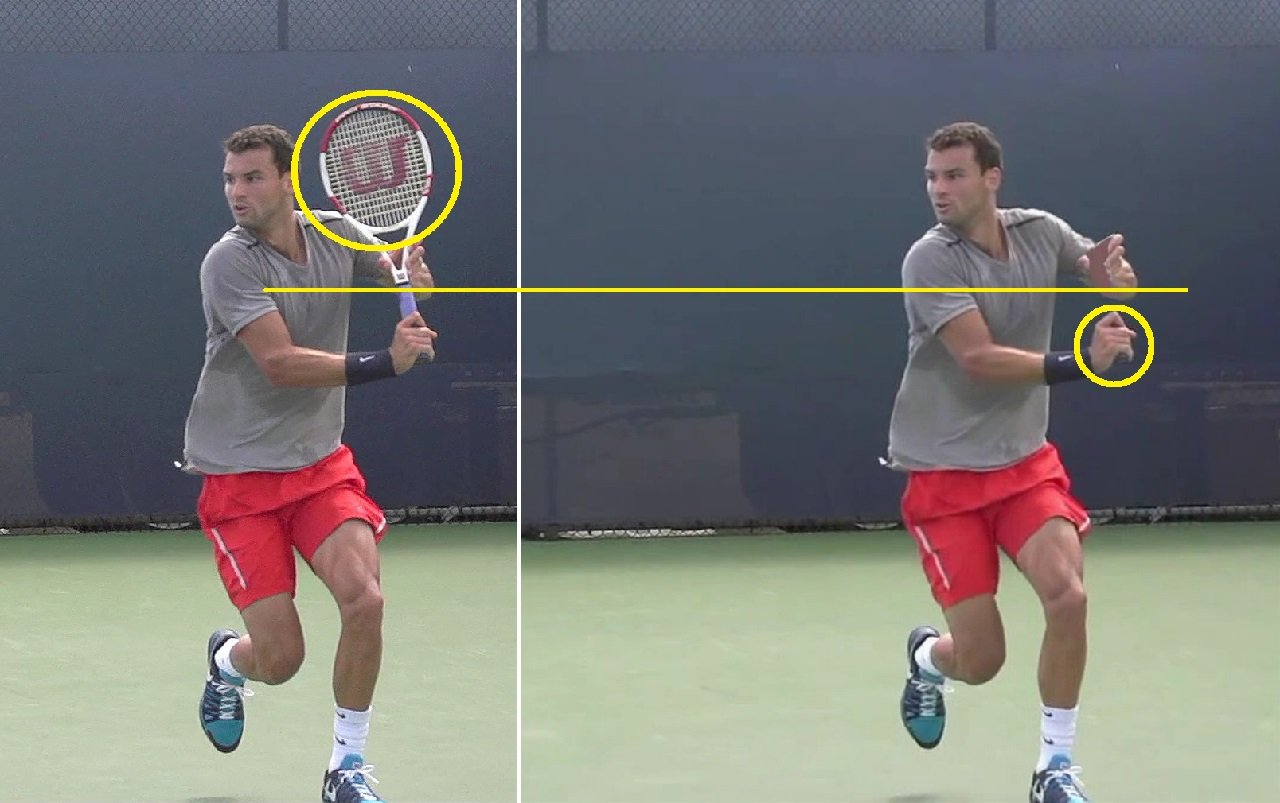
Illusion: If we look at the forehand or backhand when it’s just a split moment before contact, we can see that the racket face is still facing 90 degrees away from the ball and our desired direction of stroke.
When players look at that image while knowing they need to hit the ball a split second later, they believe they need to use the wrist to move the racket 90 degrees forward and align it with the ball.
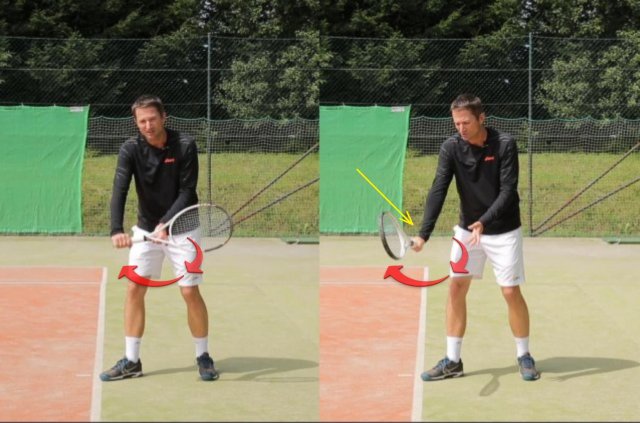
In other words, they want to slap forward with the wrist into the ball. If they do that, they will play very inconsistently because the racket angle will change very rapidly as it passes through the contact point, resulting in the balls spraying out of contact very randomly.
Reality: We don’t need to use the wrist to move the racket forward 90 degrees. That will happen automatically if we just continue our whole arm move forward.
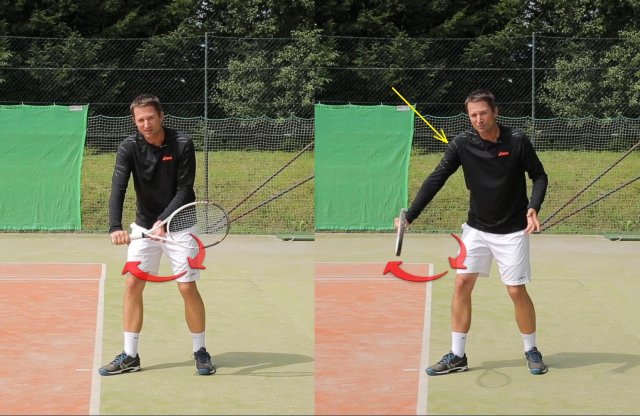
On the forehand and two-handed backhand stroke, the body rotation will help add that extra rotation to the racket face in order to align it with the ball. On the one-handed backhand, the arm and forearm movement forward will align the racket with the ball.
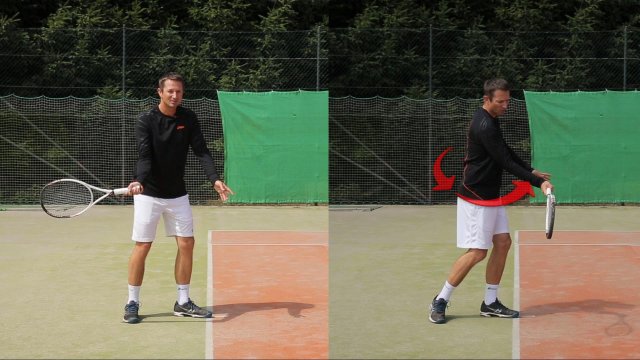
Note: The pros release the wrist more and actually slap the ball on the forehand quite a lot in some situations (but not the one-handed backhand!).
However, I don’t recommend that technique to recreational tennis players because it’s too difficult to play consistently like that without years of training.
Illusion #5 – Racket Face Is Not Open (Much) At Backhand Slice Contact
Illusion: When we prepare for the backhand slice, we can clearly see quite an open racket face. When we finish the backhand slice stroke, we see the racket face even more open; in fact, it’s pointing directly upward.
This creates the illusion that the racket face was opening more and more as we were executing the stroke. When players believe that and want to hit a backhand slice like that, all their balls will float upward with lots of backspin and no power.
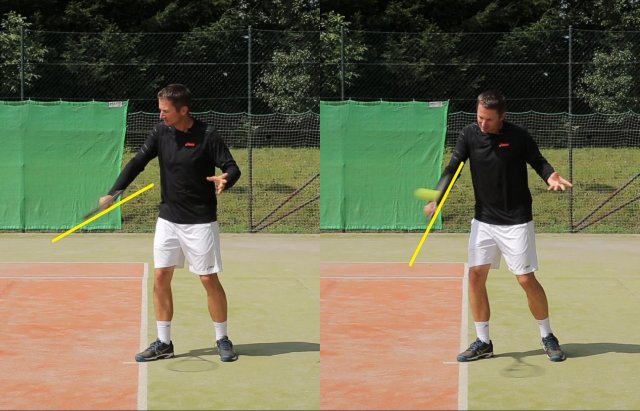
Reality: The racket face actually starts to close from the initial preparation. At contact, it is just slightly open, in some cases almost perpendicular to the ball.
That allows us to apply some backspin to the ball and hit more through in order to give the ball more power. After that almost perpendicular racket position at contact, the racket starts to open again.
This is one of the most common visual illusions/misinterpretations in tennis because the changes in racket angle are so quick that you cannot see them with the naked eye at the actual speed of hitting. You can see that only in slow motion or in freeze frame right at contact.
Illusion #6 – Volley Not To The Side & Forward
Illusion: When observing a player hitting a forehand or a backhand volley from the front view, it will appear as though the arm goes forward and away from the body.
If players visualize the stroke like that, they will tend to have very unstable and inconsistent volleys because the arm will not be properly supported and stabilized by the body.
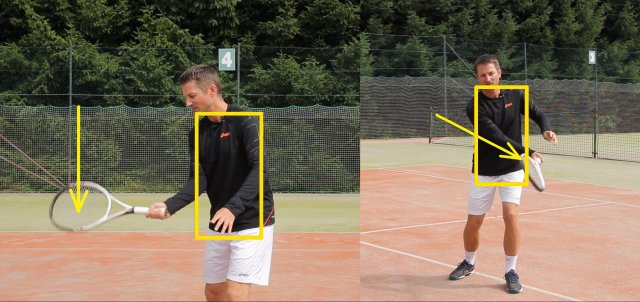
Reality: The illusion is created because the observer fails to see that the body turned around 45 degrees to the side as the player prepared for the volley.
The correct execution of the forehand and backhand volley is when the body stays in that orientation throughout the movement of the arm that is executing the volley.
If we then look at the volley execution from a side view that’s at around 45 degrees to the player, we can see that the arm does not move forward and away from the body but actually across the body diagonally.
That gives us much more stability at contact and therefore much more consistent and accurate volleys. This applies to both the forehand and the backhand volley.
Stay tuned for six more serve visual illusions in the upcoming video article.
You are the best at breaking it down. Can’t wait to get out there and trying it out. Thanks so much
Much appreciated, Anita, glad that my efforts for not in vain. 😉
Thank you Tomaz, some very clear coaching.
Thanks a lot!
Very important and useful explanations. Thanks Tomaz.
Thank you very much Tomaz your teaching is very good. Best wishes and take care.
Tomaz – Really like this insightful lesson. Taking away the racquet in various positions – I was for sure surprised at what the hand and arm were doing – been doing racquetless shadow swings in my office this afternoon now – thanks for clearing my mental image of pretty much each stroke !
Glad to hear that, Jay! I practiced hundreds of times in front of the mirror when I was a kid…